Buying a fixer-upper: the real cost before you offer
A house that needs work is only a bargain if the price reflects the work. A step-by-step method to price a fixer-upper before you offer, what to check first and how to decide whether to buy, renovate or walk away.
The real cost of a fixer-upper is the price, plus buying costs, essential work, chosen improvements, fees and permissions, living costs during the work and a contingency.
Price the essential work first: structure, roof, damp, wiring, plumbing, heating and drainage come before kitchens and finishes.
Get a thorough survey and written quotes for the big items before you offer, not after; RICS recommends its most detailed survey for run-down homes and major works.
Compare the total with what similar finished homes have sold for, and with buying a home that needs less work.
GOV.UK says that if a survey finds significant issues you can ask the seller to fix them, renegotiate to reflect the cost of the work, or withdraw.
How do you work out the real cost of a fixer-upper?
The real cost of a fixer-upper, or doer-upper, is the price plus the costs of buying, the essential repairs, the improvements you want, professional fees and permissions, the cost of living somewhere else during the work and a contingency for what you cannot see. Work out that total before you offer, from a survey and written quotes, and compare it with what similar finished homes sell for.
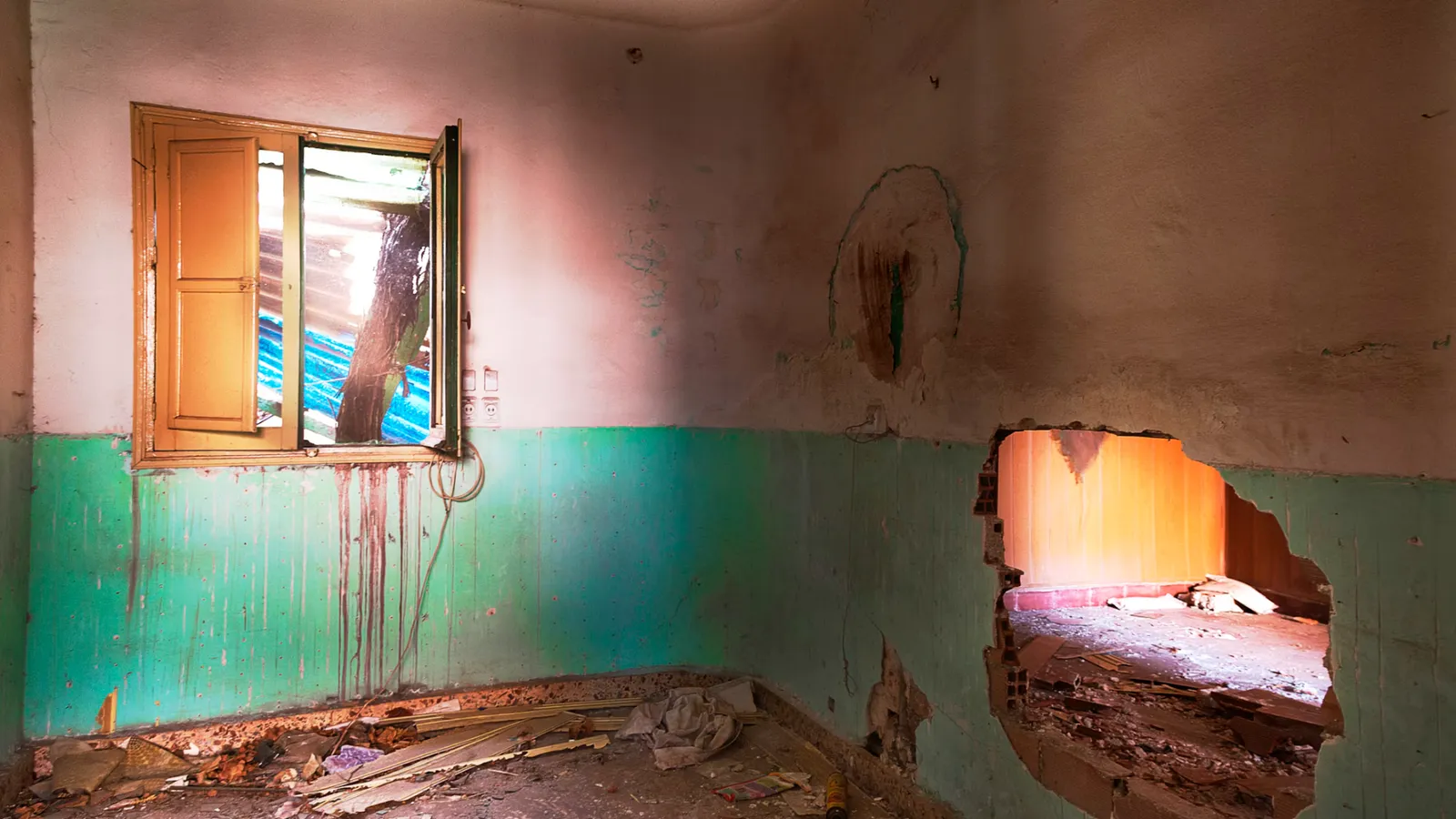
A house that needs work can be good value. It can also be the most expensive house on your shortlist once the work is counted. The difference is almost always whether the work was priced before the offer or after it. This guide gives you a step-by-step method, the checks to make first and a way to decide whether to buy, renovate or walk away.
A viewing tells you what to ask. A survey tells you the answer, and gives you evidence for your offer.
Choose the thorough option.RICS describes three levels of Home Survey and recommends Level 3, its most comprehensive, for larger, older or run-down properties and for buyers planning major works.
Do not rely on a mortgage valuation.Historic England explains that a valuation is a brief inspection for the lender, not a survey.
Book the specialists. If the surveyor suggests a structural engineer, drains survey, electrical test or damp specialist, get them in before you commit.
In the UK
GOV.UK's how to buy guide says that if a survey uncovers significant issues, you can ask the seller to pay for them to be fixed before you buy, renegotiate your offer to take the cost of the work into account, or withdraw. It also suggests sharing the relevant part of the survey with the seller's legal team to support any of these.
Many buyers arrange the survey after the offer is accepted. For a fixer-upper, it is worth getting as much as you can before you offer: a builder's walk-round with a rough figure, a specialist's look at the roof or the structure, and quotes for the biggest items. Then, if the survey later finds more, you renegotiate with evidence.
Step 4: write a scope of works
You cannot price "do it up". You can price a list. Write down what the house needs, room by room and element by element, separating:
Essential work: what must be done for the house to be safe, dry and usable.
Chosen improvements: what you want to change.
Later: what can wait a year or five.
Our guide to writing a scope of works shows how, with a worked example. A clear scope means every builder prices the same job, and our guide to builders' quotes shows how to compare them.
Step 5: price the work
Replace guesses with figures as fast as you can.
Get written quotes for the big items. Roof, structure, rewiring, heating, drainage.
Get more than one. Comparing quotes for the same scope shows what the job is really worth.
Check what each quote includes. Making good, waste removal, scaffolding and VAT are often where two quotes differ.
Add the knock-on work. A rewire means replastering and redecorating; new drains mean digging up the garden.
Use [published ranges](/blog/renovation-cost-per-square-metre) only as a sense check. For example, the 2026 cost breakdown for western Sicily by Jonathan Smith, Mekozo's founder, who films his villa renovation on Operation Sicily, puts a full electrical rewire of an 80 to 120 square metre property at €3,500 to €9,000 and roof repair or replacement at €6,000 to €18,000. Those are Sicilian figures; your own quotes are what count.
Professional fees. An architect or designer, a structural engineer, a party wall surveyor if you share walls.
Permissions. Planning permission where needed, and building regulations approval for work such as structural changes, rewiring or new drainage.
Living costs during the work. Rent or a short let, storage, travel to the site, and paying two sets of bills.
Time. Every extra month of work is another month of those living costs.
In the UK
GOV.UK's guide to building regulations approval explains when work needs approval. Check whether the house is listed or in a conservation area before you plan any changes, because that affects what you can do inside and out, and confirm that past work had the approvals it needed.
Step 7: add it all up
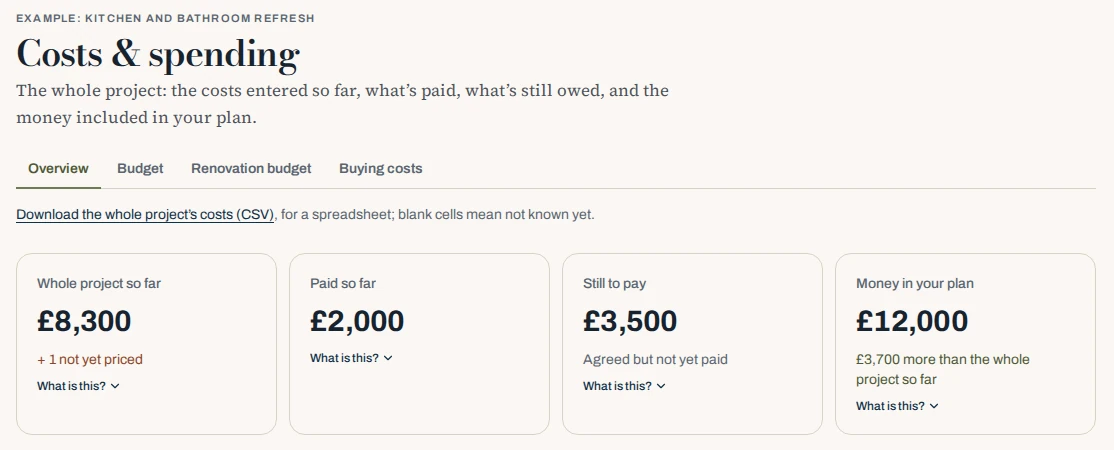
Mekozo's Costs & spending view puts the purchase, the buying costs and the work in one total, and shows what is paid, what is still to pay and what is not yet priced, so you can see the real cost of a fixer-upper.
Put every heading in one list, with each line marked as an estimate, a quote, agreed or paid:
Purchase price
Buying costs
Essential work
Chosen improvements
Fees and permissions
Living costs during the work
Contingency
The contingency is for what you cannot see until walls are opened and floors lifted. Its size depends on how much is known. Our guide to how much renovation contingency to allow shows how to set one from your own risks rather than a rule of thumb.
Step 8: compare the total and set your offer
Now compare the real cost with two things:
What similar finished homes nearby have sold for. If the real cost is close to or above that, the house is not a bargain, however low the price looks.
A home that needs less work. Price it the same way. It might cost more to buy and less in total.
That comparison gives you a ceiling. Set your offer below it, decide your walk-away point before you negotiate, and keep the quotes and survey findings to explain your figure. Our guide to how much to offer on a house covers making and defending an offer on a house that needs work.
Watch out
The most common fixer-upper mistake is falling for the potential and pricing the work afterwards. If the numbers only work when everything goes right, they do not work.
Should you buy a fixer-upper? Questions to answer honestly
Do I have the money for the whole project, including contingency, not just the purchase?
Where will I live while the work happens, and for how long?
How much time can I give it, and how much will I do myself?
Am I comfortable managing builders, decisions and delays?
What happens to my plans if the work takes twice as long?
Does the house still meet my must-haves once it is finished?
If you are weighing work on your current home against moving, ask the same questions of both options: the full cost of renovating to meet your needs, against the full cost of buying and moving to a home that already does.
On the Operation Sicily villa
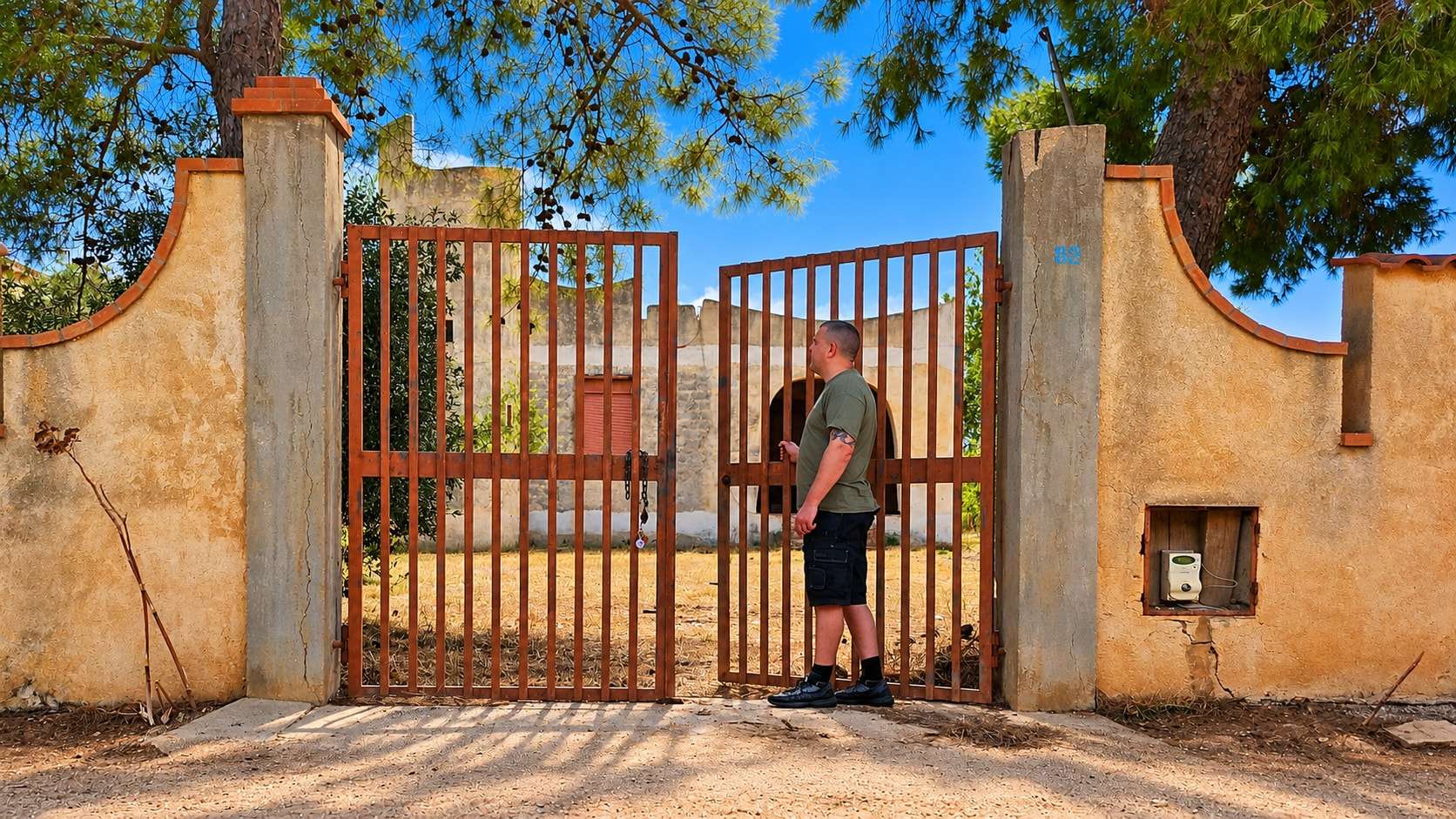
From the villa in Sicily. Jonathan bought his abandoned villa for €21,500, and the notary, estate agent and taxes added €7,500 (Episode 9). The price was the smallest part of the project. His budgeting started with a structural survey, put must-haves before upgrades, kept labour, materials, permits and fees as separate lines, sought three to five quotes and set a backup fund of 10 to 15% (Episode 14). On an abandoned property, he says he would now hold back 20 to 25% of the build cost. One line shows why: a single test on the old cesspit decided whether it could stay or would need replacing at a cost of upwards of €12,000. It passed (Episode 57), but the budget had to be ready for either answer.
This guide explains a planning method for weighing up a home that needs work. It is not survey, legal or financial advice; use a qualified surveyor before you offer and a solicitor or conveyancer for the legal side.
Questions people ask
Is buying a fixer-upper a good idea?
It can be, if the price reflects the work and you have the money, time and patience to finish it. It goes wrong when the work is priced after the offer, or when living costs and delays are left out. Work out the whole cost first, then decide.
How do I work out the cost of a fixer-upper?
Add the price, the buying costs, the essential repairs, the improvements you want, professional fees and permissions, the cost of living elsewhere during the work and a contingency for what you cannot see. Base the big items on a survey and written quotes rather than guesses.
How do the repairs change my offer on a fixer-upper?
Start from what similar finished homes nearby have sold for, then take off the whole cost of the work, fees, living costs and contingency. That gives a ceiling for a house that needs work, and the survey and quotes are your evidence for an offer below it. Our guide to how much to offer on a house covers the wider negotiation.
What should I check before buying a fixer-upper?
Check the structure, roof, damp, wiring, plumbing, heating and drainage first, because they cost the most and limit everything else. Then check permissions: whether the house is listed or in a conservation area, and whether past work was approved. A thorough survey and specialist checks will answer most of these.
Should I renovate or move?
Compare the full cost of the work to make your current home fit your needs with the full cost of buying and moving to one that already does. Include buying costs, moving costs, disruption and time. Neither is right in general; the numbers and your must-haves decide.
Does a fixer-upper need a bigger contingency?
Usually, yes, because more of the work is hidden until walls are opened and floors lifted. On his abandoned villa, Jonathan Smith says he would now hold back 20 to 25% of the build cost. Size yours from the survey and your own risks, and see our guide to renovation contingency for the method.
Jonathan Smith is the founder of Mekozo and Operation Sicily. Jonathan bought an abandoned villa in Sicily and is rebuilding it on camera, every week. Mekozo is the app Jonathan built to keep that renovation's money in one picture.
A 1 euro house in Italy comes with a deposit, a notary, taxes on the deed, design and permits, and a renovation with a deadline. Every cost heading, a method to budget one, and the official sources to check.
Every step of a house hunt in order, from setting the whole-project budget and writing a wish list to viewings, comparisons and the checks to make before you offer, as one checklist you can work through.
A plain guide to the steps and cost headings of buying a house in France, with the official French and UK sources for each one, so you can plan the whole purchase before you sign anything binding.