Your house wish list: must-haves and nice-to-haves
A step-by-step way to write a house wish list, with the four categories that keep it honest, a dream home checklist to start from and how to use it at every viewing.
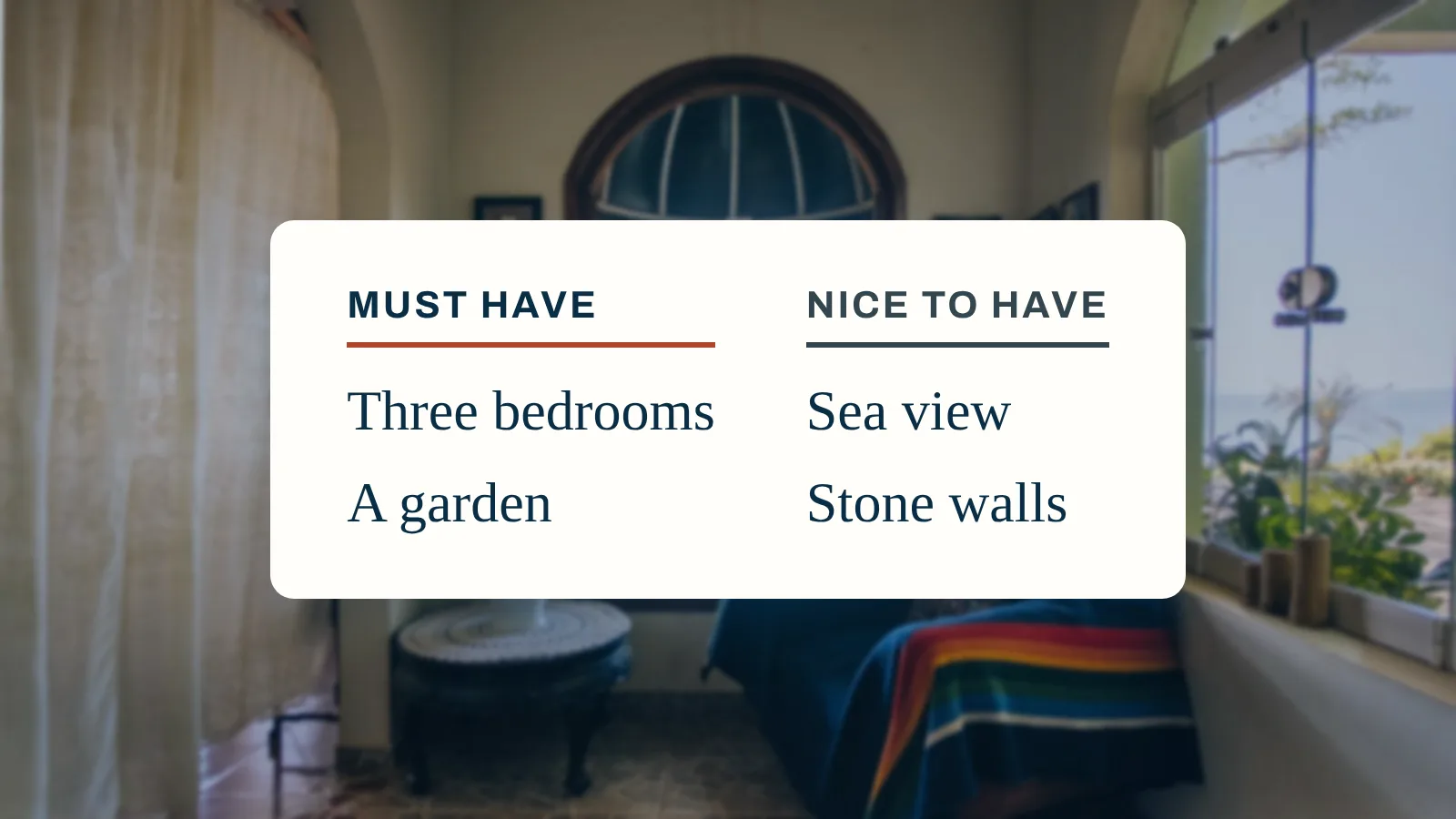
A house wish list sorts what you want into four groups: must have, important, nice to have and don't want.
Keep must-haves to the few things you would not buy without; if everything is essential, no house will ever match.
Write the wish list before the first viewing, so it shapes the search rather than being bent to fit a favourite.
Include the whole budget and one compromise you are willing to make, not just rooms and features.
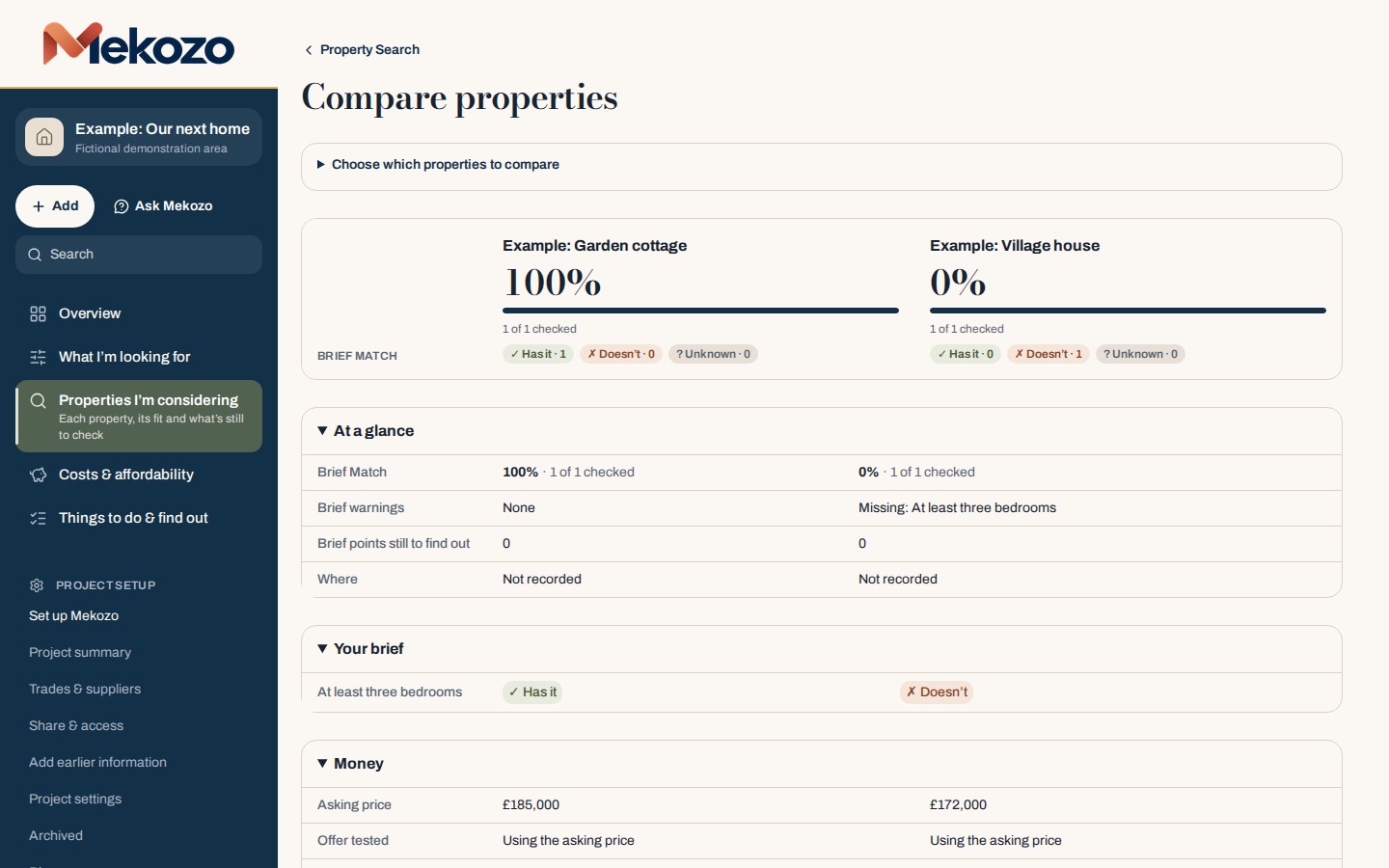
Score every house against the same list as met, not met or unknown, and treat unknown as a question, never a yes.
What is a house wish list?
A house wish list is a short written list of what you want from your next home, sorted into four groups: must have, important, nice to have and don't want. Write it before the first viewing, keep the must-haves to a handful, include the whole budget and one compromise, and judge every house against the same list.
It sounds simple, and it is. But it is also the single most useful thing you can do before you start viewing, because it stops the search from being steered by whichever house you saw last. This guide shows how to write one, what to put on it and how to use it.
The four groups that keep a wish list honest
Most wish lists fail in one of two ways: everything is a must-have, or nothing is written down at all. Four groups fix both.
Group
What it means
Test
Must have
You would not buy the house without it, at any price
Would you walk away over this alone?
Important
You want it strongly and will weigh it against other things
Would you trade it for a must-have elsewhere?
Nice to have
You would enjoy it, but can live without it or add it later
Would it change your offer, or just your mood?
Don't want
Things that count against a house, or rule it out
Is this a deal-breaker or a dislike?
Tip
The hardest discipline is keeping the must-have list short. A good rule is that each must-have should be something you cannot change after you buy, such as location, plot size or the number of rooms you can realistically fit. A tired kitchen is rarely a must-have; a second bedroom often is.
How to write a house wish list, step by step
Start with the money. Write down the most you can spend on the whole project: the price, the costs of buying, any work and living costs while it happens. Our guide to the costs of buying a house lists every heading.
Write down how you live now. A normal weekday and a normal weekend: where you work, how you travel, who visits, what you store, where you spend your evenings.
Write down how you will live in five years. Children, a parent moving in, working from home, retirement, a dog.
Brainstorm everything you want. No sorting yet. Rooms, features, location, feel.
Sort each item into the four groups. Use the tests in the table above.
Cut the must-haves. If you have more than about five, move the weakest to important.
Add your deal-breakers to don't want. The things that would end a viewing at the front door.
Write one compromise. The thing you are genuinely willing to give up for the right house.
If you are buying with someone, do steps 2 to 8 separately, then compare and agree one shared list.
What to put on your wish list: a dream home checklist
Use this as a starting point. Not every line belongs on your list; the point is to decide, before a viewing, which ones do.
Money
Most you can spend on the whole project, not only the price
How much work you are willing to take on: none, cosmetic, a kitchen or bathroom, or a full renovation
Running costs you can afford each year: energy, council tax or local property tax, maintenance
Location
Areas or towns, and the ones you would rule out
Journey to work, school, family and the station
Shops, healthcare and things to do within walking distance
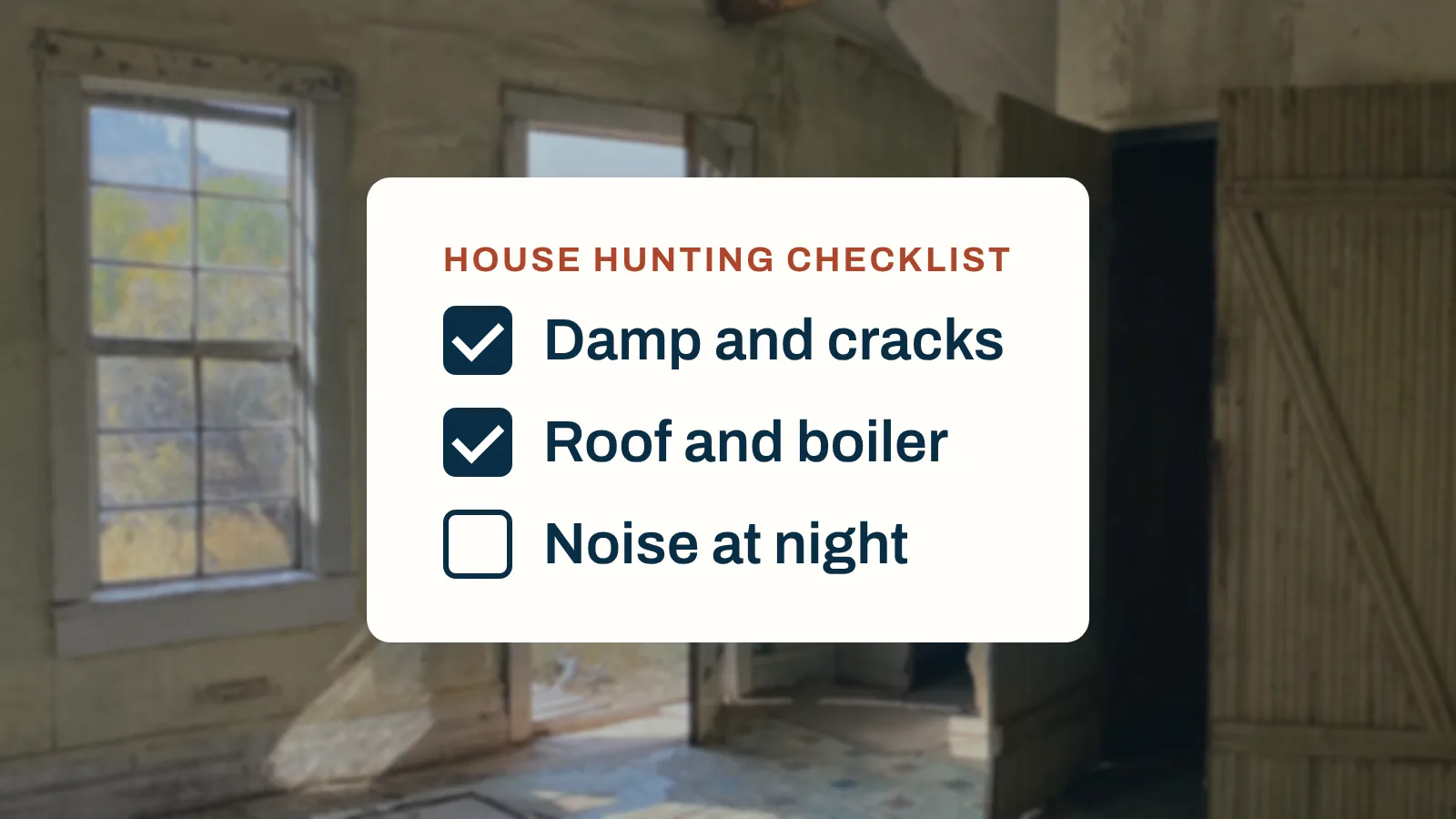
Noise you can live with: roads, railways, flight paths, pubs
Flood risk you are prepared to accept
The house
Number of bedrooms and bathrooms
Living space: one open room or separate rooms
Kitchen size, and space to eat
A place to work from home
Storage: bikes, prams, sports kit, tools
Light and which way the main rooms face
Energy efficiency and heating type
Age and style of house, and whether you want an older home
Outside
Garden size, aspect and how much upkeep you want
Parking: off-road, on-street or a garage
Room to extend in future
Practical
Broadband speed and phone signal
Accessibility, now or later: stairs, a downstairs toilet, level access
Freehold or leasehold
Timing: when you need to move
In the UK
GOV.UK's guide to how to buy a home suggests thinking about the amount of living space and storage, internet speed, car parking, scope for extending, the garden and how much maintenance you can manage, the condition of the property, and whether it is listed or in a conservation area, which can limit the changes you can make. You can check an area's long term flood risk in England with GOV.UK's flood risk service, and look up a property's energy rating with Find an energy certificate.
A worked example
Here is how a couple's list might look once they have sorted and cut it.
Group
Items
Must have
Whole project under budget; three bedrooms; within 30 minutes of both workplaces; off-road parking
Important
A garden that gets afternoon sun; a separate room to work from; a kitchen big enough to eat in
Nice to have
A second bathroom; a garage; walking distance to a park
Don't want
A main road outside; a property that needs structural work; a high flood risk
Our compromise
We would take a smaller garden for a shorter commute
Four must-haves, and every one of them is hard to change after buying. The kitchen, the second bathroom and even the work room could be added or adapted later, so they sit lower down.
Use the wish list at every viewing
Mekozo turns your wish list into a Property Brief and checks every property against it, showing which points each one has, which it does not and which are still to find out.
A wish list only helps if you use it every time. At each viewing:
Check every must-have first. If one is missing, you can stop there, however lovely the house is.
Mark each item as met, not met or unknown. Unknown is not a yes. It is a question for the agent, the seller or the survey.
Note anything on the don't-want list, and whether it is a deal-breaker or just a dislike.
Write one line on how the house felt. Feelings matter, but they belong next to the facts, not instead of them.
Add the open questions and who will answer each one.
The HomeOwners Alliance viewing checklist suggests viewing a house two or three times, at different times of day, so a second visit is the time to check the unknowns on your list.
Viewings teach you things. You might find that light matters more than you thought, or that a garden you imagined using every day would mostly be work. Changing the list is fine, as long as you do it on purpose.
Review it after every three or four viewings, not in the car outside a house you love.
Write down each change and the reason, so you can tell learning from rationalising.
Watch for a must-have quietly becoming important just as your favourite house turns out not to have it.
Watch out
The most common way a wish list fails is not that it was wrong, but that it was rewritten to fit one house. If you find yourself moving a must-have down the list for a particular property, stop and ask whether you would make the same change for any other house.
From wish list to comparison
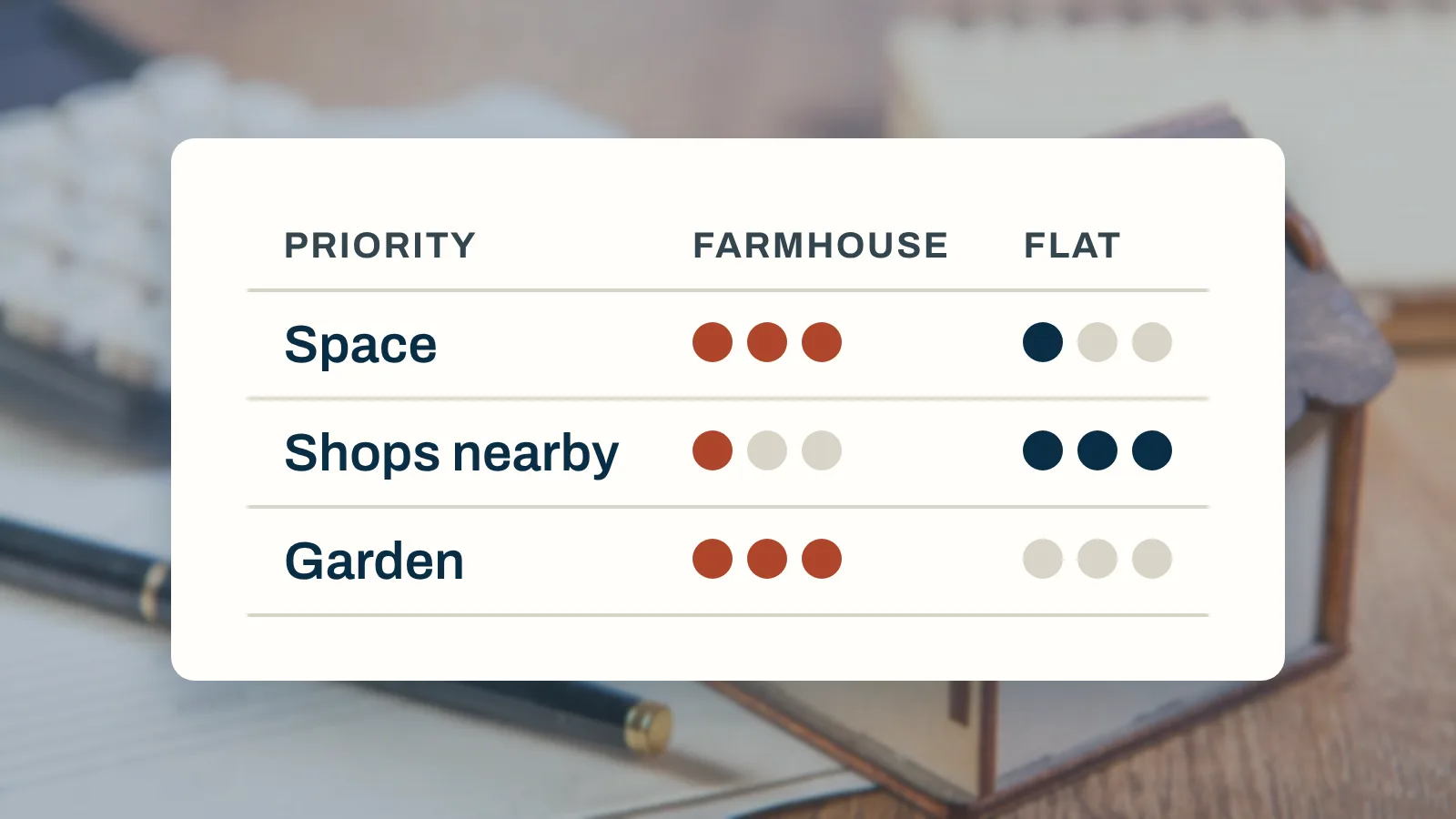
Once you have viewed a few houses, the wish list becomes the spine of your comparison. Score each house the same way, add the full cost of each one, and look at them side by side. Our guide on how to compare houses you have viewed shows how, whether you keep everything in a house hunting app or a spreadsheet.
If a house meets most of your list but needs work, price the work before you count it as a contender. Our guide to buying a fixer-upper shows how to work out the real cost before you offer.
On the Operation Sicily villa
From the villa in Sicily. Before Jonathan Smith, Mekozo's founder, started viewing, he wrote down exactly what he was looking for: a detached house with a garden, at least two bedrooms, a quiet spot near the sea, under €100,000, on the market for a while, needing a complete renovation and with potential to add value (Episode 8). Over three months he viewed about 50 properties against that list. The villa he chose, in western Sicily, met it and came in under budget: he bought it for €21,500. A "needs a complete renovation" must-have is unusual, but it shows the point: the list said what he wanted, not what an agent thought he should want. His buying a house in Sicily checklist on Operation Sicily, where he films the renovation, starts the same way, with the budget and the brief.
This guide helps you decide what you want from a home. It is not legal, survey or financial advice.
Questions people ask
What should be on a house wish list?
Start with the basics: budget for the whole project, location, number of bedrooms and bathrooms, living space, outside space and parking. Then add how you live: storage, a place to work, light, noise, broadband and how much work you are willing to take on. Sort each item into must have, important, nice to have or don't want.
How many must-haves should a house wish list have?
As few as you can manage, usually a handful. A must-have should be something you would genuinely walk away from a house without. If your must-have list is long, move some items to important, or you will rule out every house or start quietly ignoring the list.
What is the difference between a must-have and a nice-to-have?
A must-have is a condition of buying: without it, you would not buy the house at any price. A nice-to-have is something you would enjoy but could live without or add later. In between sit the important items, which you weigh against each other.
Should we write one wish list or two when buying together?
Write two separately first, then combine them. Comparing the lists shows where you agree, where you differ and which items each of you would really walk away over. Agree one shared list before the viewings start, so you judge every house by the same standard.
Can a house wish list change during the search?
Yes, but change it on purpose, not by accident. Viewings teach you things, such as how much a garden matters to you. Review the list after a few viewings, write down any change and the reason, and check you are not simply rewriting it to fit a house you have fallen for.
Jonathan Smith is the founder of Mekozo and Operation Sicily. Jonathan bought an abandoned villa in Sicily and is rebuilding it on camera, every week. Mekozo is the app Jonathan built to keep that renovation's money in one picture.
Every step of a house hunt in order, from setting the whole-project budget and writing a wish list to viewings, comparisons and the checks to make before you offer, as one checklist you can work through.