Warranties, manuals and home paperwork
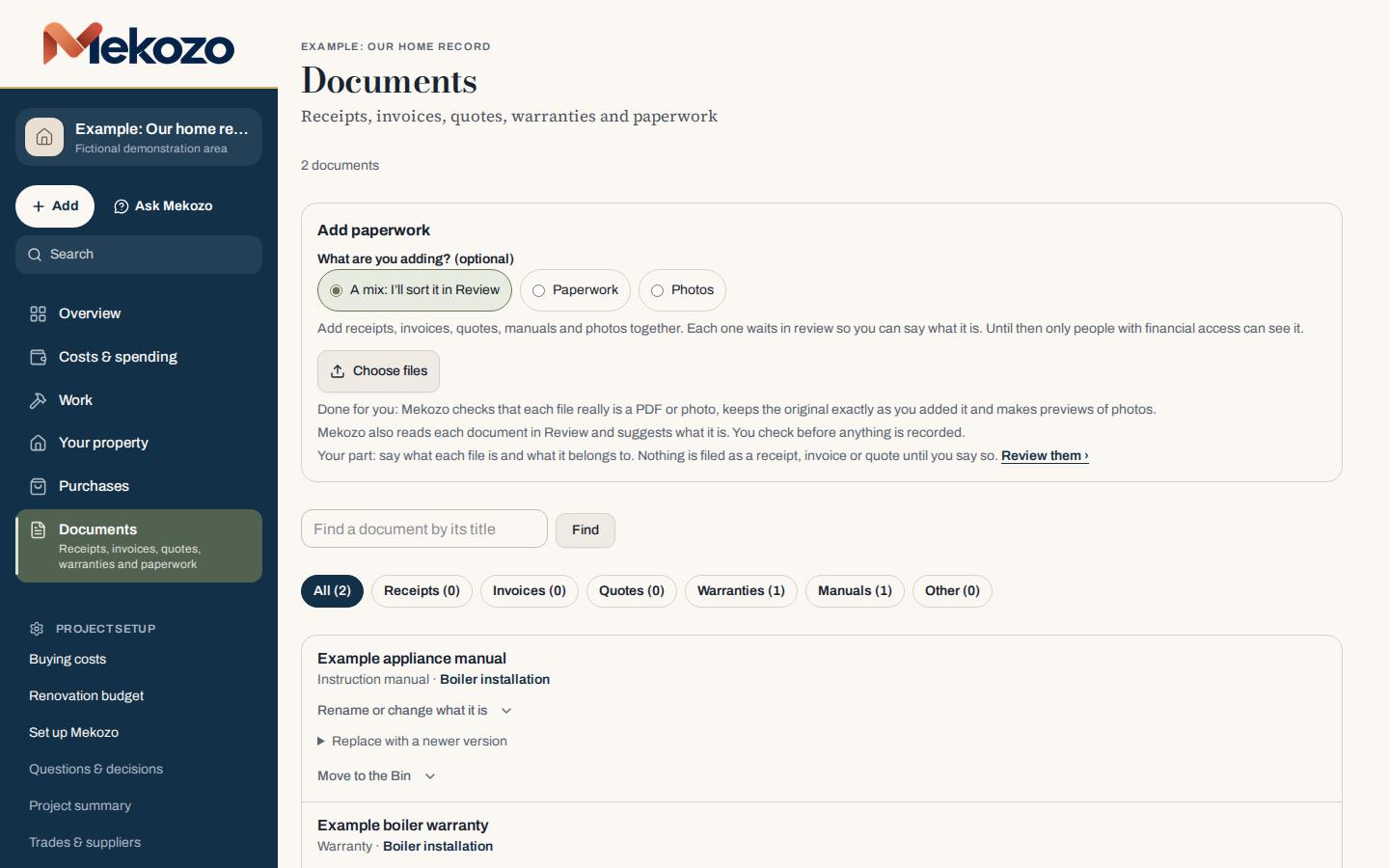
Example home documents with warranty and manual filters and a stored appliance manual
Open full screenshot

“Where is the warranty, and who fitted this?”
Keep the details you will need again with the home they belong to.
Try Mekozo free30 days free. No card needed.
The builders have gone, the boxes are unpacked and the home is yours to live in. This stage lasts the longest of all, and it is the one people plan for least. The manual is somewhere in an email, the warranty is in a drawer and the name of the installer is in an old message. Then the boiler stops working on a cold evening, and all three are needed at once.
Managing a home is about keeping the details you will need again with the home they belong to. That means a record of what is installed where, who did the work and when, what it cost, and where its warranty and manual are. It also means looking ahead: the regular checks and services that keep a home in good order, and the next project you will plan when you are ready.
None of this needs to be done in one go. A home record is built a little at a time, usually at the moments when something is bought, fitted, fixed or serviced.
Not every piece of paper matters. The ones that do are the ones you will need when something goes wrong or when you sell: warranties and guarantees, manuals, receipts for major purchases, certificates for work done, and the details of who did it. Keep each one with the item or room it relates to, so you do not have to search the whole pile.
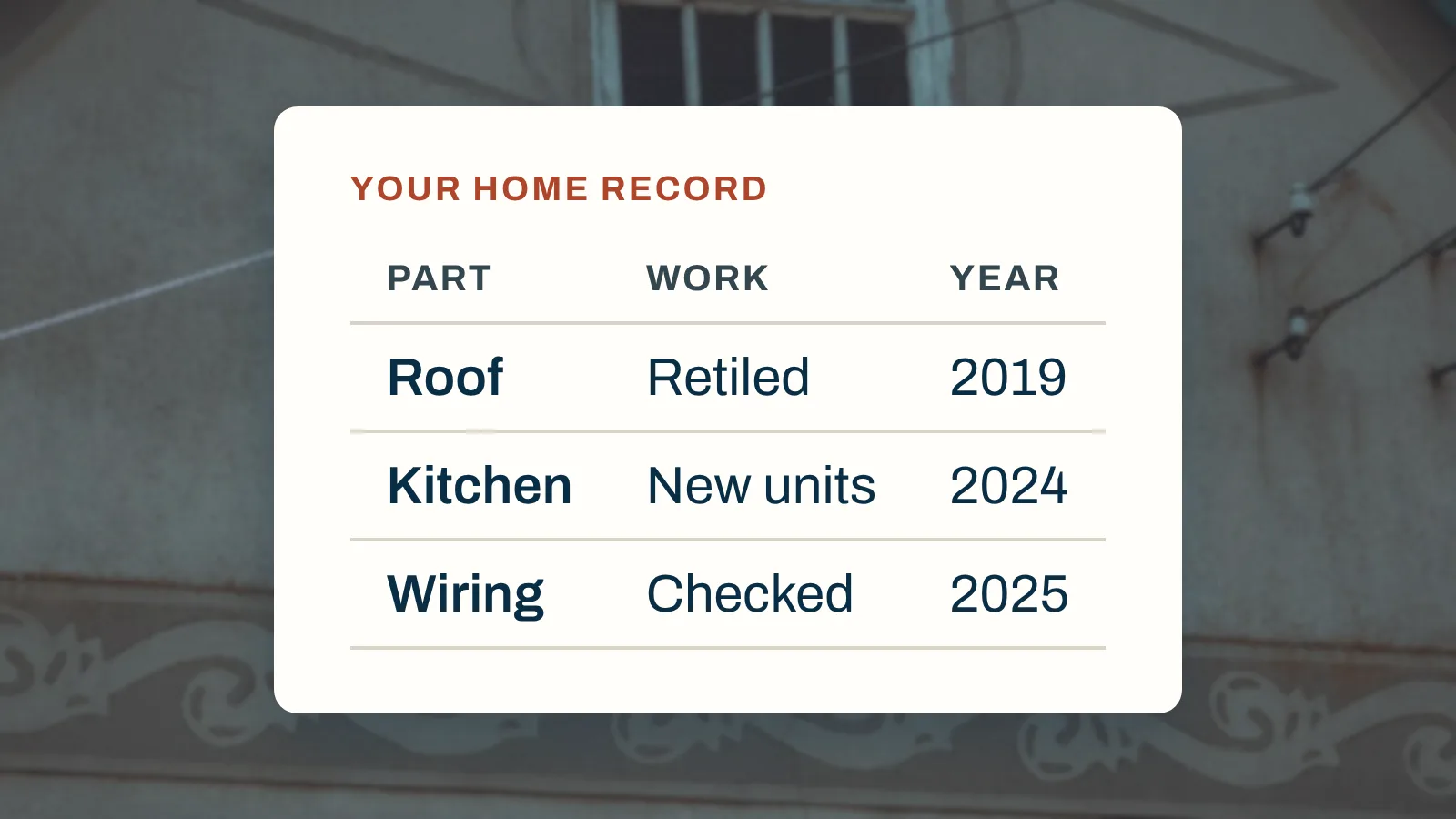
A record of completed work answers the questions that come up later. When was the roof last repaired? Who fitted the kitchen? Was the boiler installed before or after the warranty date? Record finished work as it happens, with the date, the person or company and the cost. Keep work that is only planned or quoted separate, so the record shows what really happened.
Regular maintenance is usually easier to plan for than an emergency repair. Make a simple plan of what needs checking or servicing, and how often, then record each job when it is done. Over a few years, that record becomes a useful history of your home.
Homes need money every year, not only when something breaks. Set aside an amount for maintenance and keep a note of what you actually spend, so next year's figure is based on your home rather than a guess.
Sooner or later there will be another project: a new bathroom, an extension or a garden. Your home record gives the next project useful context. You already know what is there, what it cost and who did it well.
Historic England publishes a practical home maintenance checklist by season, and Citizens Advice explains how to claim using a warranty or guarantee when something you bought fails.
Mekozo keeps a lasting record of your home, built from what you add.
To set it up in Mekozo, follow keep manuals, warranties and home documents together. Planning new work? Go to planning a renovation.
Keep the documents you will need when something goes wrong or when you sell: warranties and guarantees, manuals, receipts for major purchases, certificates for work done and the details of who did it. Your legal adviser can tell you which legal documents to keep where you live.
Keep each one with the item it covers, named so you will recognise it later, such as the product, the supplier and the room. Record when each warranty runs until, so you can check it before you pay for a repair.
It is a list of the checks, services and repairs done on your home, each with the date, who did it and what it cost. It helps you plan the next job and shows a buyer how the home has been looked after.
No. Mekozo keeps a record of your home's work, installations, warranties, manuals and documents. It is not a home inventory for insurance and does not give insurance or legal advice.
Example home documents with warranty and manual filters and a stored appliance manual
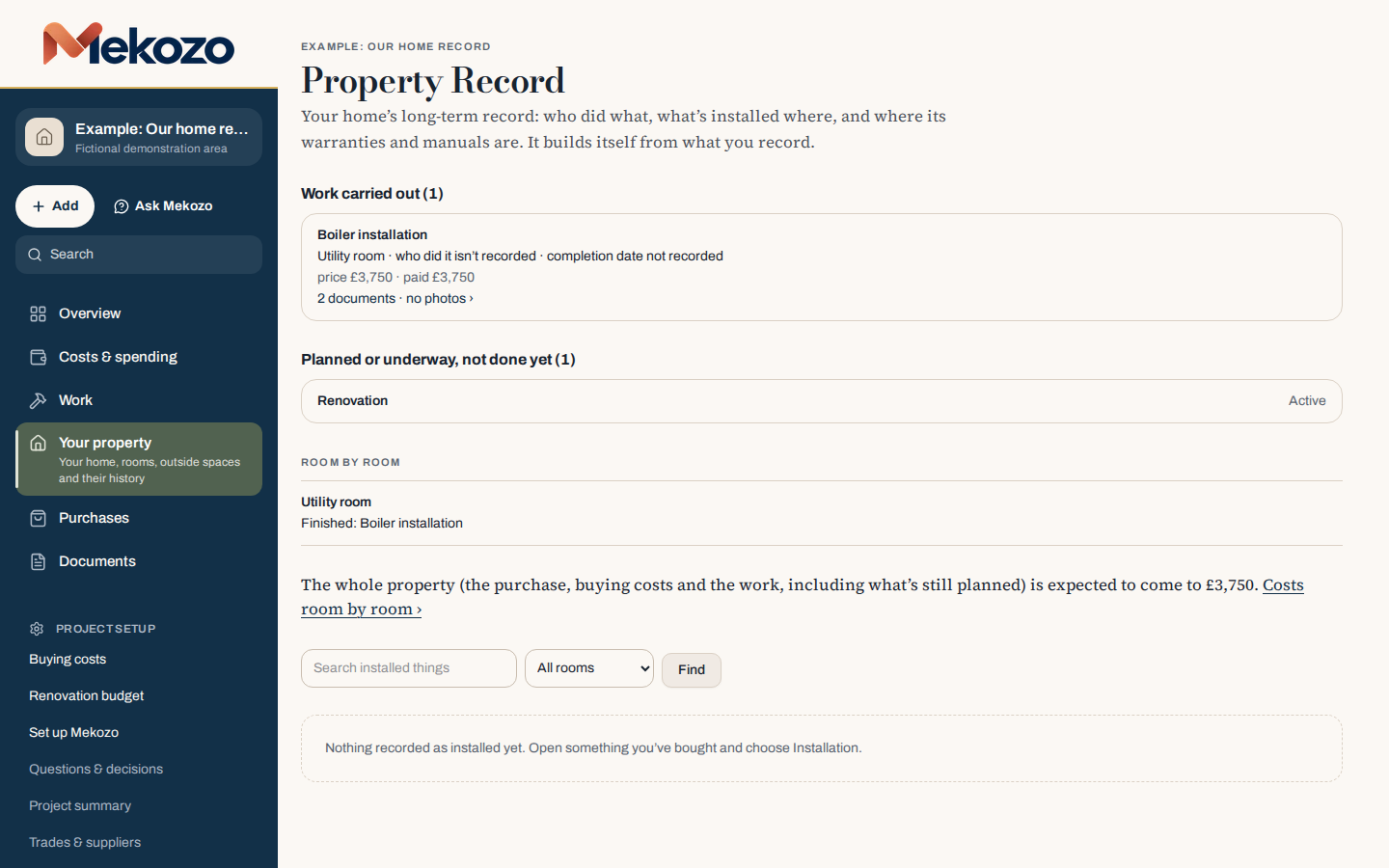
Open full screenshotExample Property Record distinguishes completed boiler installation from a planned annual boiler service
Open full screenshot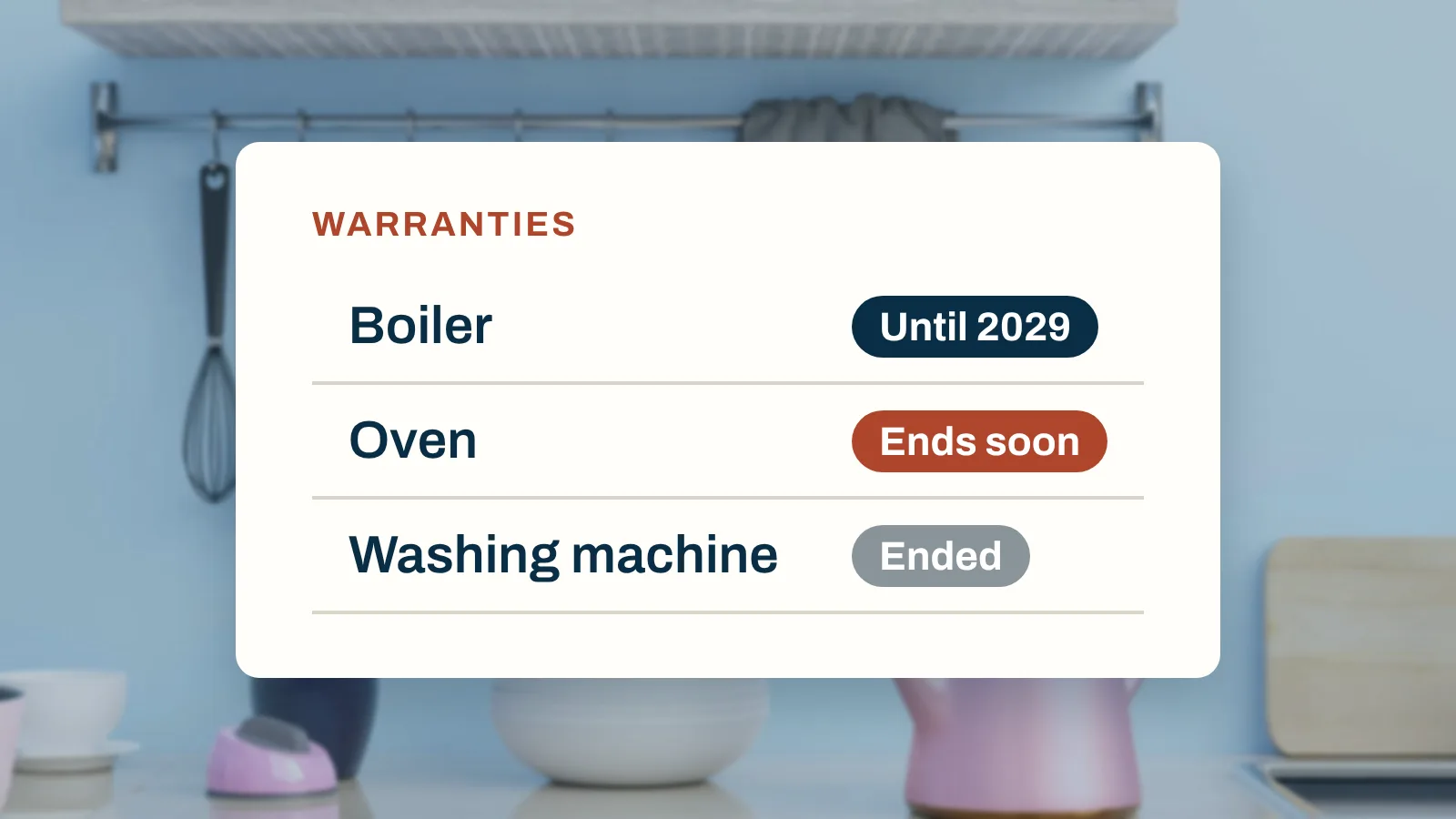
How to find a lost appliance manual, what to keep for a warranty claim, and a simple way to file every manual and warranty with the item it covers, so the next breakdown starts with the paperwork to hand.

A home maintenance log is the dated record of every check, service and repair your home has had. What to record for each job, a layout to copy, and why buyers, their solicitors and warranties all care about it.
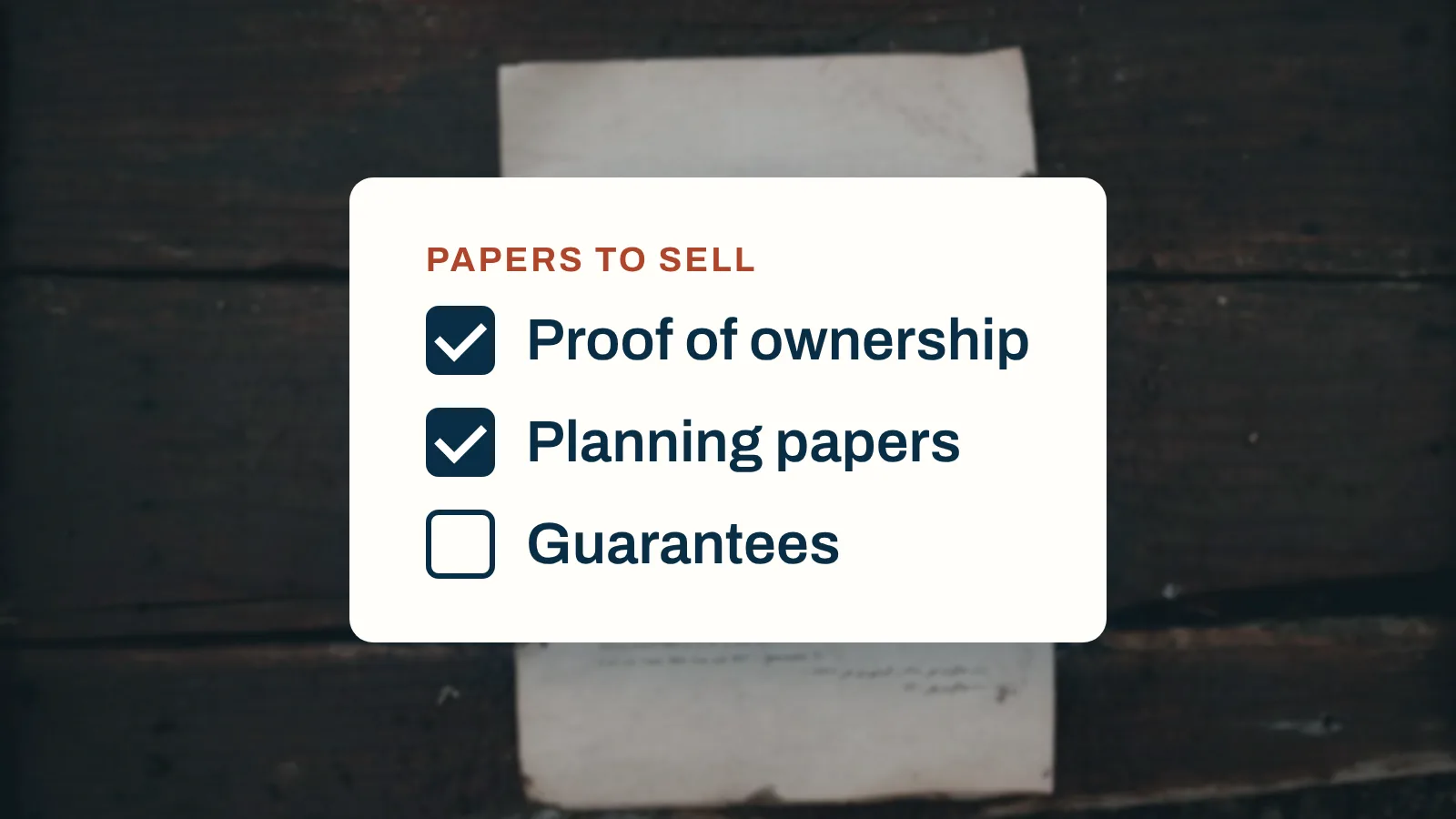
The documents you need to sell a house, from proof of ownership and the energy certificate to the certificates, guarantees and records of work that answer a buyer's questions, with country rules in labelled boxes.
A step by step method for tracing the history of your house, from the title register and old maps to census returns, local archives and planning files, and a way to keep what you find.
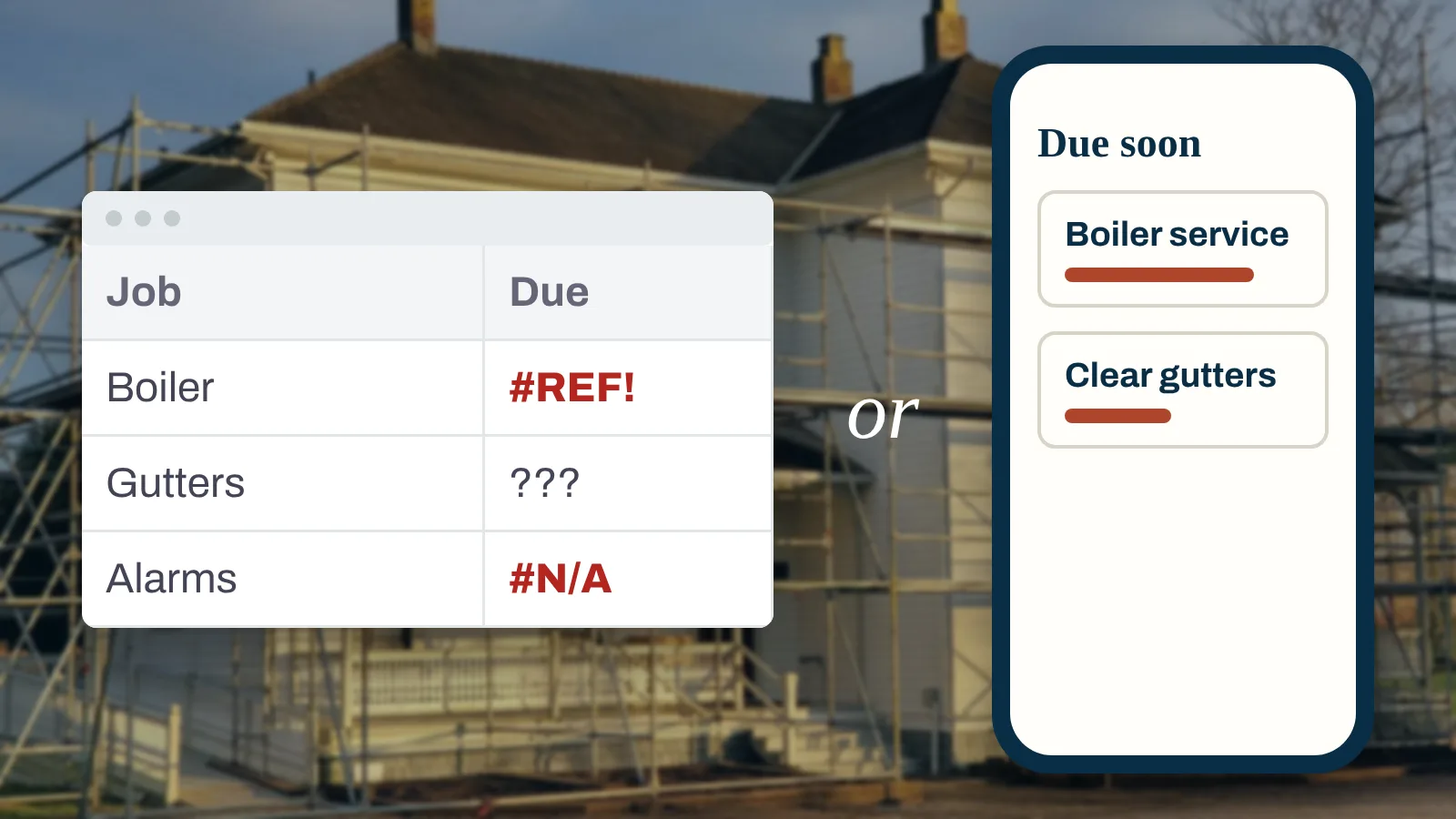
A spreadsheet and a home maintenance app can both keep track of your house, if they record the right things. Here is what to track, a spreadsheet layout to copy, what a good app should do, and how to choose.

There is no single register of build dates, so finding out when your house was built means piecing together paperwork, records, maps and the building itself. Ten places to look, in order.
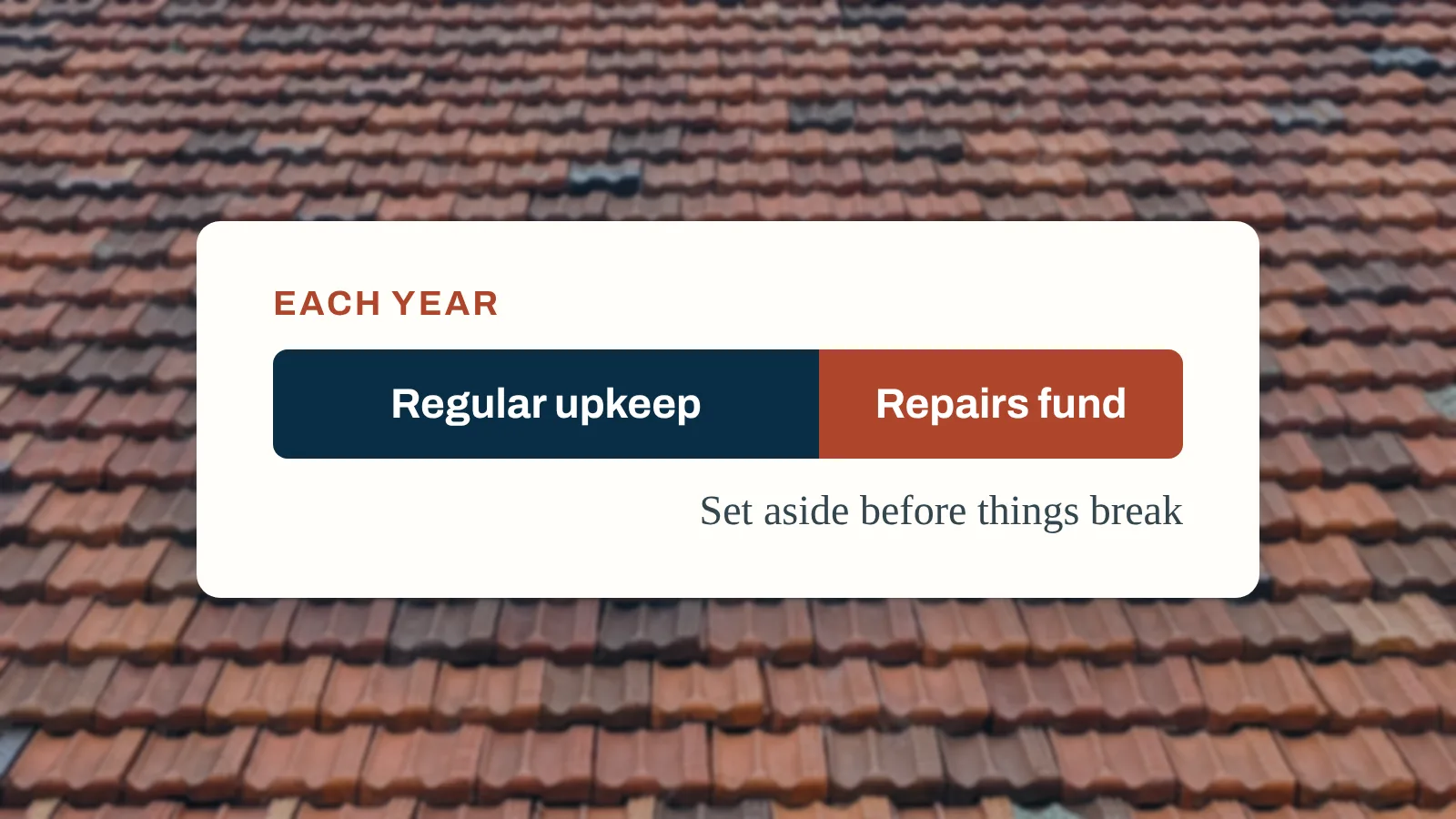
There is no single right figure for home maintenance. Build the budget from your own house in three parts: regular servicing, an allowance for small repairs and a fund for the big replacements, checked against named UK prices.
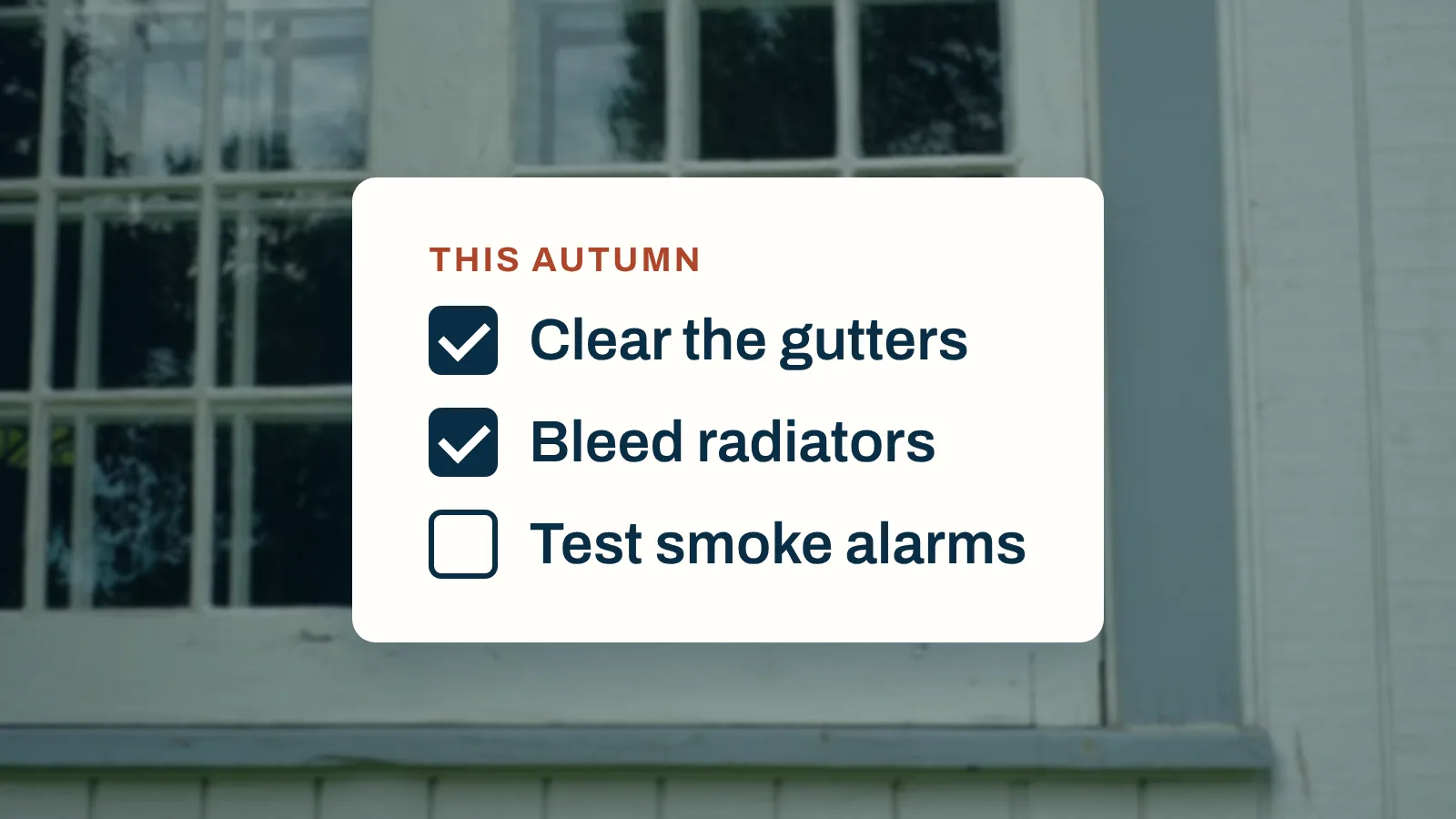
A practical home maintenance schedule: what to check every month, every season, every year and every few years, with the UK guidance behind each check and how to keep a record of it.
What goes in a home file, how to organise it so you can find things fast, and which documents matter most when you repair, claim or sell.
Budgets, quotes, payments, documents and decisions in one place
30 days free. No card needed.
Monthly, with no annual plan. The Terms of membership set out the details.