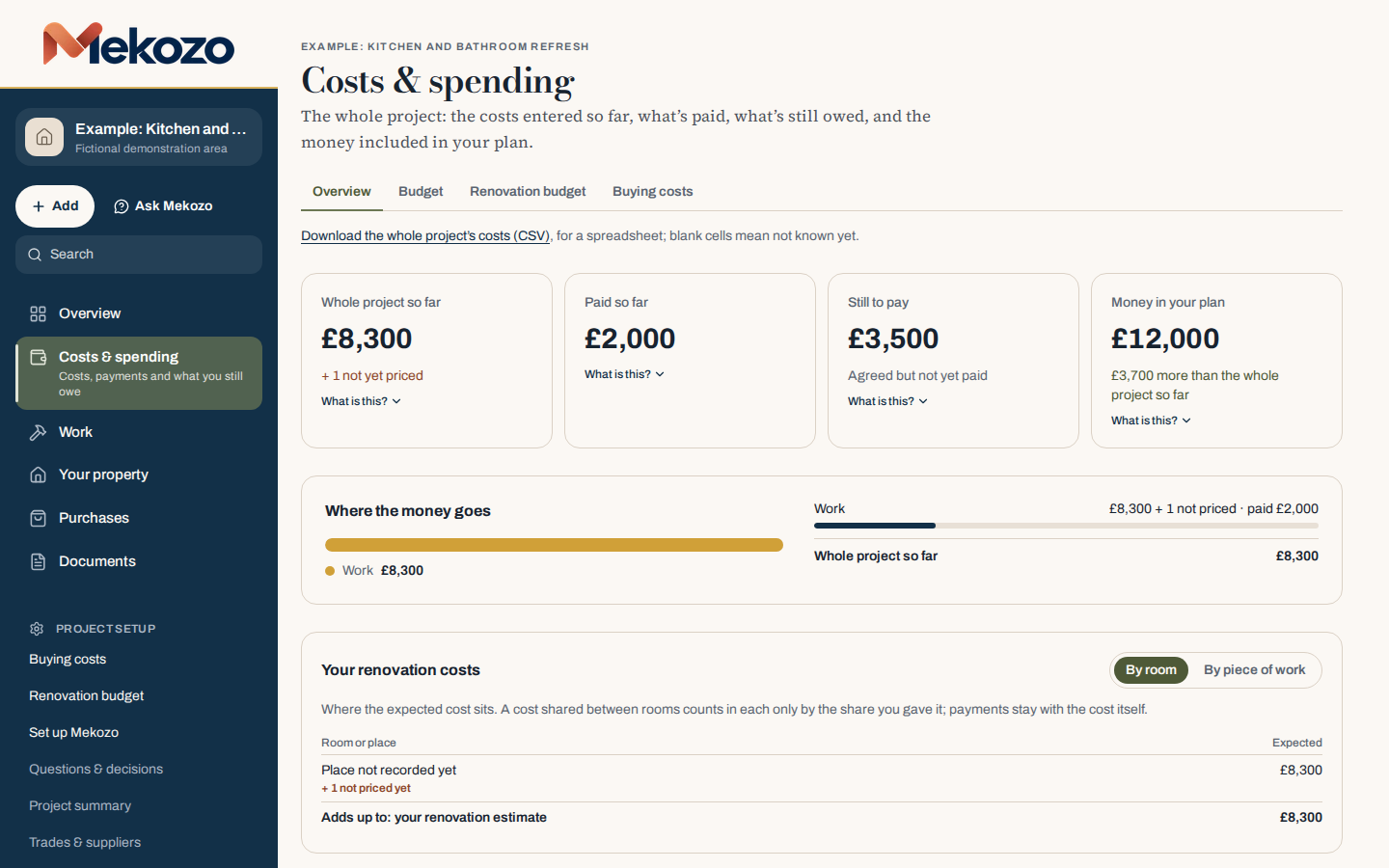
Estimates, committed costs, paid and outstanding amounts
Example renovation finance: estimates, paid amounts and agreed costs still to pay
Open full screenshot

“What have we agreed to spend, and what is still left to pay?”
Bring changes and payments back into view.
Try Mekozo free30 days free. No card needed.
Once the work starts, the plan meets the building site. A delivery changes, a quote becomes an invoice and another payment is due. A wall comes down and reveals something nobody expected. Decisions that were weeks away suddenly need an answer by tomorrow.
This stage runs from the first day on site to the final payment. The work is mostly keeping track: what you have agreed to, what has been done, what has been paid and what is still to pay. You need to know what changed and what still needs attention, without rebuilding a spreadsheet every evening.
It is also the stage where small gaps become expensive. An extra agreed on site and never written down, an invoice paid twice, a deposit that was never recorded: each one makes it harder to say where the money has gone. The habit that helps most is simple. Record each thing when it happens, against the job it belongs to.
A quote is a forecast. An accepted quote is a commitment. An invoice is a bill, and a payment is money that has left your account. Keep those apart for every job. The figure that matters most while work is underway is what you have agreed but not yet paid, because that is money you genuinely owe. A paid amount and the total cost tell different stories.
Most builders are paid in stages: a deposit, payments as work reaches agreed points, and a final payment at the end. Agree the stages in writing before the work starts, pay against work that is done, and keep the final payment until the job is finished and checked. Record each payment against the job it belongs to, with the date and a reference.
Almost every renovation changes as it goes. A change is not a problem in itself; an unpriced change is. Before any extra work goes ahead, agree what it is, what it costs and how it affects the timing, and write it down. Then update the agreed price so your figures stay true.
Materials, fittings and appliances have their own lifecycle: considered, ordered, delivered, installed and paid. They do not always happen in that order. Keep track of each one so you know what has arrived, what is still on order and what has been paid for.
At the end, walk through every room and write down what still needs doing or fixing. Agree a date for each item with the builder and check it off when it is done. Keep the warranties, manuals and certificates that come with the finished work, because the next person who needs them will probably be you.
If the work goes wrong, Citizens Advice explains your rights when there is a problem with home improvements, and GOV.UK covers building regulations approval for the work being done.
Mekozo keeps the money, the paperwork and the progress of the work in one place.
Already part way through? Use Add earlier information to catch up: bring in what has happened so far, then manage what comes next.
You can follow a renovation as it happens on Operation Sicily, where Jonathan Smith filmed the renovation of the villa in Sicily that Mekozo was built for.
To set it up in Mekozo, follow understand estimated, agreed, paid and still to pay and keep manuals, warranties and home documents together. Still planning? Go back to planning a renovation. Finished? Carry on to managing your home.
Record every job with its agreed price, then record each payment against it as you pay. Keep estimates and quotes separate from what you have agreed, so what you still owe is always clear.
Agree a payment schedule in writing before work starts, with a deposit and stage payments tied to work that is done. Keep the final payment until the work is finished and the snagging list is closed.
Agree each extra in writing before it is done: what it is, what it costs and how it changes the timing. Then update the agreed price, so your budget reflects what you have actually committed to.
No. In Mekozo, use Add earlier information to bring in your receipts, invoices and payments so far. A rough figure for what you have already paid is fine; you can refine it as you sort the paperwork.
Example renovation finance: estimates, paid amounts and agreed costs still to pay
Open full screenshot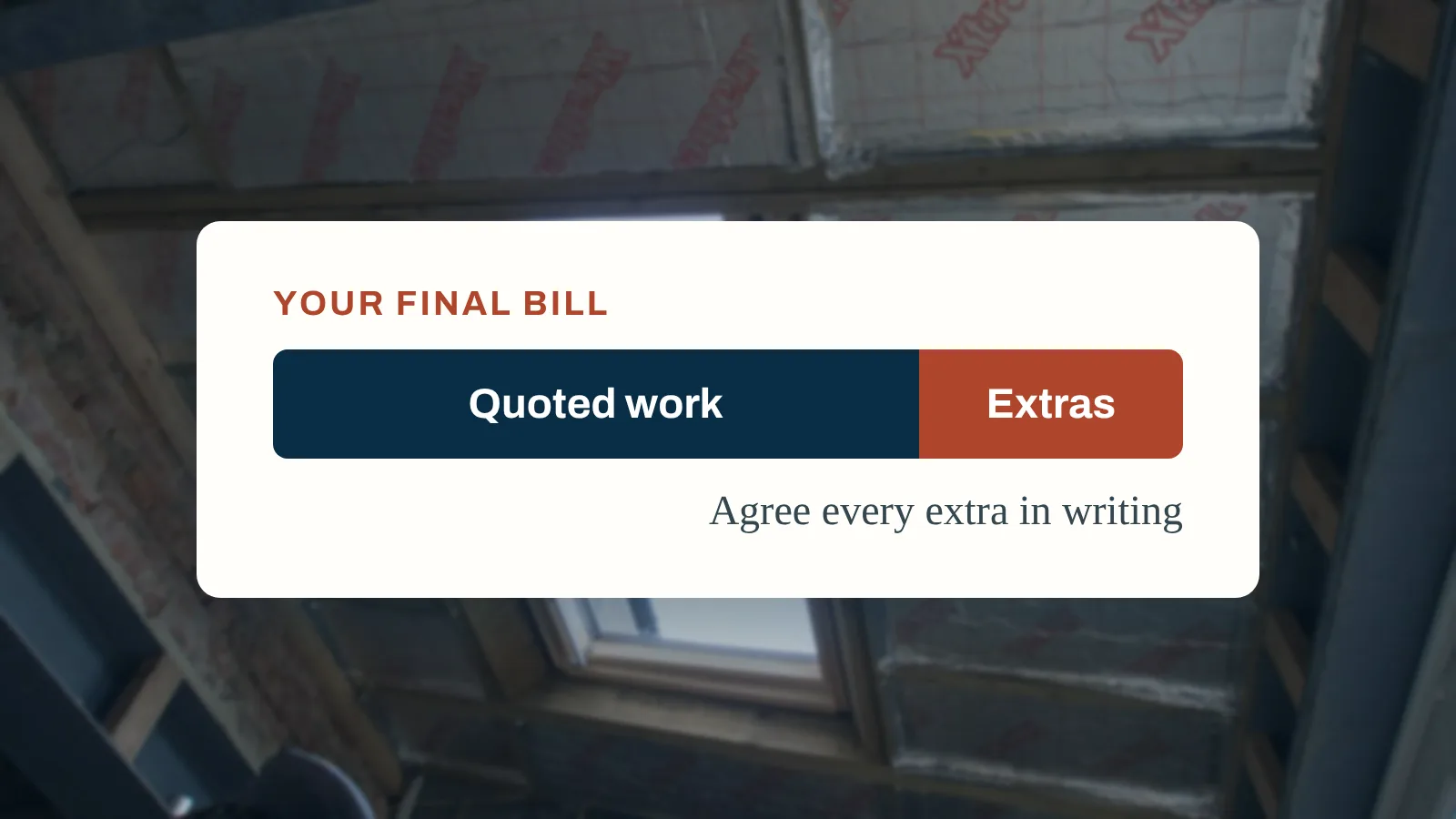
Changes and extras are where renovation budgets drift. What a variation is, the four kinds of change, a five step way to agree each one before the work, and a change log you can copy.

Where to find builders worth calling, how to check they are who they say they are, and the questions to ask before you hire, with what a good answer sounds like.
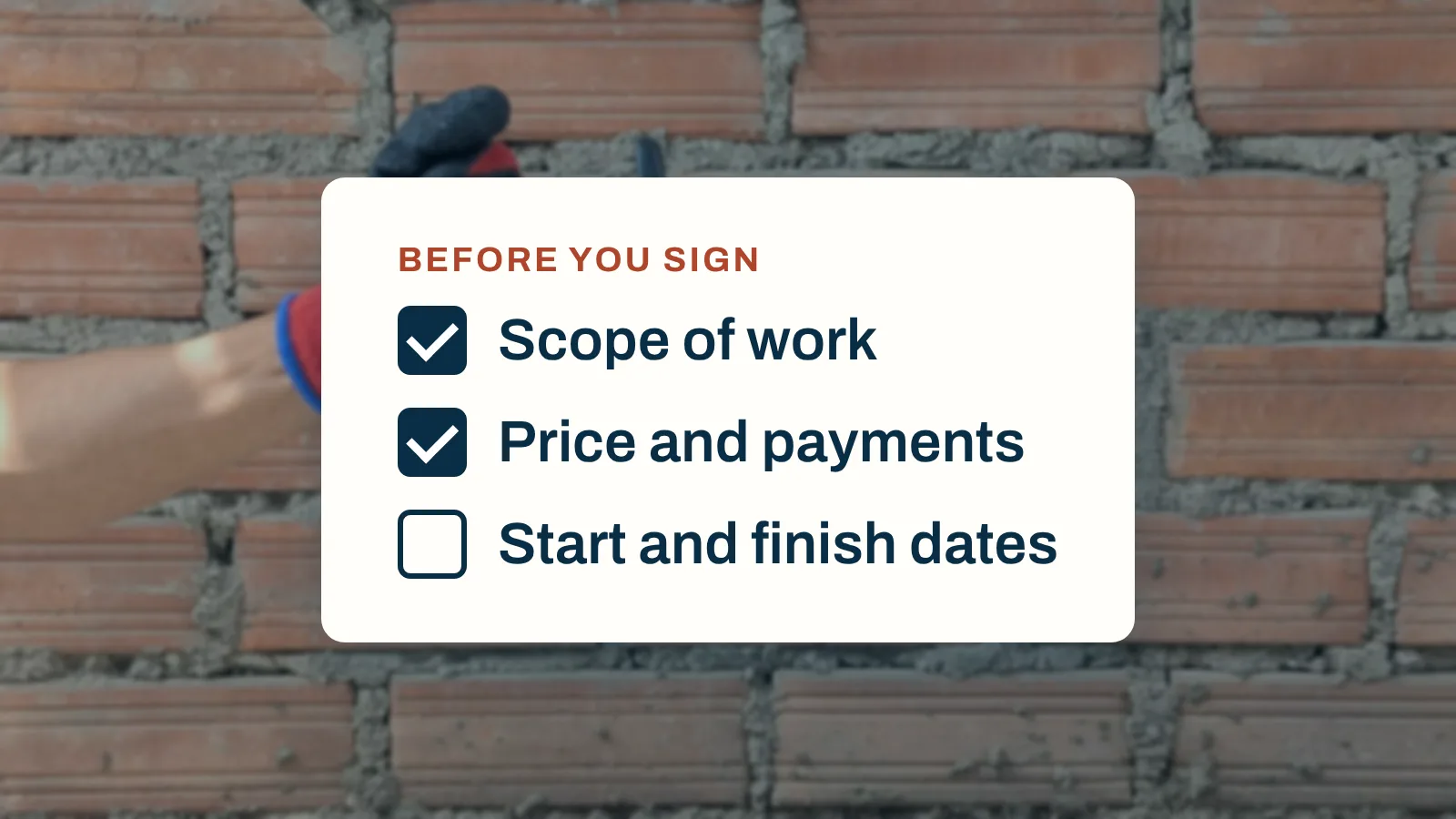
A written agreement with your builder does not need legal language. It needs the work, the price, the dates, the payments, how changes are handled and what happens at the end. Here is what to put in it.

Renovating a house you cannot visit every day takes a different kind of planning. The local team, written briefs, photo routines, payments and travel costs, with lessons from a villa renovated between the UK and Sicily.
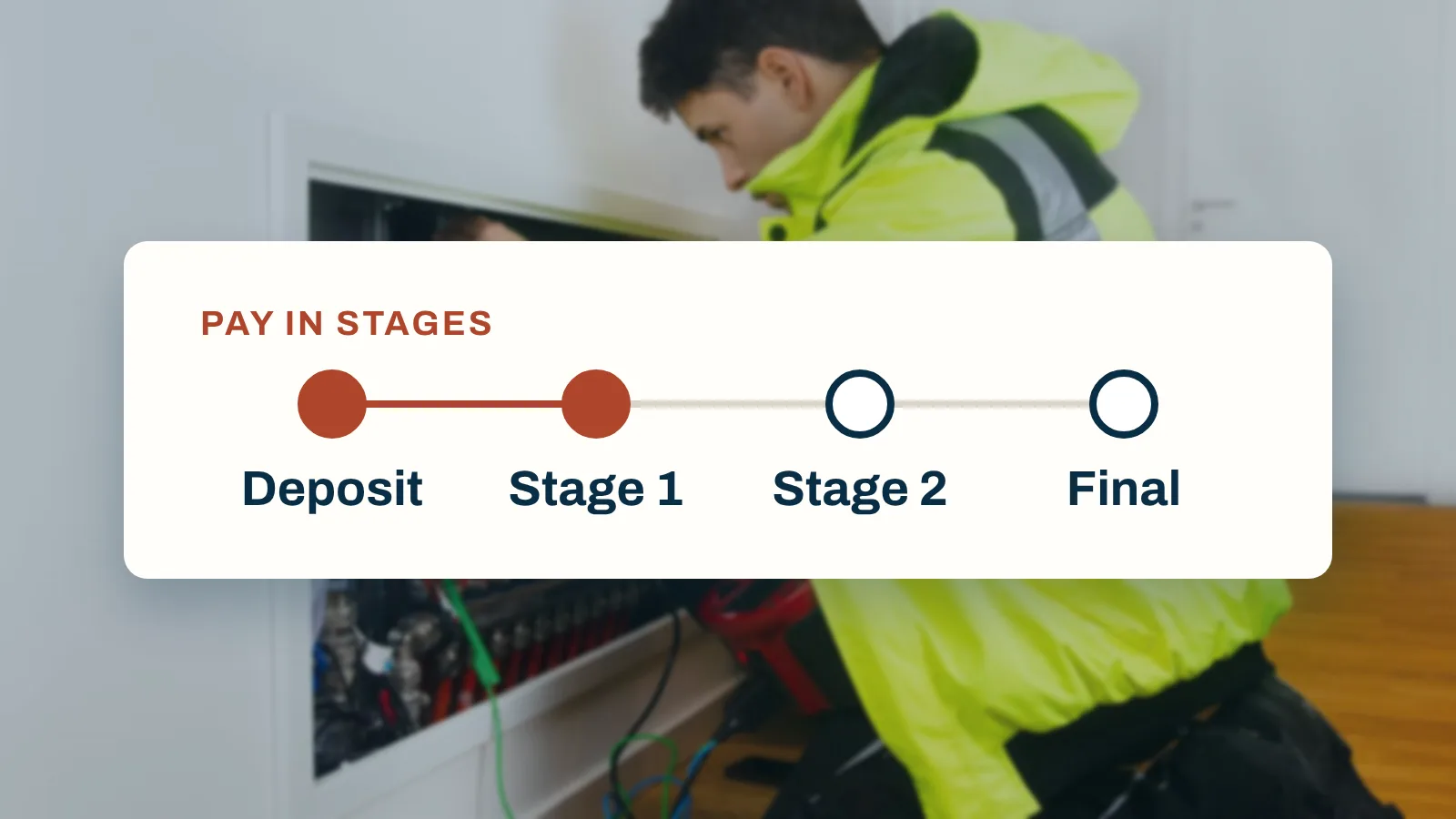
A good payment schedule keeps your money roughly level with the work done. How to set the deposit, the stages and the final payment, how to pay safely, and what to record each time.

A simple system for renovation paperwork: capture every receipt and invoice the day it arrives, file it against the job it belongs to, check it, and keep what you will need later.

Before and after photos are more than a reveal. How to take matching shots room by room, what to record while the walls are open, and how the photos help with snags, neighbours, claims and a sale.
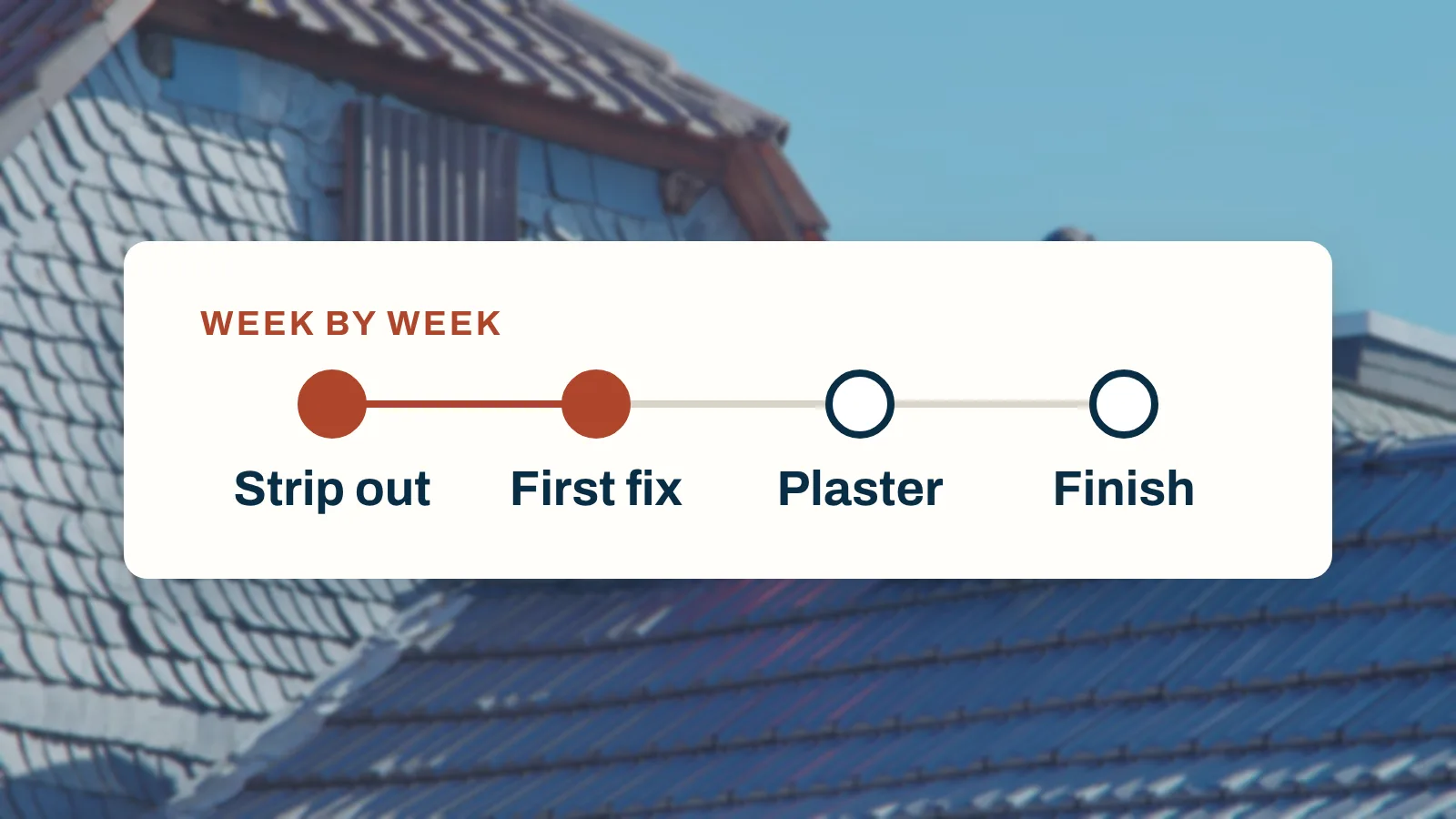
A renovation schedule is more than a list of dates. How to build one from the jobs, their dependencies, lead times and decision dates, and how to keep it on track when something slips.

A snagging list (a punch list) records every defect left at the end of a job. How to write one room by room, agree it with your builder and close it before the last payment.
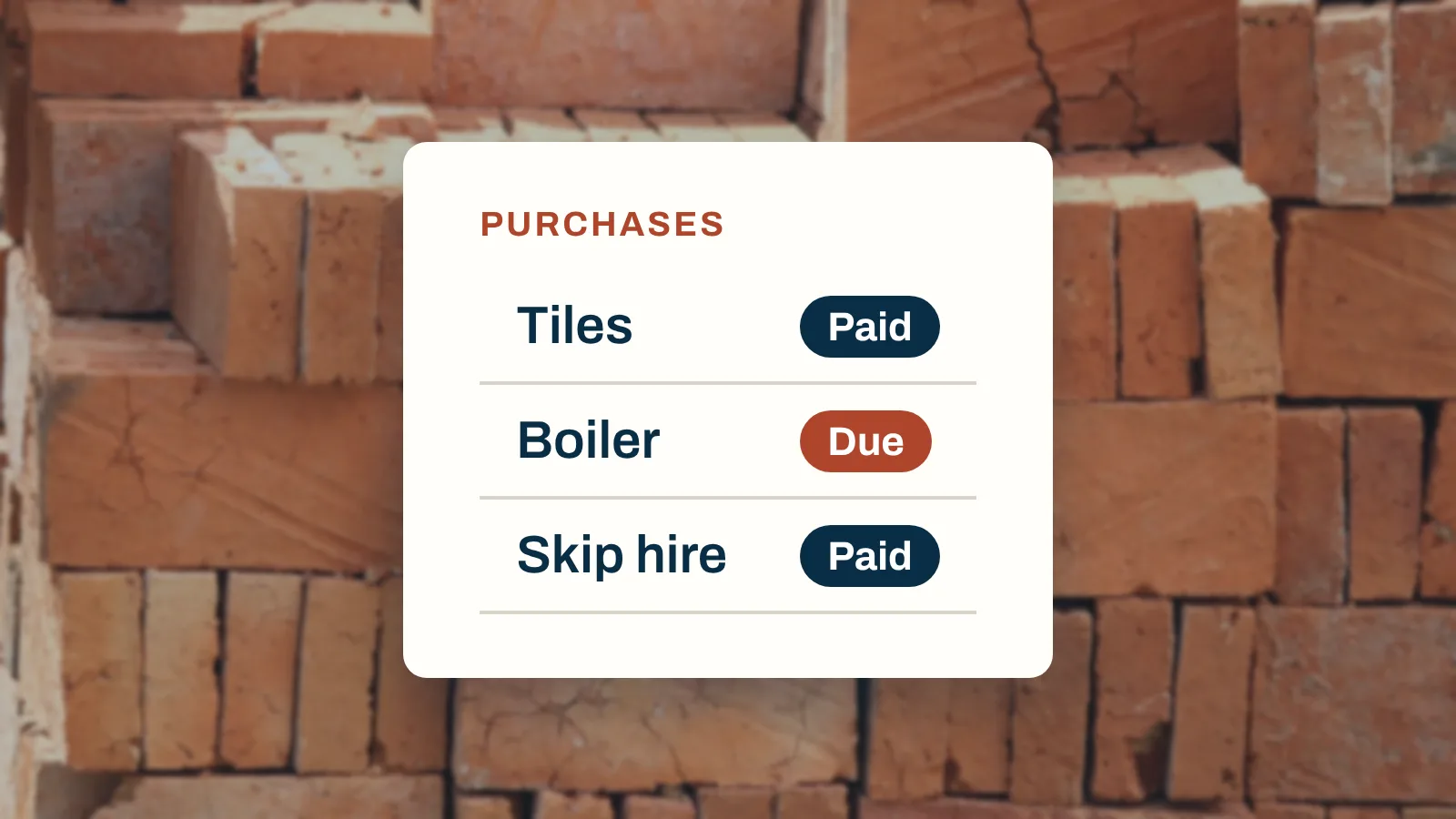
Agreed, invoiced, paid and delivered are four different facts. Here is how to track renovation spending so each one stays visible.
Budgets, quotes, payments, documents and decisions in one place
30 days free. No card needed.
Monthly, with no annual plan. The Terms of membership set out the details.