Managing your home
When was my house built? How to find out
There is no single register of build dates, so finding out when your house was built means piecing together paperwork, records, maps and the building itself. Ten places to look, in order.


A step by step method for tracing the history of your house, from the title register and old maps to census returns, local archives and planning files, and a way to keep what you find.
To find the history of your house, start with the papers you already hold and the title register, then work outwards: old maps, census returns and the 1939 Register, electoral registers, building plans and planning files at your local archive and council, listing records, and the memories of neighbours. Record each finding with its source and date.
This guide takes you through those sources in a sensible order, explains what each one can and cannot tell you, and shows how to keep the history with the rest of your home's records.
A house history is more than curiosity. It explains why a wall is thicker than the others, why the garden slopes, or why one room never feels warm. It tells you which parts are original and which were added, which matters when you plan work: older materials and methods often need different repairs. It can show what was approved by the council and what was not. And when you sell, a clear, sourced history with its documents is part of what buyers and their conveyancers ask about.
The National Archives says the best place to start searching for the history of the ownership and construction of a house is the local archive for the area, which typically holds local maps, electoral registers and family and estate papers. Before you visit, gather what you already have so you know what to look for.
| Source | What it can tell you | Where to find it |
|---|---|---|
| Your deeds and papers | Past owners, sales, covenants, plans | Your own files, your conveyancer or lender |
| Title register | Current owner, last sale price, rights and restrictions | HM Land Registry (England and Wales) |
| Listing records | Date and features of listed buildings | National Heritage List for England |
| Old maps | When the house first appears and how the plot changed | Local archive; tithe maps at The National Archives |
| Census and 1939 Register | Who lived at the address on a given date | The National Archives |
| Electoral registers | Occupants year by year | Local archive or library |
| Building plans | How the house looked when new | Local archive, from the mid-19th century |
| Planning files | Extensions, conversions and alterations | Your local council |
| Neighbours and local history | Memories, photographs, stories | People nearby, local history groups |
Look through everything handed over when you bought: the contract pack, the property information form, any guarantees and certificates, and anything left in the house. Old letters, receipts and photographs found in lofts and cupboards can date work and name people. Note each item, its date and what it shows.
Watch out
The National Archives notes there is no legal obligation to hold evidence of title for more than 30 years, under the Law of Property Act 1925, so older deeds may not have survived. Do not assume the history starts where your papers do.
In the UK (England and Wales)
GOV.UK lets you search HM Land Registry for any property, even one you do not own. The property summary is free; the title register and the title plan cost £7 each. The title register usually shows who owns the property and how much it was last sold for, and contains information previously included in old paper deeds. Scotland and Northern Ireland have their own land registers.
The register tells you about the land and its current ownership, not the building's whole story. HM Land Registry's own blog, How old is my house?, says its records centre on land ownership rather than the buildings on it, and suggests local archives, census returns and listing records for the age of older homes. If your question is mainly "how old is it?", our guide to finding out when your house was built goes into that in more detail.
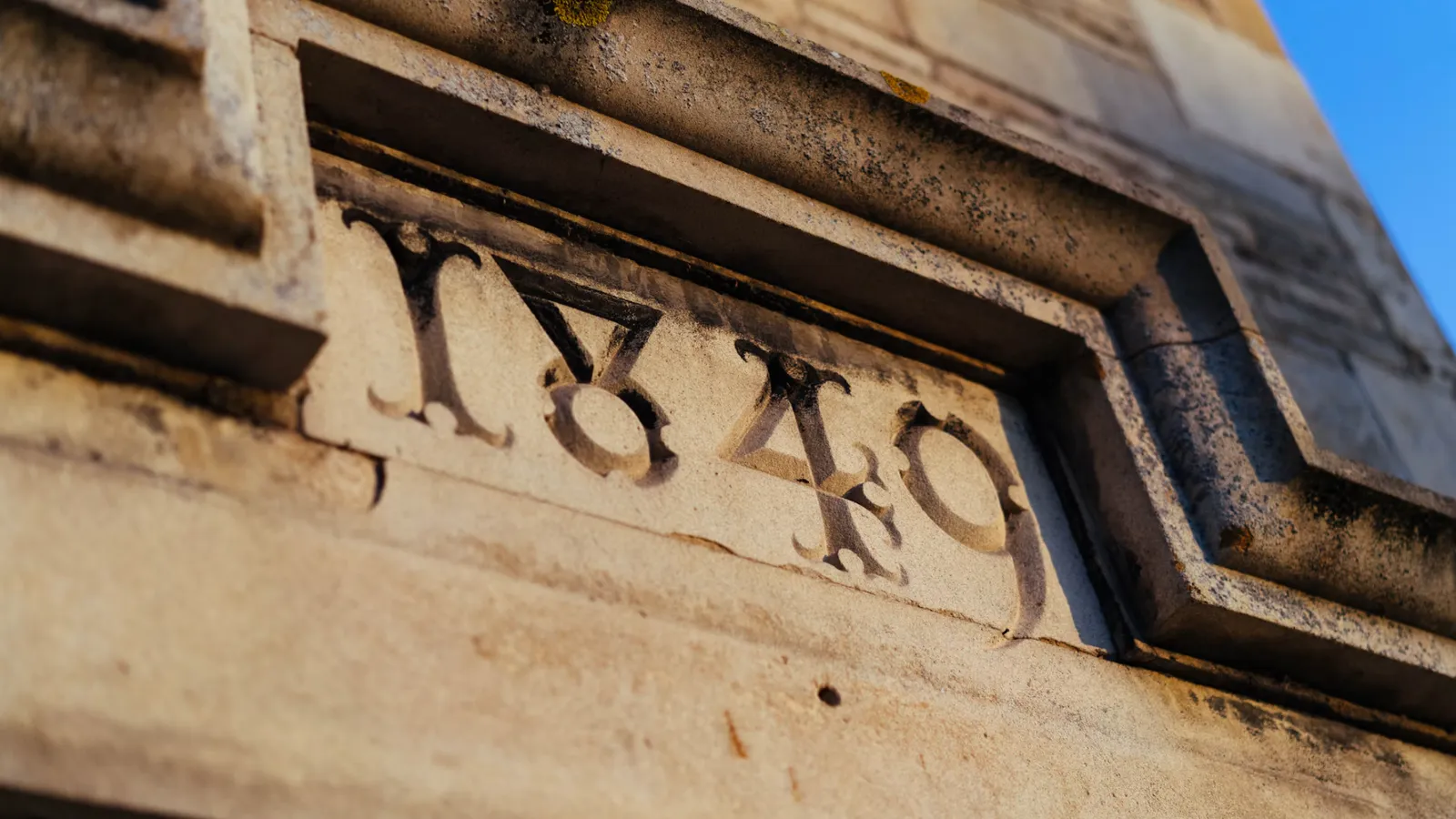
Historic England says the National Heritage List for England records a brief overview of the date of construction and significant features of every listed building in England, and calls it a great place to start. If your house is listed, its entry may also include photographs and stories contributed by the public. In Wales, listed buildings are recorded by Cadw. If the house is not listed, Historic England suggests looking for visual clues such as date plaques or carvings, talking to neighbours and reading the history of your area.
Maps from different dates show when your house first appears, how the plot was divided and what stood there before.
Tip
Photograph or save each map with its date and source in the file name. Months later, "map-1898-local-archive.jpg" is far more useful than "IMG_4471".
The National Archives' own online records can show who occupied a house on a specific date:
Between those dates, electoral registers at your local archive or library fill in the occupants year by year. Historic England's guide also points to title deeds and other archive material for tracing people.
Watch out
House numbers and street names change. If an address search finds nothing, look for the house by its position on the street in a map of the same date, or by a house name.
The National Archives says many local archives hold building plans from the mid-19th century, showing how buildings might have looked when new. For more recent changes, search your council's planning register by address: it lists applications and decisions, and often the drawings, for extensions, loft conversions and other alterations.
The planning history is the most practical part of a house's story. It tells you what was approved, when, and sometimes who designed it. Gaps matter too: a large extension with no planning record is a question to answer before you plan more work or sell. Our guide to renovating an old house covers what to check before you start work on an older property.
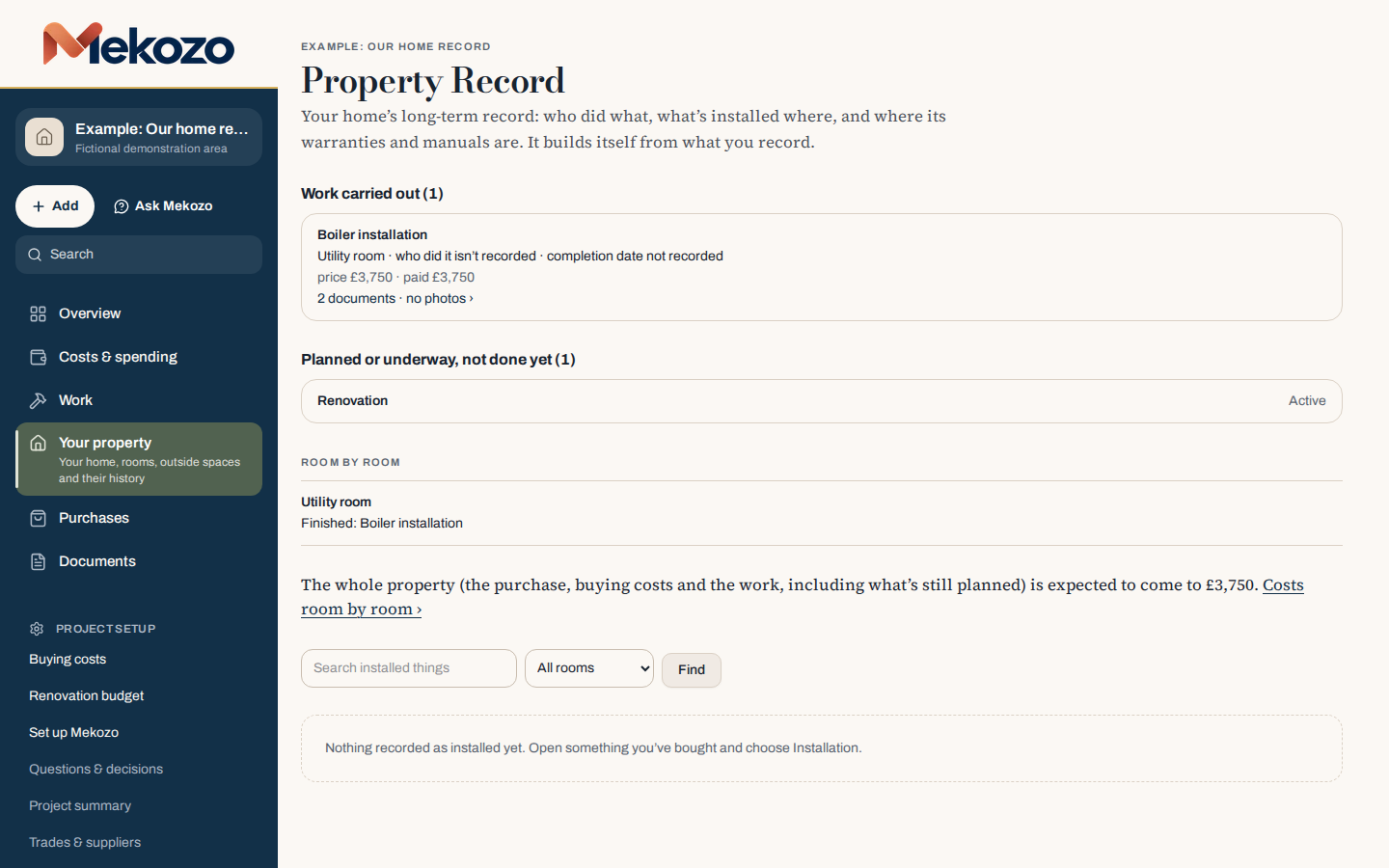
Mekozo's Property Record keeps your home's long-term record: what was done, what is installed where, and the documents connected to each entry.
Try it free for 30 days, no card neededA house history is only useful if you can find it again. For each discovery, write down:
Then add the history to the rest of your home's records: guarantees, certificates, manuals and the jobs you have had done since moving in. Our guide to keeping a useful home record shows how to organise them, and when you come to sell, our guide to the documents needed to sell a house explains which ones buyers ask for.
Neighbours, local history societies and long-standing residents often know things no archive holds: what was there before, who built it, when the porch went on. Ask for photographs. Note who told you what and when, and treat it like any other source: useful, sometimes wrong, and worth checking against the records.
On the Operation Sicily villa
From the villa in Sicily. Jonathan Smith, Mekozo's founder, is piecing together the history of his villa in western Sicily in exactly this way. The villa history page on Operation Sicily, where he films the renovation, sets out what is confirmed and what is not. From local records and conversations with neighbours, the villa was built in the late 1960s by a Sicilian farming family, fell silent in the 1990s and sat untouched for more than two decades before Jonathan bought it in 2024 for €21,500. The clear-out turned up letters, certificates and legal documents, including the papers of a teacher born in 1899, which Jonathan is translating and comparing with the municipal archive. There are also papers relating to an Italian building amnesty, covered in Episode 11, which he has deliberately left undated until they are checked against the full property file. Room measurements in the later records match what the renovation has uncovered, and an elderly neighbour remembers when the plots were open fields. Every finding is kept with its source, and anything unproven is labelled as such.
Playing loads YouTube’s external player.
Watch directly on YouTube ↗For more on looking after your home's paperwork, see our guide to looking after a home and its records and our home maintenance checklist. Mekozo can keep a property's history with its documents and photos, each finding with its source; see how to keep manuals, warranties and home documents together.
This guide explains a research method. It is not legal advice; for questions about ownership, boundaries or planning status, ask a conveyancer or your local council.
Start with your own deeds and papers, ask neighbours and look for date stones or plaques. Check whether the house is listed on the National Heritage List for England, which records a brief overview of the date and features of every listed building in England. Local archives and libraries often let you view maps, electoral registers and building plans free of charge.
Search the census by address for the years 1841 to 1921, and the 1939 Register taken on 29 September 1939, through The National Archives. Electoral registers at your local archive or library fill in the years between. The title register shows only the current owner, so earlier owners usually come from deeds and archive records.
Ask your conveyancer or lender whether they hold any, and check the papers you received when you bought. The National Archives notes there is no legal obligation to keep evidence of title for more than 30 years, so older deeds may not have survived. Some end up in local archives.
Your local archive holds local maps, and The National Archives holds tithe maps and apportionments from 1836, which show whether a property existed at the time. Historic England suggests using old maps, plans and photographs to trace how a house has changed; compare maps from different dates to see when yours first appears.
Search your local council's planning register by address. It lists applications, decisions and often the drawings for extensions, conversions and alterations. Building control records may also be held by the council, and certificates for work done should be in the papers handed over when you bought.
No. A house's history is spread across the land register, archives, the census, maps, council records and the memories of people nearby. The quickest route is to work through those sources in order and record what each one tells you.
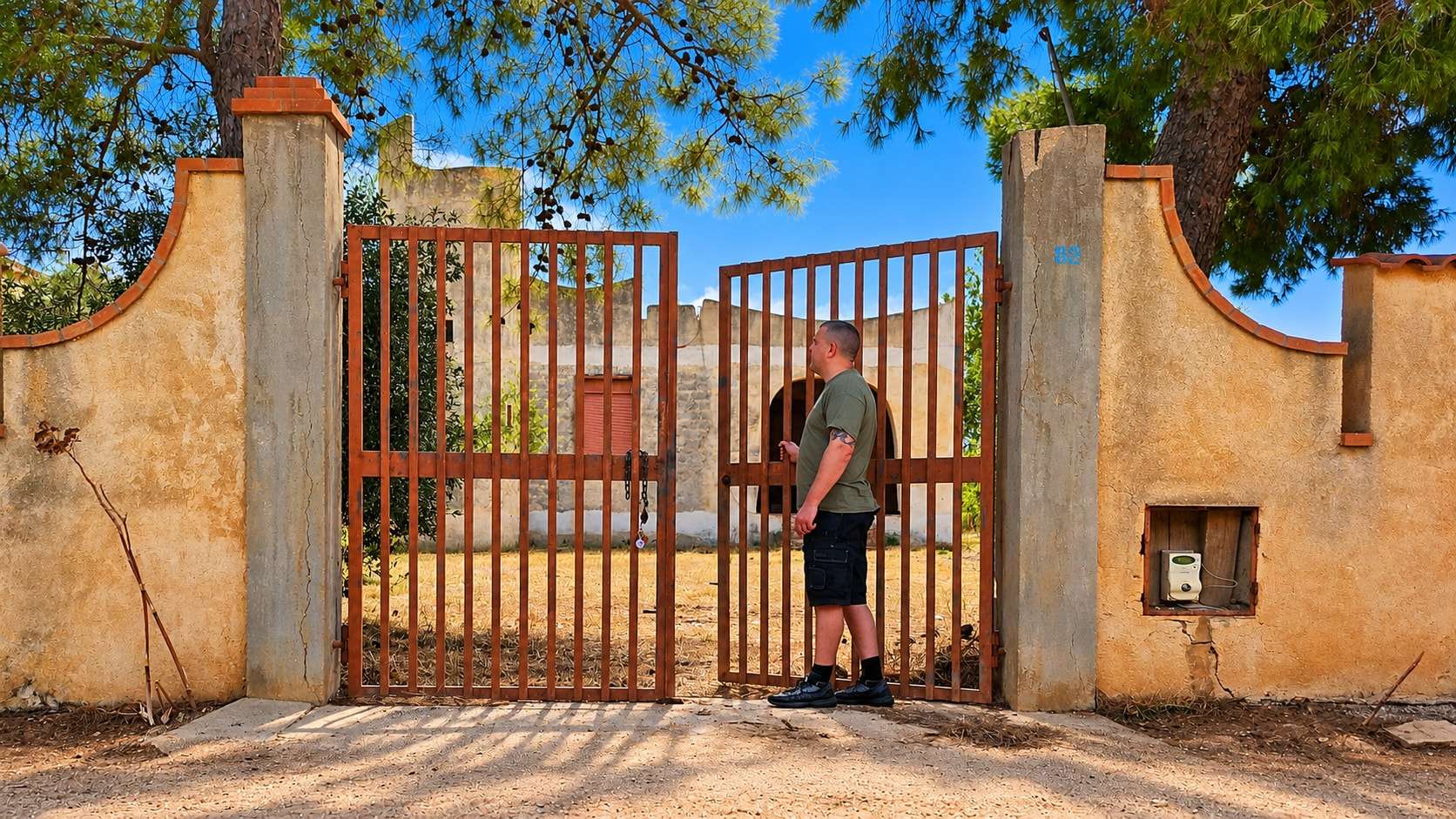
Jonathan Smith is the founder of Mekozo and Operation Sicily. Jonathan bought an abandoned villa in Sicily and is rebuilding it on camera, every week. Mekozo is the app Jonathan built to keep that renovation's money in one picture.
Real renovation experience and regional guidance from Operation Sicily.
There is no single register of build dates, so finding out when your house was built means piecing together paperwork, records, maps and the building itself. Ten places to look, in order.
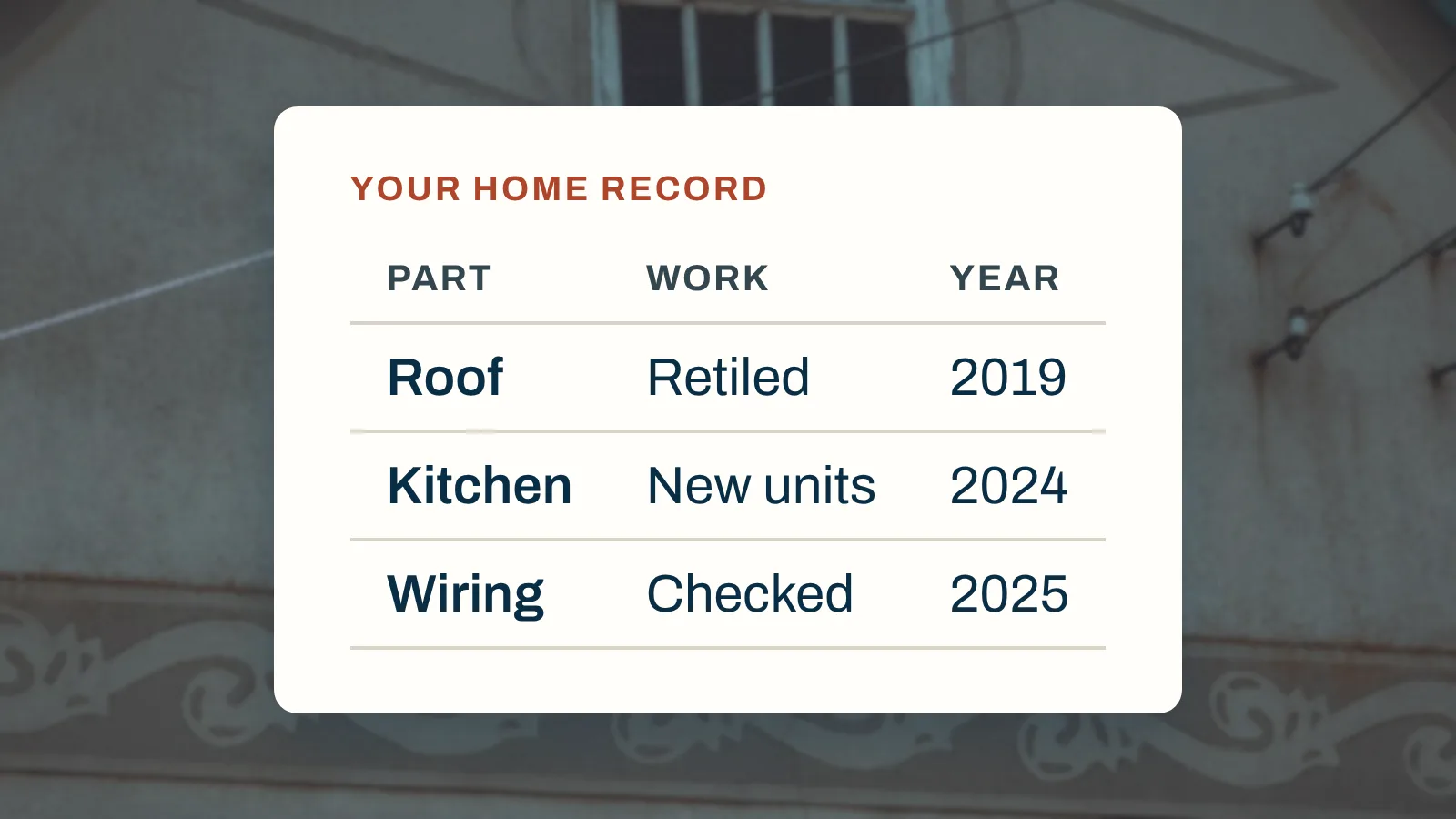
What goes in a home file, how to organise it so you can find things fast, and which documents matter most when you repair, claim or sell.

An old house rewards patience. Check the structure, roof, damp, services and paperwork before you plan finishes, do the work in the right order, use materials that suit how the house was built and give the unknowns their own budget.
Budgets, quotes, payments, documents and decisions in one place
30 days free. No card needed.
Monthly, with no annual plan. The Terms of membership set out the details.