Documents needed to sell a house, and records buyers want
The documents you need to sell a house, from proof of ownership and the energy certificate to the certificates, guarantees and records of work that answer a buyer's questions, with country rules in labelled boxes.
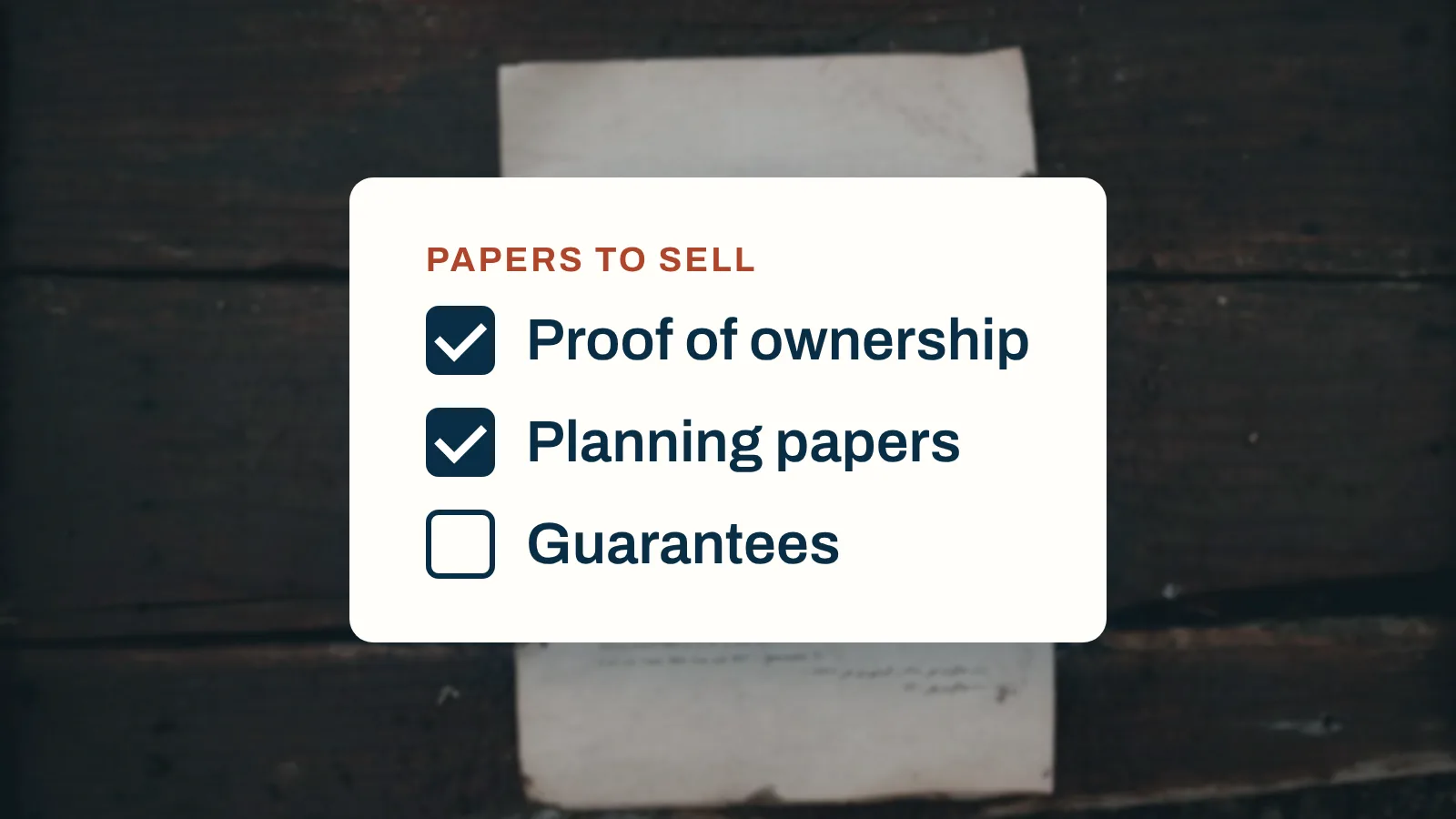
To sell a house you usually need proof of identity and ownership, an energy certificate, the answers to the property information form, and certificates, permissions and guarantees for past work.
In England and Wales, the Law Society's TA6 notes list utility bills, planning permissions and building control consents, competent person certificates, guarantees and warranties, and information about works you have carried out.
In Scotland, sellers must provide a Home Report, made up of a single survey and valuation, a property questionnaire and an energy report.
Beyond the legal minimum, buyers value a record of servicing and repairs, manuals for what is included, and a list of what was done to the house and when.
Gather the papers before you put the house on the market, and tell your solicitor or conveyancer early about anything missing.
The documents needed to sell a house usually include proof of identity and ownership, an Energy Performance Certificate, answers to the property information form, and certificates, permissions and guarantees for past work. Buyers also value records of servicing and repairs and manuals for what is included. Gather them before you market the house, and tell your conveyancer early about gaps.
The exact list depends on where the house is and whether it is freehold or leasehold, so the country rules below are in labelled boxes. Your solicitor or conveyancer will confirm what your own sale needs. This guide helps you have the papers ready when they ask.
Why gather documents before you sell
The questions about your house arrive soon after an offer is accepted. If the papers are already together, you answer in days rather than weeks. If they are not, the sale waits while you search old emails or chase a contractor who has moved on.
The Law Society's explanatory notes for the TA6 property information form are clear about what is at stake in England and Wales: buyers can rely on the information you give, misleading information may let the buyer claim compensation after completion, and incomplete answers may delay the sale or cause the buyer to withdraw. If you do not know an answer, you must say so.
Documents needed to sell a house: the checklist
Most sales draw on the same groups of papers.
Group
Documents
Why buyers ask
Identity
Passport or driving licence, proof of address
Your solicitor or conveyancer will ask for it
Ownership
Title register and plan, any older deeds
Shows what you own and can sell
Energy
Energy Performance Certificate
Shows the energy rating; valid for 10 years
Property information
Property information form, fittings and contents form
The buyer relies on your answers
Past work
Planning permissions, building control certificates, competent person certificates
Shows work was approved
Guarantees
Windows, damp proofing, roof, boiler, building work
May pass to the buyer, if transferable
Services
Utility bills, boiler installation and service records, electrical certificates
Answers questions on heating and electrics
Leasehold
Lease, service charge and ground rent details, management information
Extra questions for flats and leasehold houses
Home records
Manuals, maintenance log, list of work done and when
Helps the buyer and their surveyor
In England and Wales
The Law Society's TA6 notes list the documents a seller may need: utility bills, information about facilities and services, planning permissions and building control consents, a copy of the Land Registry title documents, party wall notices and any other notices or consents, competent person certificates, any guarantees and warranties, and information about any works you have carried out. Leasehold sellers also complete the Leasehold Information Form (TA7), and you may be asked to complete a Fittings and Contents Form (TA10). You can get copies of the title register and title plan from HM Land Registry through GOV.UK, and an Energy Performance Certificate is valid for 10 years, according to GOV.UK.
In Scotland
Sellers must provide a Home Report to interested buyers. mygov.scot says it is split into three parts: a single survey and valuation, a property questionnaire and an energy report, and that sellers must provide it within nine days of a request. There are some exceptions, and some types of home are exempt but still need an Energy Performance Certificate.
In Northern Ireland and other countries
The forms and the process are different. Ask your solicitor, notary or the official government guidance where the house is, and do not assume the England and Wales list applies.
Certificates and permissions for past work
This is the group most likely to hold up a sale, because the work may have been done years ago.
For each extension, loft conversion, structural change, window replacement, new boiler, rewire or new circuit, look for:
Planning permission, if it was needed
A building control completion certificate, or
A competent person certificate from an installer registered with a competent person scheme
The installer's or builder's invoice and guarantee
GOV.UK warns that without building regulations approval you will not have the certificates of compliance you may need when you want to sell your home (Building regulations approval). The TA6 notes add that a gas boiler installed on or after 1 April 2005 will have required a building control completion certificate or an installer's Building Regulations Compliance Certificate, and that most electrical installation work needs a building control completion certificate, a Building Regulations Compliance Certificate or a BS7671 Electrical Installation Certificate.
Watch out
If a certificate is missing, tell your solicitor or conveyancer early. They will explain the options for your sale. Leaving a question blank or guessing an answer is what causes delays.
Guarantees and warranties
The TA6 notes suggest looking through the papers you received when you bought, any receipts or certificates for work such as new windows, damp proofing or a boiler installation, and any homeowner's logbook or manual. You can also contact the company that did the work to ask whether a guarantee transfers to a new owner.
For each guarantee, note:
What it covers, and the company that gave it.
When it ends.
Whether it can pass to a buyer, and how.
Whether it depends on servicing, and whether you can show the servicing was done.
That last point matters. The Law Society tells buyers that claims can often only be made if the item has been properly and regularly maintained, that this is often difficult to prove, and that a guarantee may not be transferable. Service records turn a guarantee from a piece of paper into something a buyer can rely on. Our guide to the home maintenance log shows how to keep them.
The home records buyers want
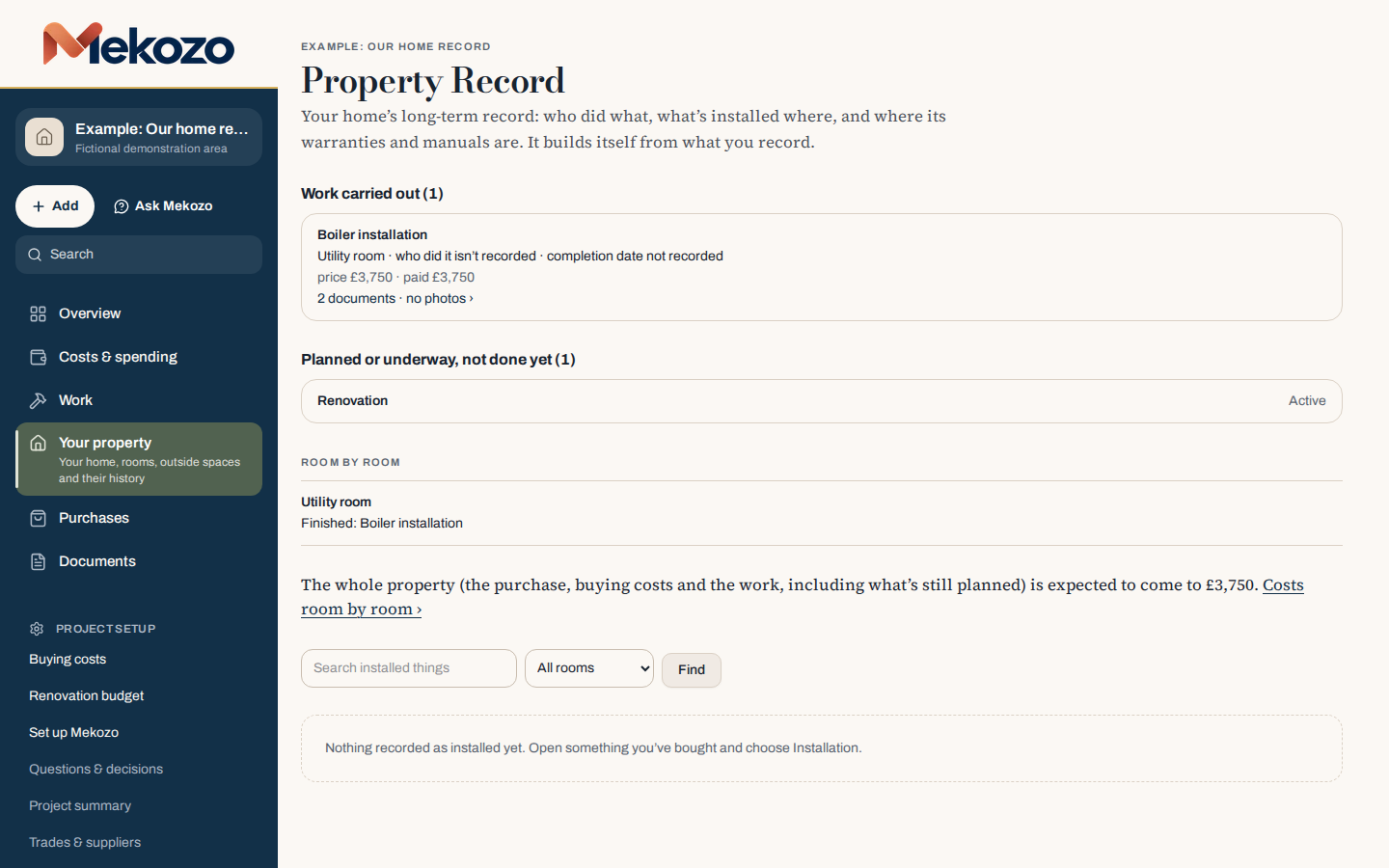
Mekozo's Property Record shows the work carried out, such as a boiler installation, with its room, what it cost and the documents connected to it, ready to hand over.
The legal list is the minimum. The records that make a buyer comfortable go a little further:
A list of work done and when. Roof repaired, boiler replaced, kitchen refitted, with the year and the company.
Boiler and heating records. The TA6 notes say sellers should provide details of the heating installation and supporting documents together with the most recent inspection report.
Electrical records. Certificates for new work and the latest inspection report, if you have one.
Where things are. The stop tap, the meters, the fuse box, the drain access points.
Photos of hidden work. Pipes, cables and structural work before they were covered.
Contacts. Trades who know the house, if you are happy to share them.
Tip
Gas Safe Register advises buyers to arrange a gas safety check if the seller cannot provide a record or if it has been more than 12 months since the last one (Gas Safe Register). A recent service record answers that before it is asked.
If you already keep your house documents in one place, most of this is done. Our guide to organising your house documents in one home file shows how to set one up, and the same structure works as a handover pack.
When to gather what
When
What to do
Before you choose an agent
Check you have, or order, a current energy certificate (or Home Report in Scotland)
Before the house is marketed
Gather certificates, permissions and guarantees for every piece of past work; note any gaps
When you instruct a solicitor
Hand over the papers, and tell them about anything missing
When the forms arrive
Answer from your records, not from memory
Before completion
Put manuals, guarantees, keys and records together for the buyer
A home sale is completed by deed before a notary. The Consiglio Nazionale del Notariato explains the steps, from purchase proposal and preliminary contract to the deed. Whether past building work was approved matters there too, so keep every permit and regularisation document with the house. Ask a notary or a geometra which documents your own sale needs. Mekozo's founder, Jonathan Smith, who films his villa renovation on Operation Sicily, lists the documents he asked for as a buyer in his checklist for buying a house in Italy.
For a home in any other country, use that country's official guidance and a local legal adviser. Do not rely on rules from somewhere else.
On the Operation Sicily villa
From the villa in Sicily. Jonathan's own search for a home shows why buyers read the documents so closely. Over three months and more than 50 viewings, he walked away from two deals because of what the paperwork did not say: a villa built over a forgotten archaeological site that was left out of the documents, and a farmhouse with a hidden room missing from every official plan (Episode 8). The villa he did buy had been built without permits and is about 110 square metres, but it had been made legal under a series of Sicilian building amnesties, the first major law coming in 1985, long before he bought it (Episode 11). Documents that match the house let a sale go ahead; documents that do not can end it.
This guide explains which documents are commonly needed. It is not legal advice; your solicitor, conveyancer or notary will tell you what your own sale requires.
Questions people ask
What documents do I need to sell my house?
You will usually need proof of identity, proof of ownership or the title details, an Energy Performance Certificate, answers to the property information and fittings forms, and certificates, permissions and guarantees for past work. Leasehold homes need the lease and management information too. Your solicitor or conveyancer will confirm the list for your sale.
Do I need the original deeds to sell my house?
Not usually in England and Wales, where most homes are registered with HM Land Registry. You can get copies of the title register and title plan from HM Land Registry, so missing paper deeds are rarely a problem. Tell your conveyancer if you have older deeds, as they may still be useful.
What happens if I do not have a certificate for past work?
Tell your solicitor or conveyancer as early as possible. GOV.UK warns that without building regulations approval you will not have the certificates of compliance you may need when you sell. Your legal adviser will explain the options for your sale; do not guess or leave the question unanswered.
Do buyers want to see maintenance records?
Many do. A record of boiler services, electrical inspections and repairs helps answer the buyer's and surveyor's questions. The Law Society notes that guarantee claims often depend on an item having been properly and regularly maintained, which is often difficult to prove without records.
What is a Home Report in Scotland?
In Scotland, sellers must provide a Home Report to interested buyers. mygov.scot says it is made up of a single survey and valuation, a property questionnaire and an energy report, and that sellers must provide it within nine days of a request, with some exceptions.
Do I need a gas safety certificate to sell my house?
The Law Society's TA6 notes say a Gas Safe certificate is not a legal requirement for selling a home in England and Wales, though a buyer who intends to let will want one. A recent service record still helps a buyer, and Gas Safe Register advises buyers to arrange a check if no record is available.
Jonathan Smith is the founder of Mekozo and Operation Sicily. Jonathan bought an abandoned villa in Sicily and is rebuilding it on camera, every week. Mekozo is the app Jonathan built to keep that renovation's money in one picture.
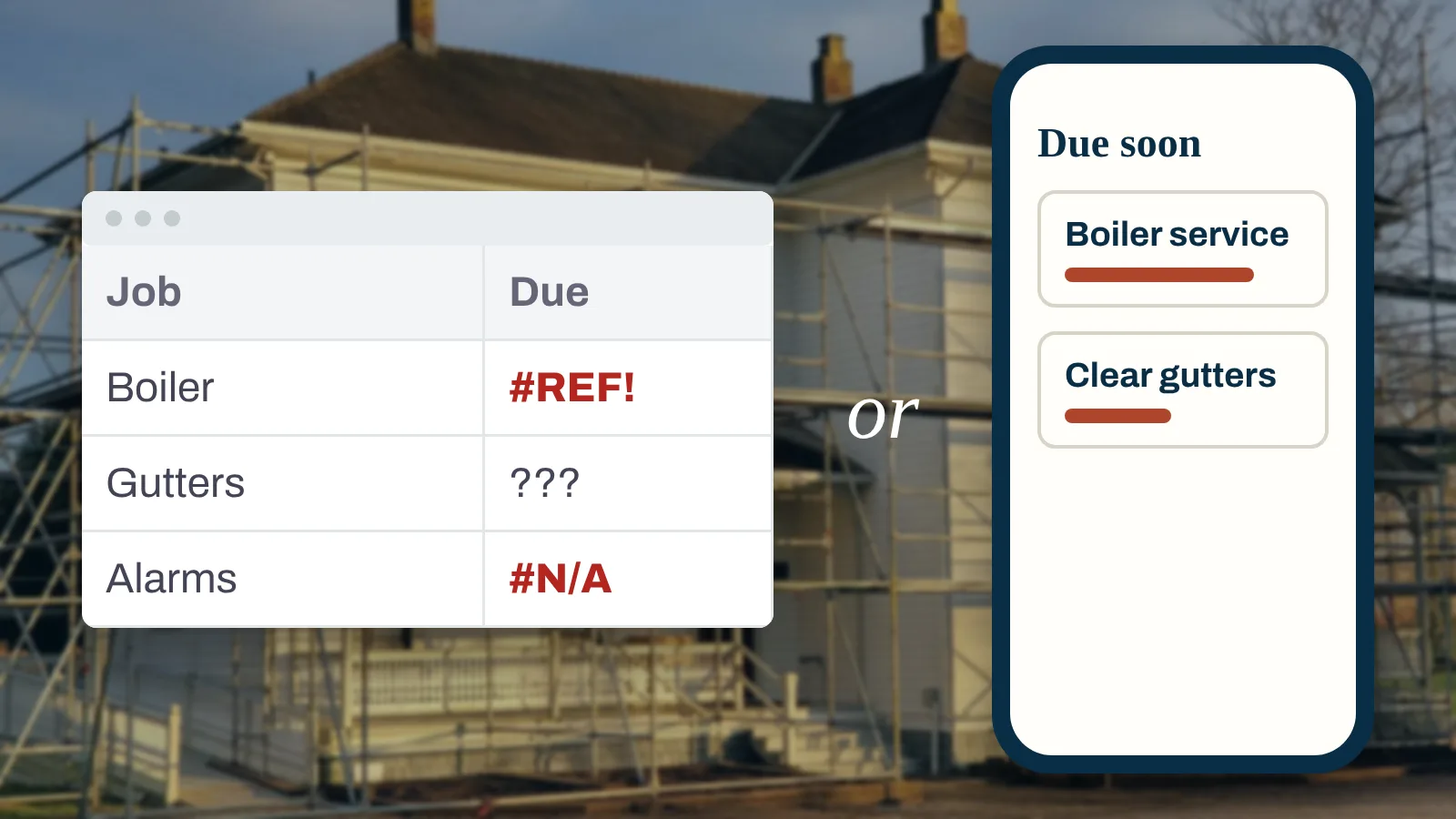
A spreadsheet and a home maintenance app can both keep track of your house, if they record the right things. Here is what to track, a spreadsheet layout to copy, what a good app should do, and how to choose.
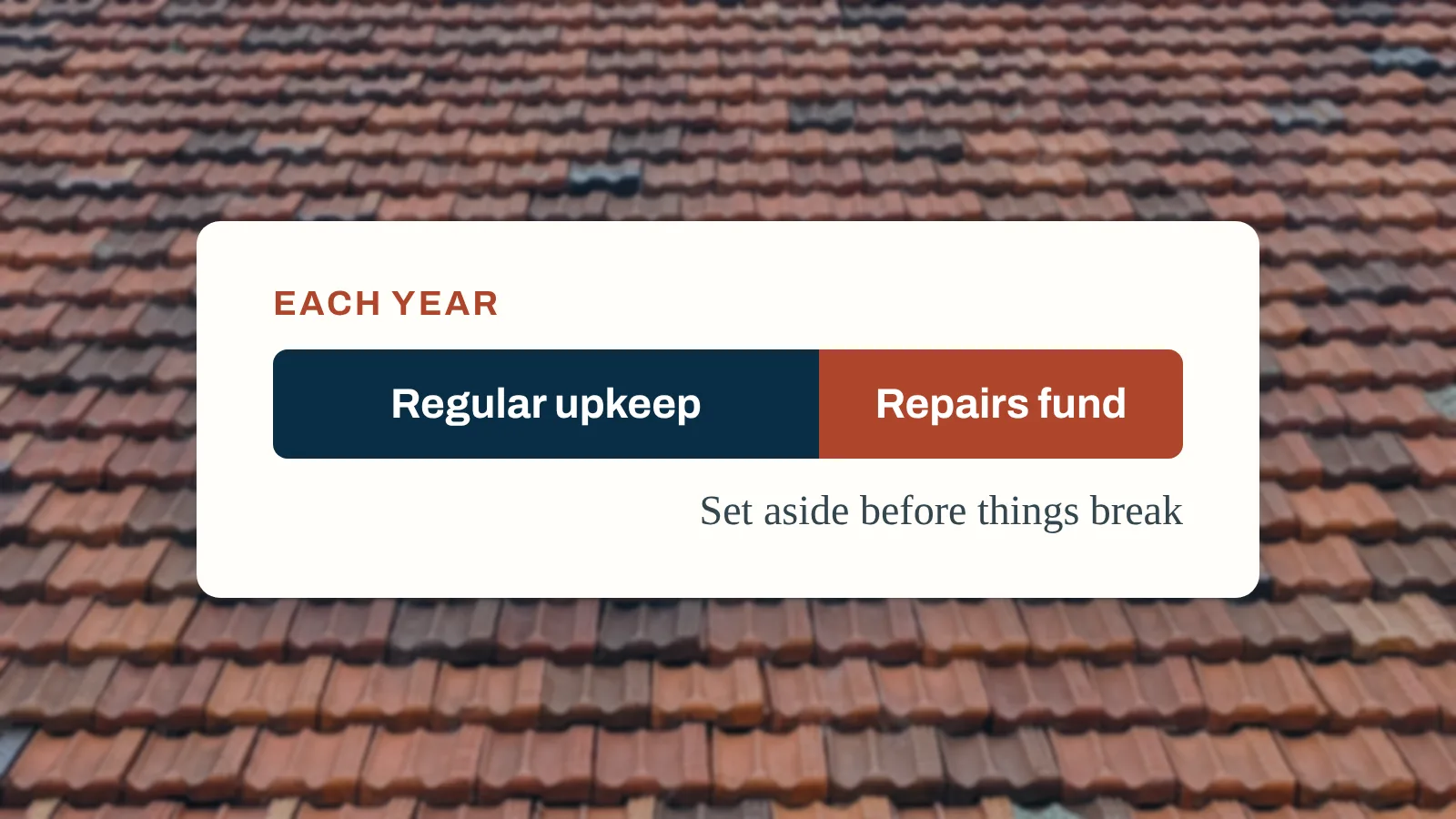
There is no single right figure for home maintenance. Build the budget from your own house in three parts: regular servicing, an allowance for small repairs and a fund for the big replacements, checked against named UK prices.
There is no single register of build dates, so finding out when your house was built means piecing together paperwork, records, maps and the building itself. Ten places to look, in order.