Buying a property
How long does it take to buy a house? The timeline
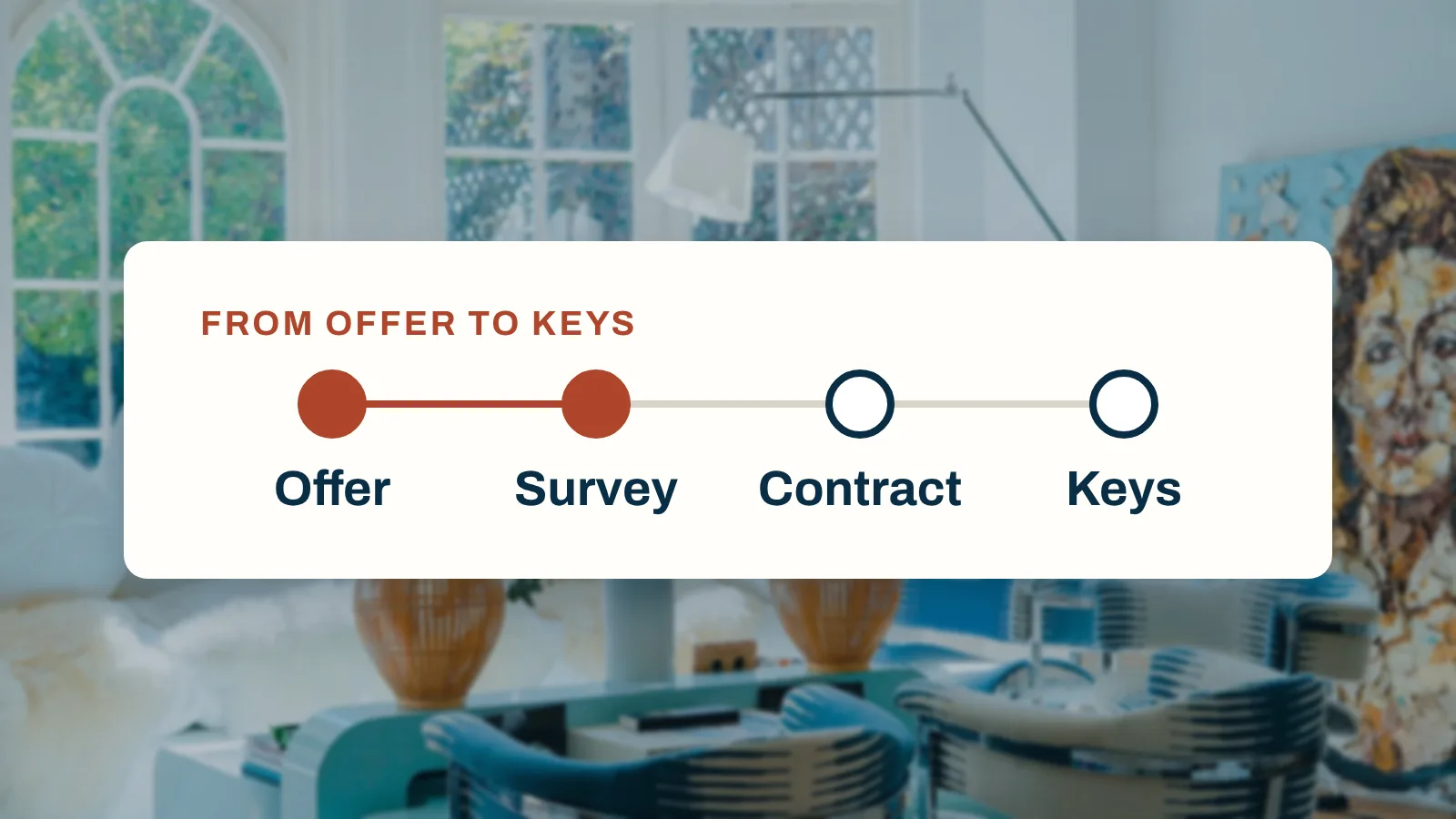
In England it takes around 120 days on average from an accepted offer to completion. Here is the timeline stage by stage, what slows each stage down and what you can control.


The steps to buying a house, in order, with a checklist for each: getting ready, the offer, the legal work, the survey, exchange, completion and the first weeks after you get the keys.
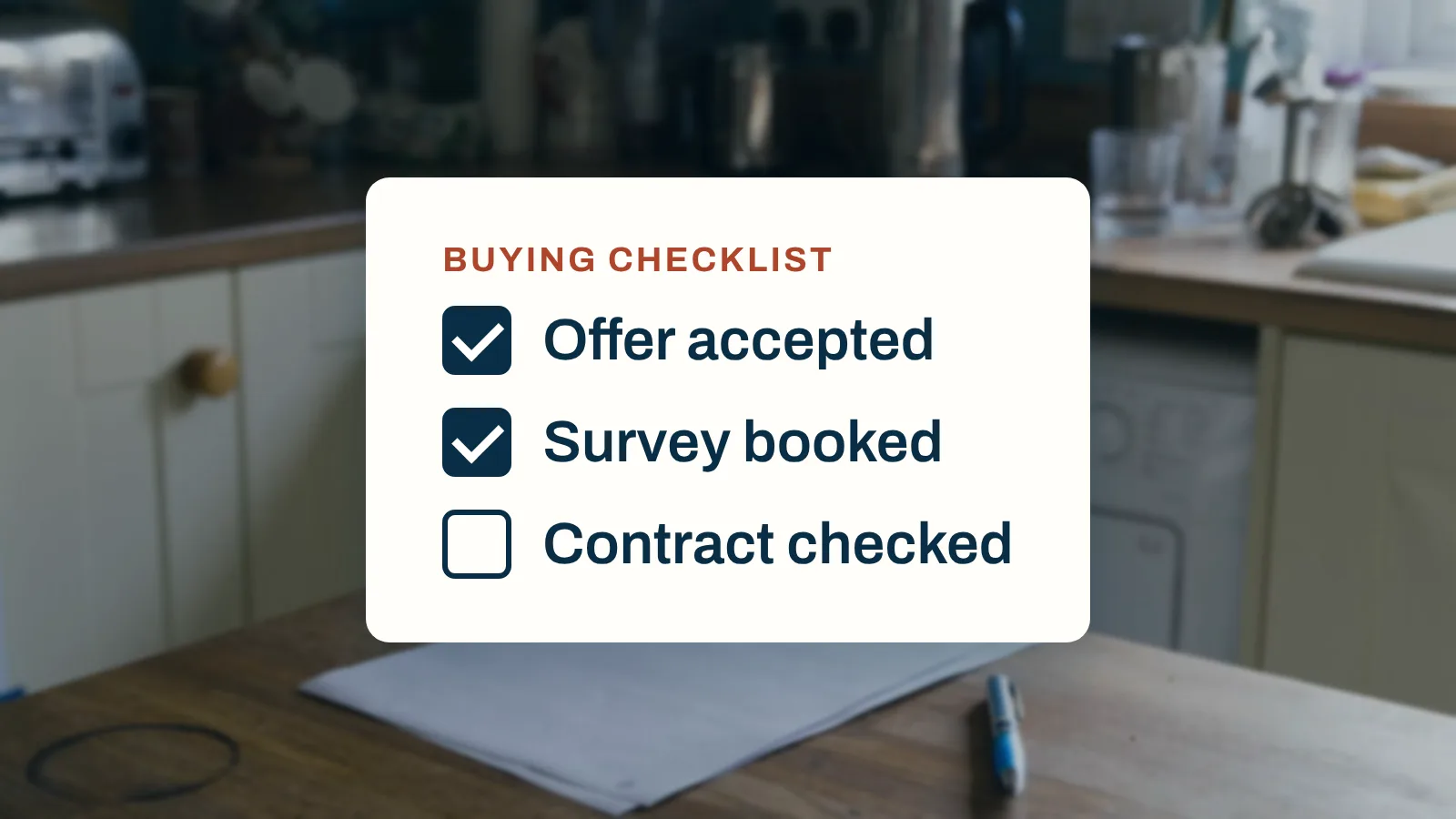
The steps to buying a house are: set your budget and gather documents, search and view, make an offer, instruct a solicitor, arrange funding, get a survey, let the legal work and searches run, review the results, exchange contracts, complete and collect the keys, then move in and update your records. Each step has its own checklist.
This guide takes you through the home buying process in order, with a checklist at every step. The method works anywhere; where the rules differ by country, they sit in labelled boxes. For how long each stage usually takes, see our guide to how long it takes to buy a house.
| Step | What happens | Who is involved |
|---|---|---|
| 1. Get ready | Budget, full costs, documents, funding | You, any lender or adviser |
| 2. Search and view | Wish list, viewings, notes, comparisons | You, estate agents |
| 3. Make an offer | Offer, negotiation, acceptance | You, the agent, the seller |
| 4. Instruct a legal representative | Solicitor, conveyancer, notary or lawyer | You, your legal representative |
| 5. Arrange funding | Savings, sale proceeds, any borrowing confirmed | You, any lender |
| 6. Legal work | Searches, property information, questions | Both legal representatives |
| 7. Survey or inspection | Condition of the home | You, a surveyor or inspector |
| 8. Review and decide | Findings, costs, renegotiation | You, your legal representative |
| 9. Binding contract | Exchange of contracts or signing | Both sides |
| 10. Completion | Money paid, keys released | Both legal representatives, the agent |
| 11. Move in | Meters, locks, insurance, address changes | You |
| 12. After the move | Registration, taxes, keeping the records | Your legal representative, you |
Know what you can spend in total, not just on the price. Our guide to the costs of buying a house lists every cost beside the price.
In the UK (England and Wales)
The government's How to buy a home guide says to get your documents together early: proof of identity such as a passport or driving licence, proof of address such as a bank statement or utility bill no more than 3 months old, and proof of the source of your funds, such as your last 3 months' payslips or tax returns if you are self-employed.
Use the same checklist at every viewing so you can compare homes fairly. Our guide to questions to ask when viewing a house has a full viewing checklist, and our guide to comparing houses shows how to weigh them against your wish list.
Tip
The government's guide suggests asking the agent for the material facts about the property, how long it has been on the market and, if more than 3 months, why they think it is not selling.
Base your offer on what the home is worth to you once every cost is counted. Our guide to how much to offer on a house covers how to set and justify a figure.
In the UK (England and Wales)
An accepted offer is "subject to contract": either side can still withdraw until contracts are exchanged. The government's guide mentions that some sellers will enter a reservation agreement to show they are committed.
In Scotland
The process and timing of offers are different, with legal steps that can bind sooner. See mygov.scot on making an offer, and note that RICS says sellers in Scotland must provide a Home Report.
In the UK (England and Wales)
The government's guide says to instruct a legal representative as soon as your offer has been accepted, and, if you have special requirements such as running a business from home, to ask them to check before you make your offer.
Watch out
A lender's valuation is not a survey. The government's guide says a valuation does not protect you if something goes wrong with the property, and may not even include a physical inspection.
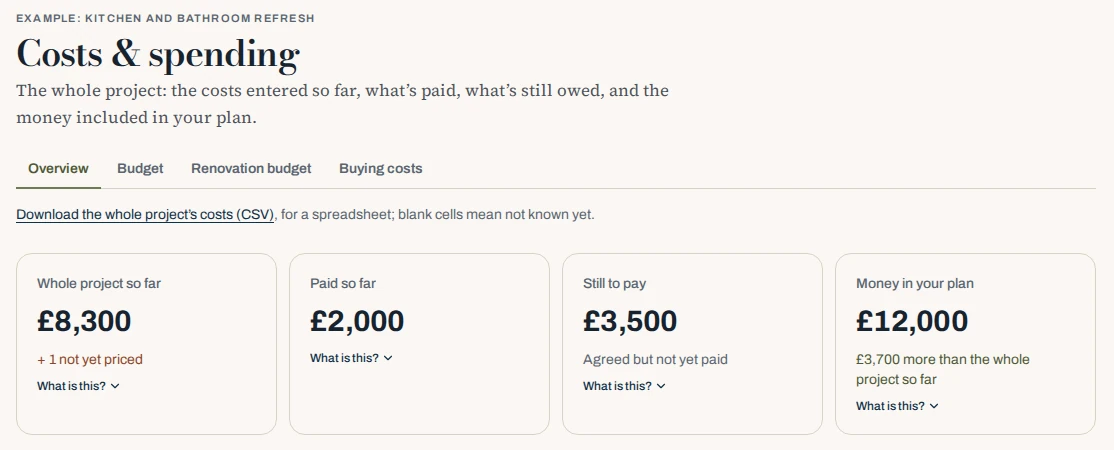
Mekozo's Costs & spending view adds every buying cost to one total and shows what is already paid, what is still to pay and what has no price yet.
Try it free for 30 days, no card neededThis is usually the longest stage. Your legal representative checks the title, orders searches and raises questions with the seller's side.
Keep a list of every question and its answer. It saves time later and is useful when you sell.
A survey (called a home inspection in the US and Canada) tells you about the home's condition. Our house survey checklist explains what one covers, what it leaves out and how to act on the report.
In the UK
The government's guide says you should strongly consider having a survey, carried out by a trained professional such as a member of RICS, which explains the three levels of RICS Home Survey. It says that if significant issues are found, you can ask the seller to fix them before you buy, renegotiate your offer to take account of the cost, or withdraw your offer.
Before you commit, put the results of steps 5 to 7 side by side.
In the UK (England and Wales)
Once contracts are exchanged, the sale is legally binding and the completion date is fixed. If you are buying a new build, the government's guide warns that many developers ask you to exchange and pay a deposit by a deadline, so make sure your lender and legal representative can meet it.
In Italy
The purchase is completed by a deed signed in front of a notary, and the notaries' council explains the steps, from purchase proposal and preliminary contract to the deed, and the taxes on the purchase. The buying a house in Sicily checklist by Mekozo's founder, Jonathan Smith, who films his villa renovation on Operation Sicily, goes through each stage from his own purchase.
Our moving house checklist covers the move itself, and our guide to moving in covers the first weeks after. On the day and in the first week:
In the UK (England and Wales)
The government's guide says that after the move your legal representative registers the change of ownership with HM Land Registry and settles other payments, including Stamp Duty Land Tax in England or Land Transaction Tax in Wales.
Our guide to keeping a home record explains what to keep and why buyers value it when you sell.
On the Operation Sicily villa
From the villa in Sicily. Jonathan's own purchase followed the same steps, in Italian form. He spent three months on the search with more than 50 viewings, and walked away from two deals when the documents and plans revealed problems the sellers had not mentioned (Episode 8). The villa he chose was advertised at €100,000; he bought it for €21,500, and the notary (€1,500), the estate agent (€1,500) and the taxes (€4,500) came on top (Episode 9). His Italian tax code, the codice fiscale, had to be in place before the purchase, and it took under six weeks from agreeing the price to signing the final deed at the notary. Keeping the costs, documents and steps of a purchase like this in one place is exactly what the checklist above is for.
Playing loads YouTube’s external player.
Watch directly on YouTube ↗For the earlier stages, see our house hunting checklist, and for everything after you have found a home, our guide to the legal work, survey and completion. To keep every cost of the purchase together, see how Mekozo keeps every buying cost in one list.
This guide explains the usual steps in plain terms. It is not legal or financial advice; your legal representative will tell you exactly what applies to your purchase.
It depends on the chain, the legal work, the survey and any borrowing, so plan in months rather than weeks from an accepted offer to completion, on top of the time spent searching. The legal work between offer and exchange usually takes longest. Our guide to how long it takes to buy a house breaks down each stage.
GOV.UK's How to buy a home guide lists proof of identity such as a passport or driving licence, proof of address such as a recent bank statement or utility bill, and proof of where your money is coming from, such as recent payslips or tax returns. Your solicitor and any lender will tell you exactly what they need.
The government's guide says to instruct a legal representative as soon as your offer has been accepted. If you have special requirements, such as wanting to run a business from home, it suggests asking them to check these before you make your offer.
A survey is not a legal requirement in England and Wales, but GOV.UK says you should strongly consider one, because a lender's valuation is not a survey and does not protect you if something goes wrong. In Scotland, RICS notes that sellers must provide a Home Report.
The money is transferred to the seller's solicitor, the sale completes and the keys are released, usually through the estate agent. Afterwards, the government's guide says your legal representative registers the change of ownership with HM Land Registry and settles other payments, such as Stamp Duty Land Tax in England.
Read the meters, change the locks if you want to be sure who has keys, tell the council for council tax and the electoral roll, update your address with banks and others, and set up insurance. Then keep the purchase documents together, because you will need them again when you renovate or sell.

Jonathan Smith is the founder of Mekozo and Operation Sicily. Jonathan bought an abandoned villa in Sicily and is rebuilding it on camera, every week. Mekozo is the app Jonathan built to keep that renovation's money in one picture.
Real renovation experience and regional guidance from Operation Sicily.
In England it takes around 120 days on average from an accepted offer to completion. Here is the timeline stage by stage, what slows each stage down and what you can control.
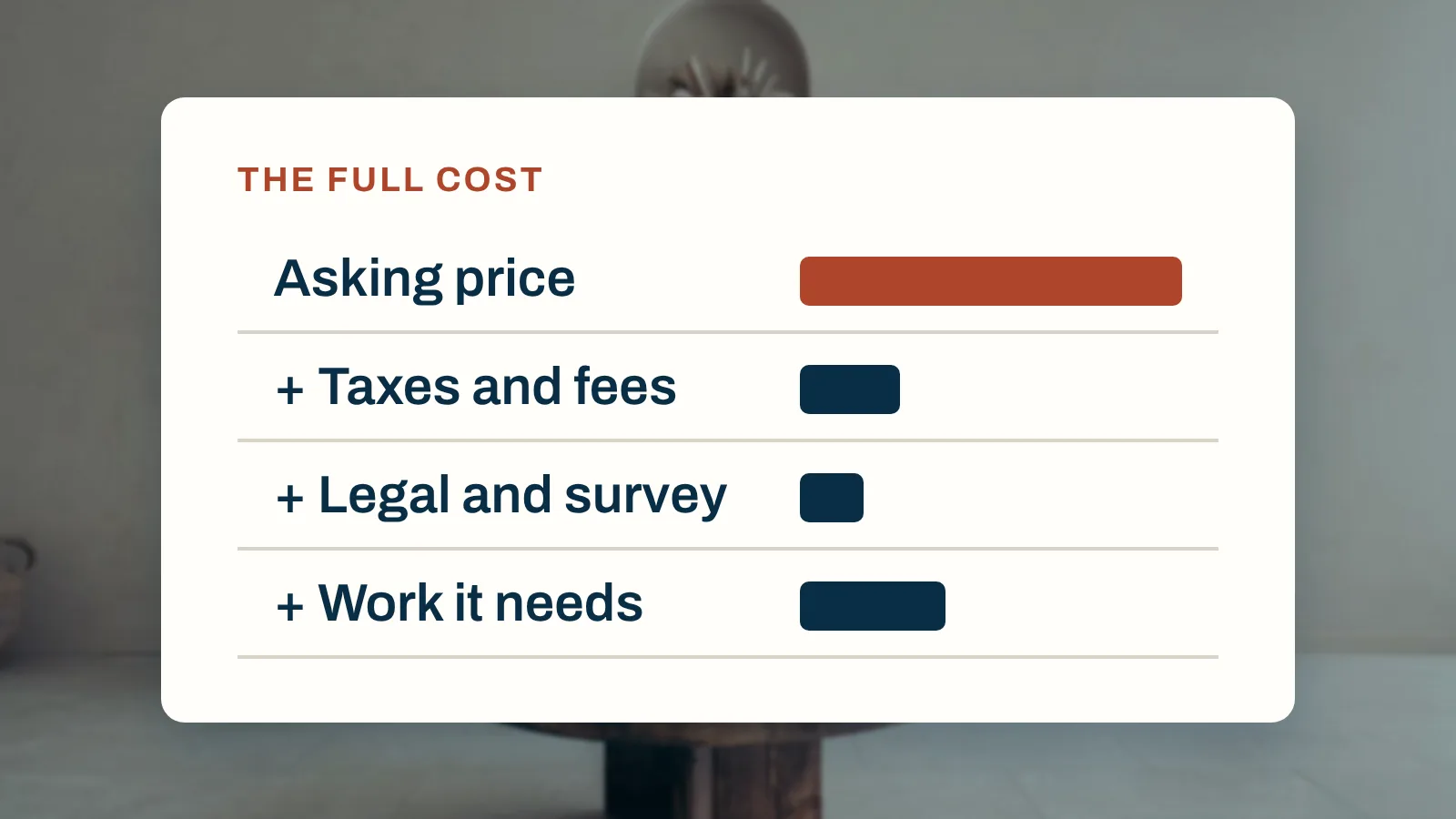
Every cost of buying a house, from tax and legal fees to the hidden ones after you move in, and how to keep them in one list.

A house survey tells you about a home's condition before you commit. Which RICS level to book, what it covers and leaves out, a checklist to use alongside it, and how to act on the report.
Budgets, quotes, payments, documents and decisions in one place
30 days free. No card needed.
Monthly, with no annual plan. The Terms of membership set out the details.