
Buying a property
Moving house checklist, and what moving really costs
Everything to do before, on and after moving day, week by week, and what the move itself costs in the UK: removals, packing, storage and the overlap between two homes.


What to do when you move into a new house, in the order that matters: security and safety on day one, meters and admin in the first week, and the home's records in the first month.
When you move into a new house, deal with security and safety first: check or change the locks, find the stopcock, fuse box and gas meter, test the alarms and book a gas safety check if there is no recent record. Then take meter readings, tell suppliers and your council, and gather every document and key into one record.
This checklist is for the moment you get the keys, not the packing before it. For the weeks leading up to the move, our moving house checklist covers removals, packing and what moving costs.
| When | What to do | Why it matters |
|---|---|---|
| Before you move in | Gas safety check, keys counted, deep clean, check the inventory | Safer and easier with empty rooms |
| Day one | Locks, emergency shut-offs, alarms, meter readings | Security, safety and accurate first bills |
| First week | Suppliers, council tax, address changes, insurance | Bills and post go to the right place |
| First month | Documents, manuals, warranties, a list of jobs | A record you will use for years |
| First season | Maintenance routine, gutters, heating service | Problems caught early cost less |
If you have a day or two between getting the keys and moving your furniture, use it.
Watch out
A survey or homebuyer report might not confirm whether the gas appliances in your new home are working safely, Gas Safe Register says. If you are in any doubt, get them checked. Only Gas Safe registered engineers can legally do gas work, whether on appliances, flues or pipework.
Find these before you need them, and label them:
Tip
Take a photo of each one, with an arrow on it, and put the photos where everyone in the house can find them. In an emergency nobody wants to search.
GOV.UK says the easiest way to protect your home and family from fire is with working smoke alarms. It advises testing them at least monthly by pressing the button until the alarm sounds, and vacuuming them every six months to remove dust. Check you have a carbon monoxide alarm near any gas, oil or solid fuel appliance, and test it too.
Accurate readings on day one mean you only pay for what you use, not what the previous owner used.
In the UK
GOV.UK says that if you move to a new property or to a new area, you should tell your local council, or the council for the new area you have moved to. For your driving licence, GOV.UK says it does not cost anything to change the address, that you must also change the address on your vehicle log book (V5C), and that you can be fined up to £1,000 if you do not tell DVLA when your address changes. Northern Ireland has a different process for driving licences, and other countries have their own rules for local taxes and registration.
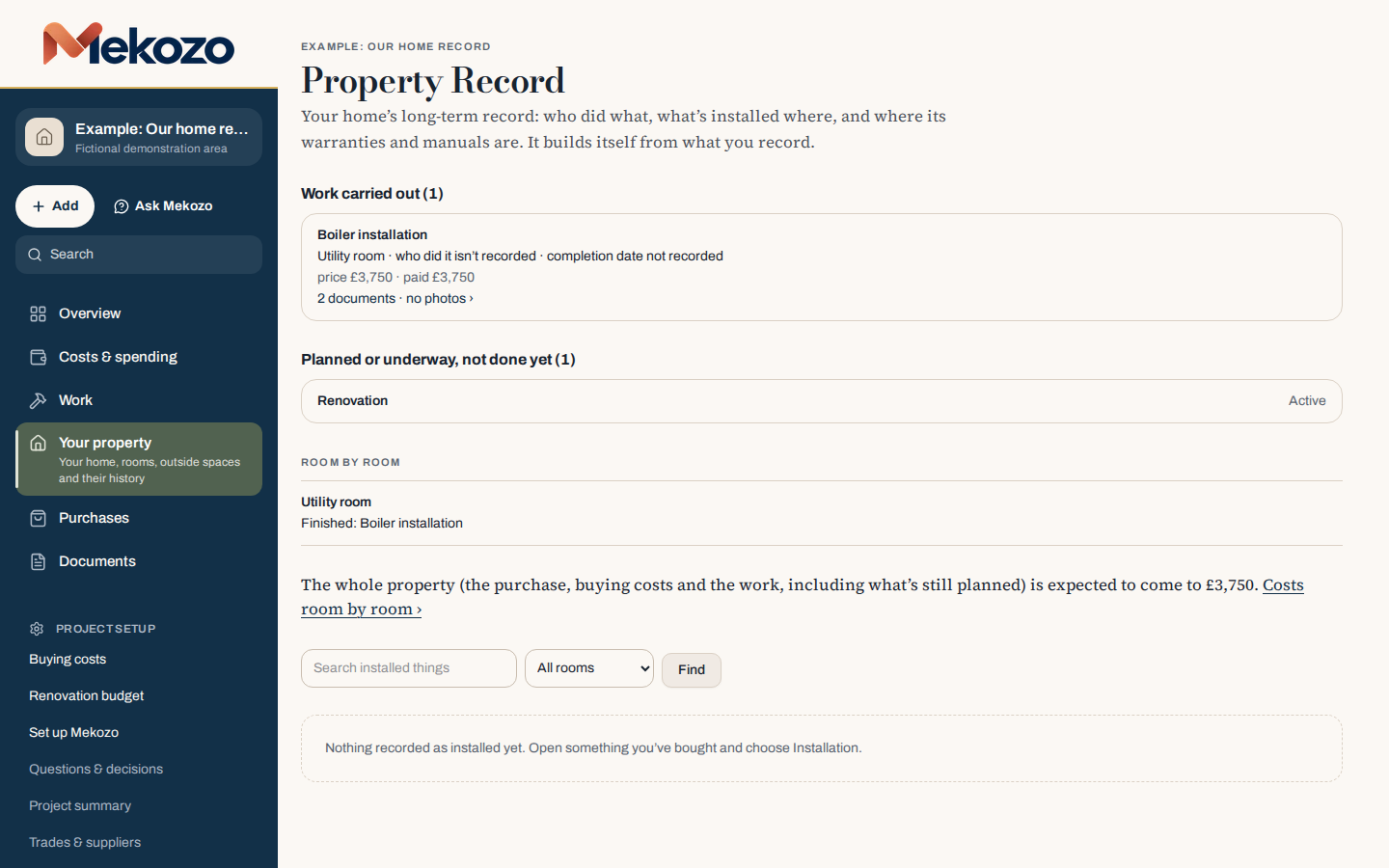
Mekozo's Property Record starts your home's record from day one: work carried out, what is installed where, and the manuals, warranties and certificates connected to each.
Try it free for 30 days, no card neededThe first month is the best time to start the home's record, while the handover is fresh and the papers are still in one pile.
Our guide to keeping a useful home record shows how to organise it so you can find any document in a minute, years from now.
Tip
File things by room as well as by type. When the dishwasher breaks, you want the manual, the warranty and the receipt together, not in three different folders.
Walk every room in daylight and write a snagging list: cracked plaster, gaps in sealant, sticking doors, scratched fittings, missing items. One problem per line, with a photo. Report it to the builder in writing. Our guide to the snagging list shows how to write one and agree it.
Our home maintenance checklist gives you the month by month and year by year routine from there.
On the Operation Sicily villa
From the villa in Sicily. For Mekozo's founder, Jonathan Smith, the first day at his villa was an extreme version of the same checklist. The house had been shut up for decades, with no power supply and no mains connection, so the first weeks were done by daylight and head torch. Day one was spent making sure every door, window and roller blind opened, closed and locked. He fitted a new euro cylinder lock to the kitchen door, cut off a seized back door lock that had no key, and put a heavy new padlock and chain on the front gate, as he shows in Episode 2 of Operation Sicily, where he films the renovation. His reason for changing the lock applies to any home: when you buy a property, you never know who still has a spare key. His practical guide to renovating a house in Sicily sets out the order he would do things in after that.
Playing loads YouTube’s external player.
Watch directly on YouTube ↗For the rest of the buying journey, see our guide to buying a home and settling in, our buying a house checklist and how long it takes to buy a house. Mekozo keeps your handover record with the house's warranties, manuals and home paperwork; see how to keep manuals, warranties and home documents together.
This checklist explains a practical routine. It is not legal or safety advice; for gas, electrical or structural concerns, use a qualified, registered professional.
Make it secure and safe. Check or change the locks, find the stopcock, the fuse box and the gas meter so you can turn things off in an emergency, and test the smoke and carbon monoxide alarms. Then take meter readings before you use much energy or water.
It is sensible, because you cannot know how many keys the previous owners gave out to family, neighbours, cleaners or trades. Swapping a lock cylinder is usually quick and inexpensive. At the least, collect every key you were given, count them and check each one works.
Gas Safe Register recommends getting your gas appliances safety checked before you move in, because unsafe appliances can cause carbon monoxide poisoning, leaks, fires and explosions. Ask the seller for any gas safety records, and if there are none or the last check was more than 12 months ago, book a Gas Safe registered engineer.
Look under the kitchen sink first, because that is where it often is, though not always. Once you find it, check it turns, label it and take a photo with an arrow on it. Do the same for the fuse box or consumer unit, the gas meter and emergency control valve, and the boiler, so anyone in the house can turn things off in an emergency.
Keep the completion statement, the transfer and title documents, your survey, the property information forms, any guarantees and warranties, building regulations and gas or electrical certificates, and manuals for the boiler and appliances. Store them together, with copies, so you can find them for repairs, insurance claims or a future sale.
Walk every room and write a snagging list of defects such as cracked plaster, poor sealant, sticking doors or missing fittings, with photos. Report them to the builder in writing within the timescales your warranty and the builder's procedures set out.

Jonathan Smith is the founder of Mekozo and Operation Sicily. Jonathan bought an abandoned villa in Sicily and is rebuilding it on camera, every week. Mekozo is the app Jonathan built to keep that renovation's money in one picture.
Real renovation experience and regional guidance from Operation Sicily.
Everything to do before, on and after moving day, week by week, and what the move itself costs in the UK: removals, packing, storage and the overlap between two homes.
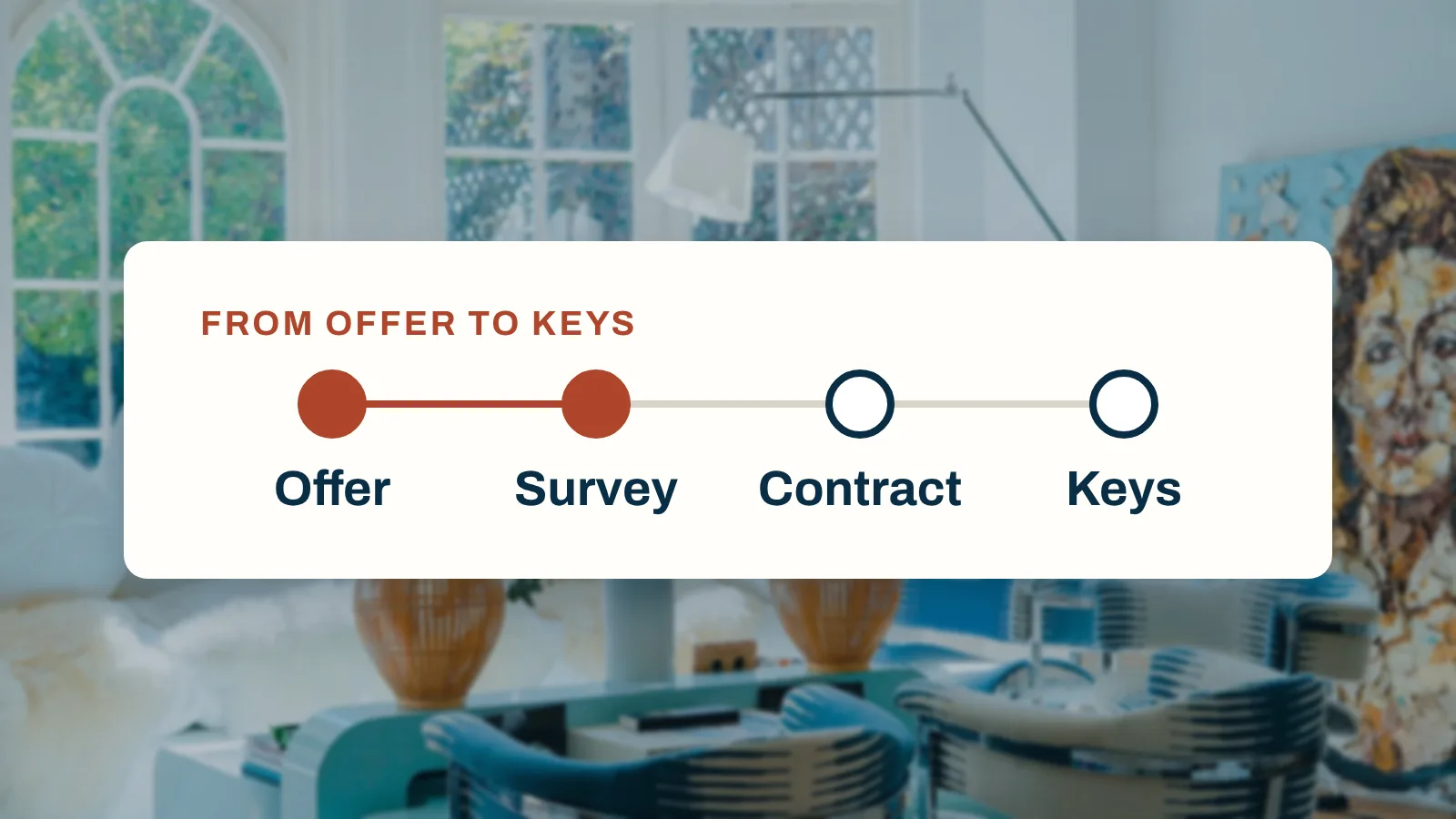
In England it takes around 120 days on average from an accepted offer to completion. Here is the timeline stage by stage, what slows each stage down and what you can control.
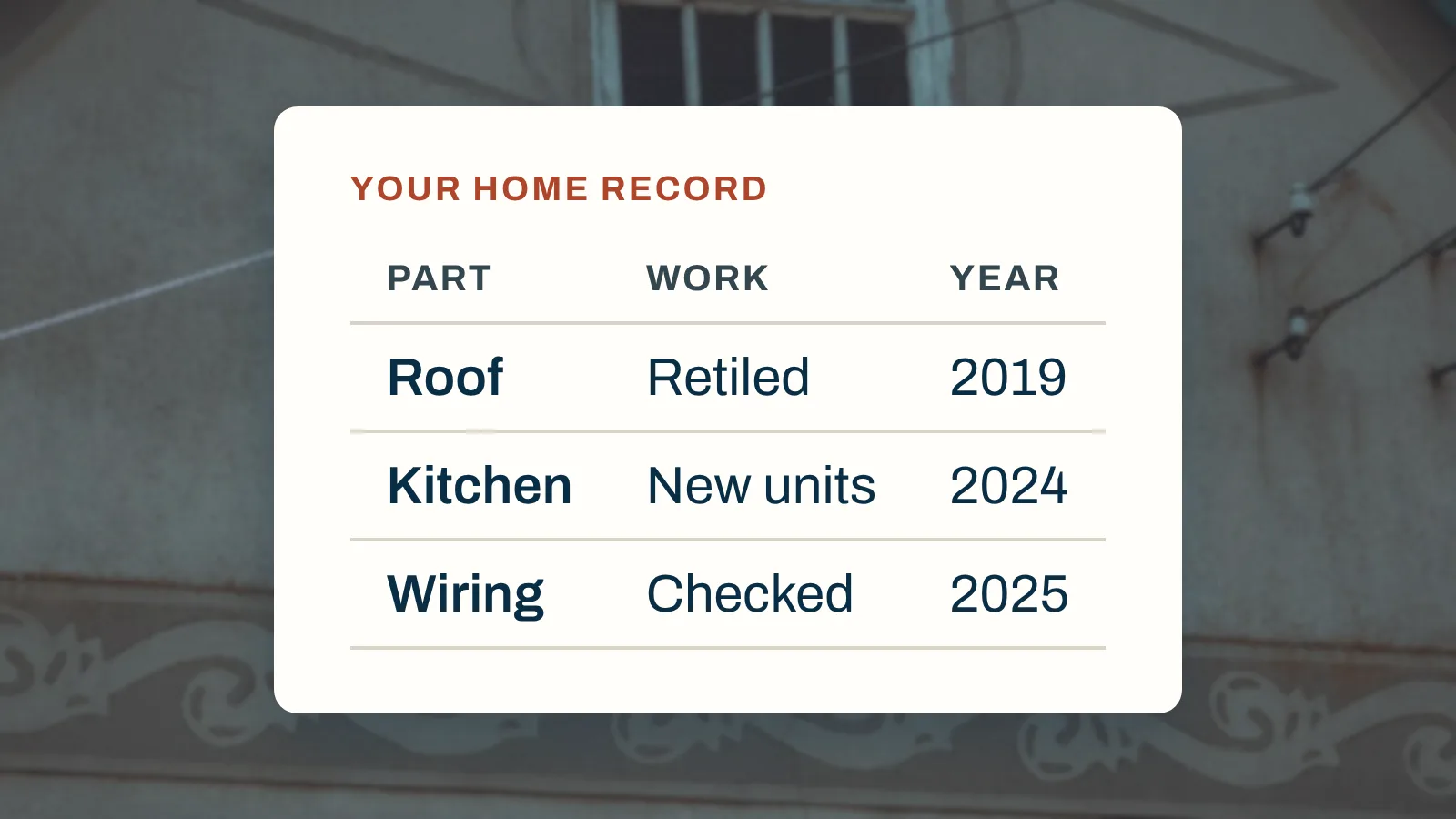
What goes in a home file, how to organise it so you can find things fast, and which documents matter most when you repair, claim or sell.
Budgets, quotes, payments, documents and decisions in one place
30 days free. No card needed.
Monthly, with no annual plan. The Terms of membership set out the details.