Home maintenance checklist: month by month and year by year
A practical home maintenance schedule: what to check every month, every season, every year and every few years, with the UK guidance behind each check and how to keep a record of it.
Group home maintenance by how often each job comes round: monthly, each season, each year and every few years.
The government's Fire Kills campaign advises testing smoke alarms at least once a month and fitting at least one on every level of your home.
Gas Safe Register recommends an annual safety check and service for any gas appliance, by a Gas Safe registered engineer, unless the manufacturer says otherwise.
Electrical Safety First recommends an electrical inspection every 10 years for an owner-occupied home and every 5 years for a rented one.
Record every check, even when nothing was wrong: what, when, who, the cost, what was found and the paperwork.
A home maintenance checklist works best grouped by how often each job comes round. Every month, test the alarms and look for leaks. Every season, clear gutters and drains and check the roof, walls and windows. Every year, have gas appliances serviced. Every few years, have the electrics inspected. Then record what was done.
This house maintenance checklist gives you the full schedule, month by month, season by season and year by year, the UK guidance behind each interval, and a simple way to keep the record so the next check starts from a history rather than a memory.
Why a schedule beats a to-do list
Most home maintenance is not difficult. The trouble is that it is easy to forget, and the cost of forgetting arrives later: a blocked gutter becomes a damp wall, a dripping trap becomes a stained ceiling. A schedule turns "I must look at that" into a date.
Three rules keep it manageable:
Tie each job to a frequency. Monthly, seasonal, yearly or every few years. A job without a frequency never happens.
Separate checks from repairs. A check takes minutes. If it finds something, the repair becomes its own job with its own date and price.
Record the result, even when nothing was wrong. "Gutters clear, 12 November" is useful the next time water appears on a wall.
Watch out
Only do checks you can do safely. Historic England suggests using binoculars to look at high level areas like the roof or chimney from the ground if safe access is not available. Ladders, roofs and anything electrical or gas related are jobs for someone trained and equipped.
Monthly home maintenance checklist
Short checks that take a few minutes each:
Press the test button on every smoke alarm
Test carbon monoxide alarms
Look under sinks, around the toilet and behind the washing machine for drips
Check the boiler pressure gauge against the manual
Run taps and showers in rooms you rarely use
Clean extractor fan grilles in the kitchen and bathroom
Walk round the outside after heavy rain and note anything new
The government's Fire Kills campaign advises testing smoke alarms at least monthly, whatever type you have, and fitting at least one smoke alarm on every level of your home. Replace each alarm by the expiry date on the unit.
Seasonal home maintenance checklist
Autumn
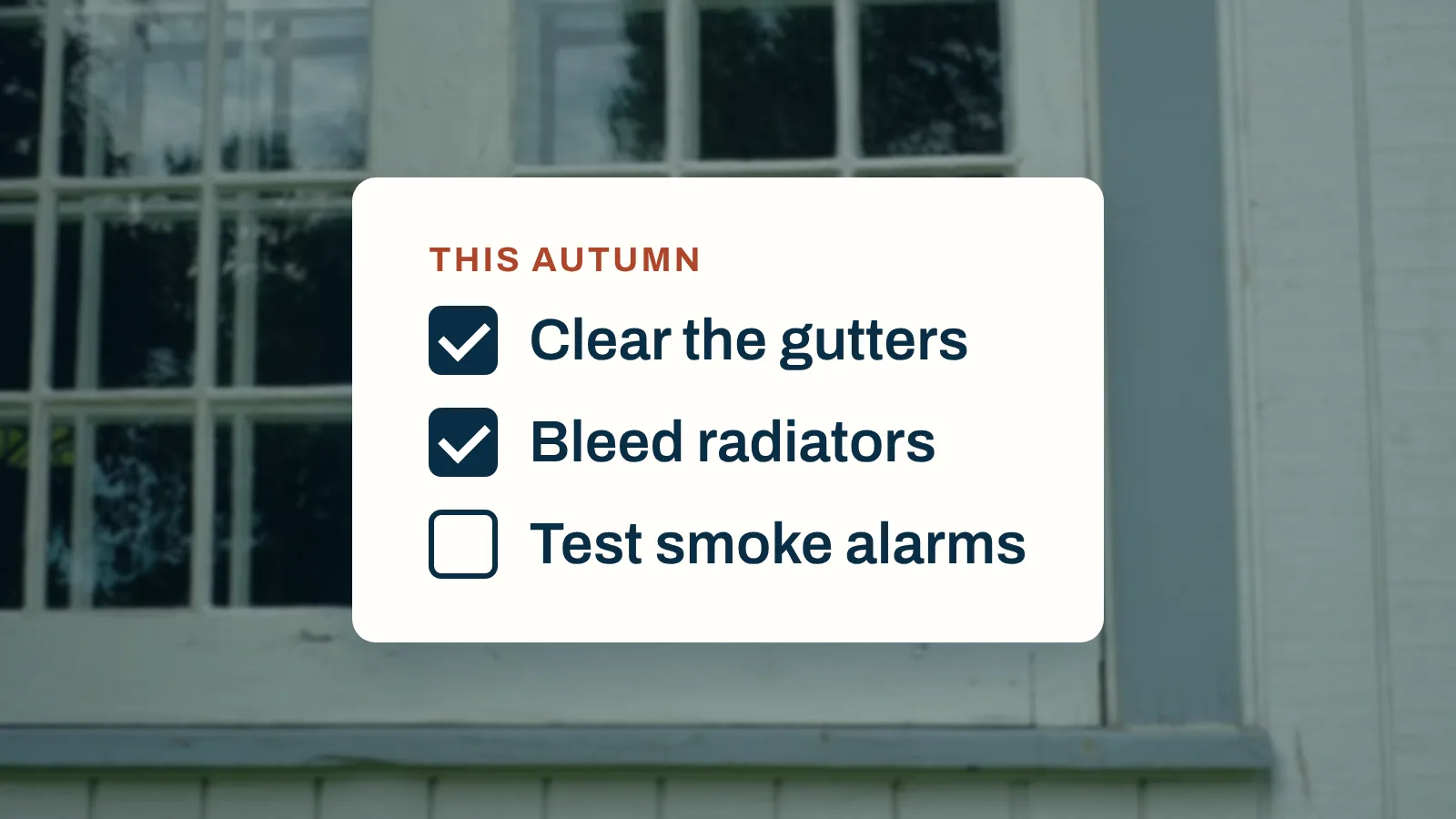
Clear gutters, hopper heads and downpipes once the leaves have fallen
Clear leaves and silt from drainage gullies and check each has a grating
Look at the roof from the ground for slipped, broken or missing tiles
Check outside pipes are lagged before the first frost
Find the stop valve and check it turns
Book the yearly gas safety check and service before the heating season
Winter
Check the loft and ceilings for damp patches after storms
Look for condensation and mould around windows
Keep heating on low if the house will be empty in a cold spell
Spring
Inspect the roof again, and after any storm or high winds
Check flat roofs for splits, cracks or holes
Look at pointing, render and brickwork for cracks or erosion
Check paintwork on timber windows and doors, especially sills and thresholds
Clear vegetation growing on or against the walls
Summer
Clear gutters again if trees overhang the roof
Repaint or treat bare timber while the weather is dry
Check outside taps, fences, paths and garden walls
In the UK
Historic England's maintenance checklist (published July 2013) advises inspecting and clearing gutters and downpipes after heavy leaf fall, at least every autumn and preferably more often, inspecting drainage gullies every autumn, and inspecting pitched and flat roofs twice a year, and pitched roofs after storms or high winds. It also advises keeping ground levels at least 150 millimetres below any known damp-proof course and making sure vents at the base of walls are not blocked. It was written for older homes, but the same checks apply to most houses.
Yearly home maintenance checklist
Once a year, book the jobs that need a professional and do a slower walk round yourself.
Job
Who
Why
Gas safety check and service
Gas Safe registered engineer
Faulty or poorly maintained appliances can produce carbon monoxide
Chimney sweep, if you use an open fire or stove
Sweep
Keeps the flue clear
Check the roof, chimney, flashings and ridge tiles
You from the ground, or a roofer
Small gaps let water in
Check walls, pointing and render
You
Cracks and erosion get worse with frost
Check windows and doors open, shut and lock
You
Seals and hinges wear
Bleed radiators and check valves
You or a heating engineer
Cold spots and stiff valves
Clean or replace extractor filters
You
Kitchen and bathroom fans stay effective
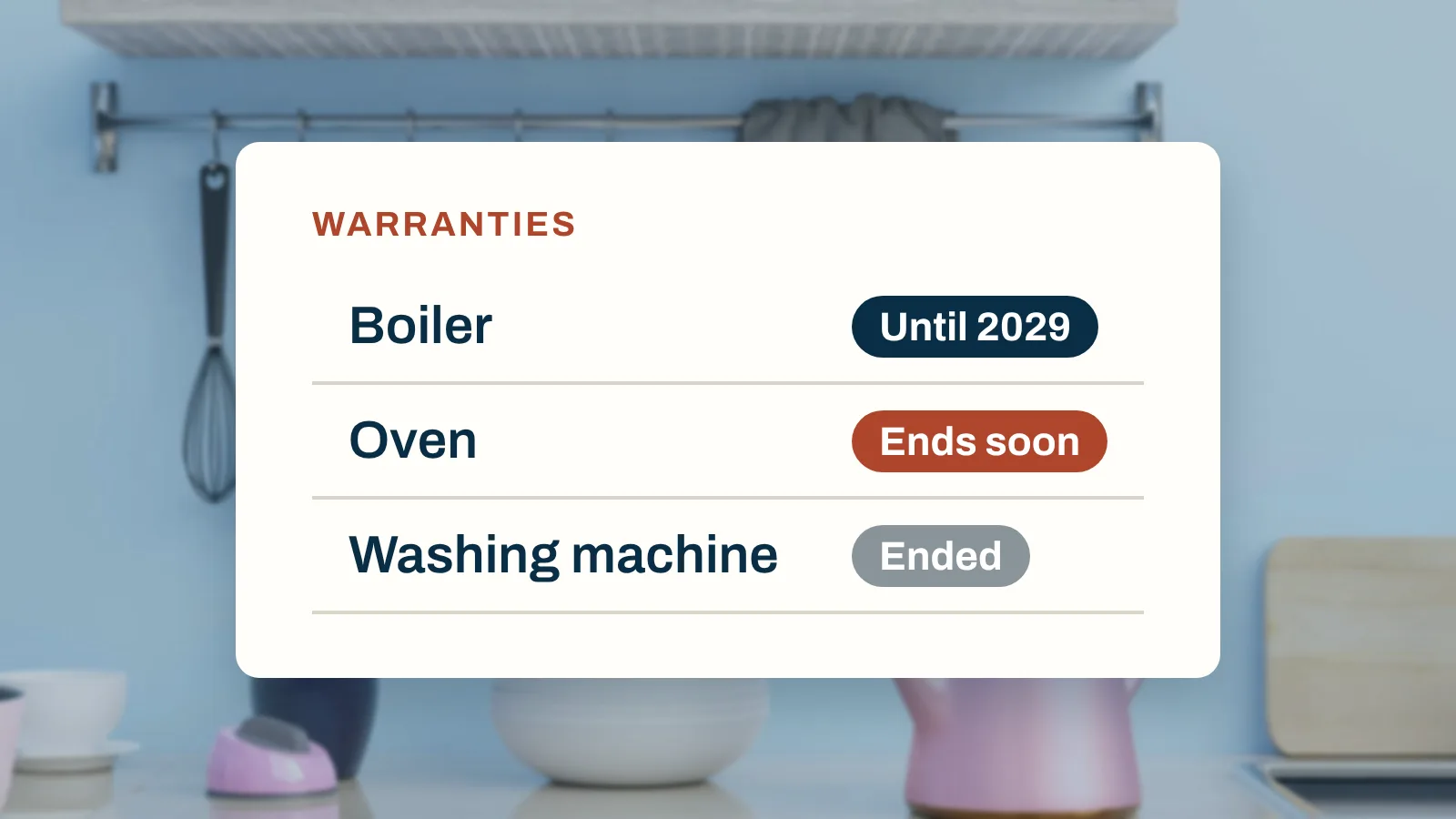
Review warranties and service dates
You
Some warranties depend on servicing
Gas Safe Register says it is so important to have all gas appliances checked once a year by a Gas Safe registered engineer, because an appliance that has been improperly fitted, repaired or maintained, or whose vents, flues or chimneys are blocked, can produce carbon monoxide. It recommends an annual safety check and service for any gas appliance unless the manufacturer's guidelines say otherwise, and suggests having the gas pipework inspected at the same time (Gas Safe Register).
Tip
If a warranty on a boiler, roof or window depends on a yearly service, keep the service record with the warranty. A missing record can be the difference between a claim and a bill.
Every few years
Some checks come round less often, so they are the easiest to lose track of. Write the next due date down as soon as each one is done.
Electrical inspection. An Electrical Installation Condition Report from a registered electrician.
Smoke alarm replacement. Check the expiry date on each unit.
Exterior repainting. Timber windows, doors, fascias and barge boards.
Pointing and render repairs. As found on your yearly walk round.
Drain survey. If you have had repeated blockages or slow drains.
Septic tank or cesspit emptying. If your home is not on mains drainage, at the interval your installer or manual gives.
Electrical Safety First recommends that electrics are inspected and tested every 10 years for an owner-occupied home and every 5 years for a rented home, and also before selling or when buying a previously occupied property (Electrical Safety First). It notes that the inspection is a legal requirement across the UK for privately rented homes. Rules for rented homes and for other countries differ, so check the official guidance where you live.
Keep a record of every check
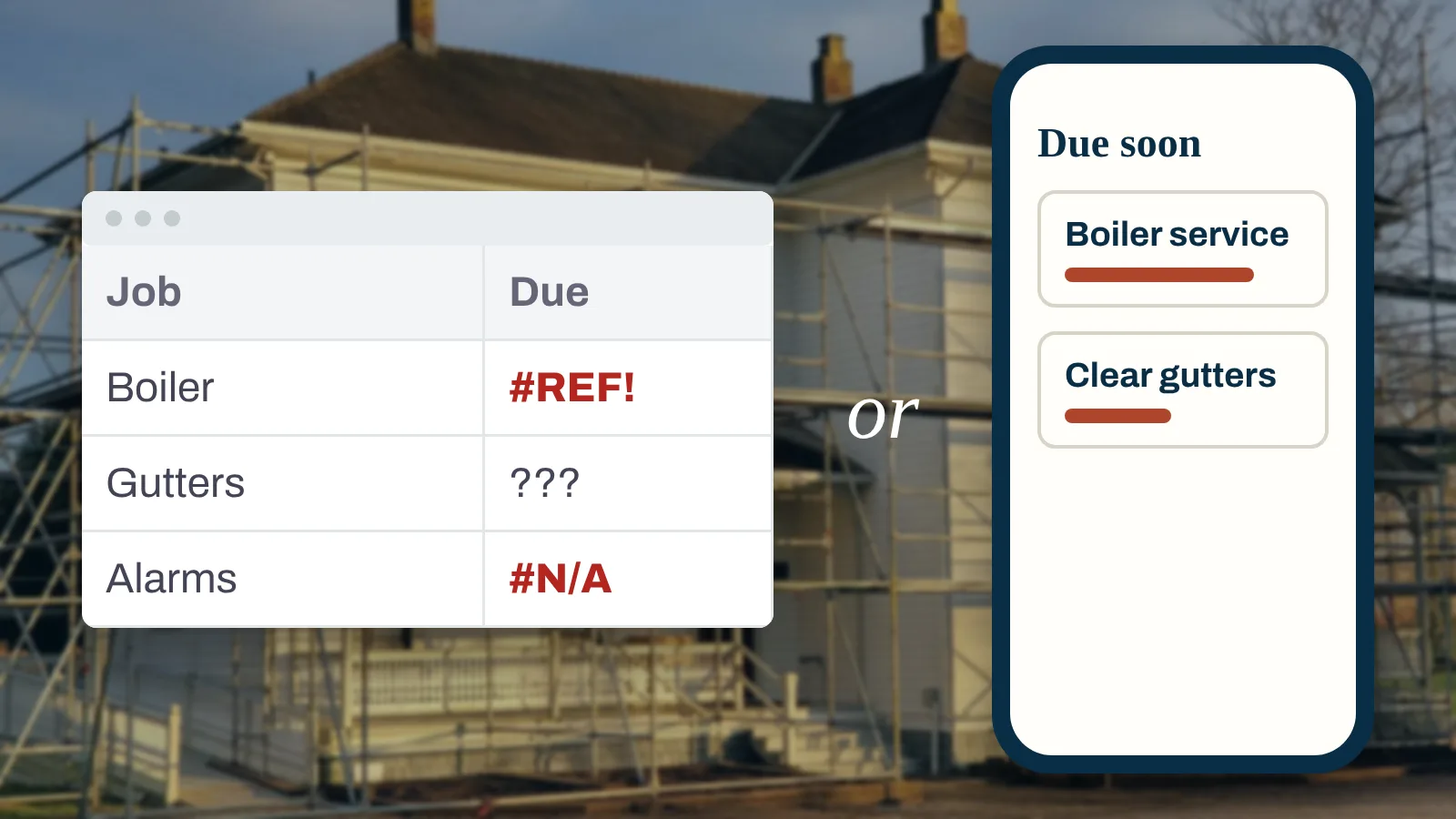
Mekozo's Property Record shows the work carried out, with its room, what it cost and its documents, and keeps planned work separate, so every check on this list leaves a history.
The schedule tells you what to do. The record tells you what happened. For each job, note:
What was checked or done. "Gutters cleared, front and back."
When. The date, so the next one can be planned.
Who did it. You, or the trade's name and contact details.
What it cost. Including call-out fees and parts, so you can plan a realistic home maintenance budget for next year.
What was found. Even "nothing wrong" is worth writing down.
The paperwork. Certificates, service records, receipts, warranties and photos.
Kept by room and by system (heating, electrics, roof, drainage), this becomes the history of the house. It helps when something goes wrong, when a warranty claim needs proof of servicing, and when you sell. Our guide to keeping a useful home record shows what to keep and how to organise it.
Watch out
A repair found during a check is a new job. Give it its own line, a price and a date, rather than leaving it as a note on the checklist where it can be forgotten.
House maintenance checklist: the full schedule on one page
When
Jobs
Every month
Test alarms; look for leaks; check boiler pressure; clean fan grilles
Every autumn
Clear gutters, downpipes and gullies; check the roof; lag pipes; check the stop valve; book the gas service
Every winter
Check the loft and ceilings after storms; watch for condensation
Every spring
Inspect roof and walls; check timber paintwork; clear vegetation
Every summer
Clear gutters under trees; repaint bare timber; check outside
Every year
Gas safety check and service; chimney sweep; full walk round; review warranties
Every 10 years (owner-occupied)
Electrical inspection; replace smoke alarms by their expiry date
On the Operation Sicily villa
From the villa in Sicily. Maintenance at the villa that Mekozo's founder, Jonathan Smith, films for Operation Sicily started before any renovation, with cheap fixes. Every internal door lock was stiff or seized, so each handle, locking plate and latch was cleaned with a wire brush and worked with lubricating spray until it moved freely, and the last broken roller shutter was re-threaded so it would shut (Episode 4). The bigger lesson came with the drainage. Jonathan tested the three chamber cesspit and soakaway before deciding whether to replace it: 90 litres poured into the soakaway drained as fast as it went in, then about 700 litres of stored rainwater were pumped into the first chamber and watched as they overflowed through the second chamber into the soakaway. Bringing the whole system up to modern standards would have meant excavating and replacing everything, at a cost that could have gone upwards of €12,000, so the test settled it. The hatches on two chambers were then raised with a brick course so all three lids sit level and stay easy to reach (Episode 57). Check first, record the result, and keep the access easy for next time. His guide to what he wishes he had known before buying the villa covers the hidden problems an older house can hold.
This guide explains a maintenance method. It is not a survey or professional advice; have gas, electrical and structural work checked by a qualified professional.
Questions people ask
What should be on a home maintenance checklist?
Group it by how often each job comes round. Monthly: test smoke and carbon monoxide alarms and look for leaks. Each season: clear gutters and drains, check the roof from the ground and look at walls, windows and doors. Each year: have gas appliances checked and serviced. Every few years: have the electrics inspected.
How often should I test my smoke alarms?
At least once a month, by pressing the test button, according to the government's Fire Kills campaign, whatever type of alarm you have. It also advises fitting at least one smoke alarm on every level of your home. Replace an alarm by the expiry date on the unit.
How often should a boiler be serviced?
Gas Safe Register recommends that any gas appliance has an annual safety check and service, unless the manufacturer's guidelines say otherwise. The check should only be done by a Gas Safe registered engineer.
How often should the electrics be checked in a house I own?
Electrical Safety First recommends a periodic inspection every 10 years for an owner-occupied home and every 5 years for a rented home, plus before you sell or when you buy a previously occupied property. The electrician issues an Electrical Installation Condition Report.
When should I clear the gutters?
Historic England's maintenance checklist says to inspect and clear gutters and downpipes after heavy leaf fall, at least every autumn and preferably more often. It also suggests inspecting pitched roofs twice a year and after storms or high winds.
What is a seasonal home maintenance checklist?
It is a list of house jobs grouped by season, because the weather decides when they matter. Autumn is for gutters, gullies, lagging pipes and booking the gas service; winter for checking the loft and ceilings after storms; spring for the roof, walls and timber paintwork; summer for repainting bare timber and checking outside.
Jonathan Smith is the founder of Mekozo and Operation Sicily. Jonathan bought an abandoned villa in Sicily and is rebuilding it on camera, every week. Mekozo is the app Jonathan built to keep that renovation's money in one picture.
How to find a lost appliance manual, what to keep for a warranty claim, and a simple way to file every manual and warranty with the item it covers, so the next breakdown starts with the paperwork to hand.
The documents you need to sell a house, from proof of ownership and the energy certificate to the certificates, guarantees and records of work that answer a buyer's questions, with country rules in labelled boxes.
A spreadsheet and a home maintenance app can both keep track of your house, if they record the right things. Here is what to track, a spreadsheet layout to copy, what a good app should do, and how to choose.