A 1 euro house in Italy comes with a deposit, a notary, taxes on the deed, design and permits, and a renovation with a deadline. Every cost heading, a method to budget one, and the official sources to check.
A 1 euro house is a symbolic price, not the cost: towns usually require a renovation within a set period, often two or three years, backed by a deposit.
Mekozo's founder, Jonathan Smith, who films his villa renovation on Operation Sicily, puts the refundable deposit at typically €2,000 to €5,000, notary fees at €1,500 to €3,500, and a full renovation at a starting budget of €80,000 to €120,000.
Taxes on the deed and notary fees still apply: Italy's notaries' council lists a minimum registration tax of €1,000 on a purchase from a private party.
Each town's call (bando) sets its own rules on deadlines, deposits and use, and is published on the comune's own official website, so read the call before you budget.
Budget the whole project in headings: purchase, deposit, notary and taxes, professionals, permits, works, utilities, travel, ongoing costs and contingency.
What does a 1 euro house in Italy really cost?
A 1 euro house in Italy costs €1 to buy, then much more to own. Towns usually require a renovation within two or three years, backed by a refundable deposit. Jonathan's 2026 guide puts that deposit at €2,000 to €5,000, notary fees at €1,500 to €3,500, and a full renovation at a starting budget of €80,000 to €120,000.
So the useful question is not "how cheap is the house?" but "what will the whole project cost, and can I finish it in time?" This guide gives you the cost headings to budget, a method to price a particular house, and the official Italian sources to check. It explains a budgeting method only; it is not tax or legal advice.
How 1 euro house schemes work
The schemes are run by individual towns, not by the Italian state. A town (comune) with empty, decaying houses in its historic centre publishes a call, called a bando, offering them for a symbolic €1. In return, the buyer commits to renovating the house within a set period.
The town publishes a call. It lists the houses, the conditions, the deadline and how to apply.
You apply to the town in response to the call, within its application window.
You lodge a deposit or guarantee. In Jonathan's research it is typically €2,000 to €5,000, refundable when the renovation is finished on time and to the required standard.
You complete the purchase at a notary. The notary checks the transaction and registers the transfer.
You design, get permission and renovate. Most schemes require completion within three years; some give two.
The deposit is returned when the town confirms the work is done. Miss the deadline and you usually lose it.
In Italy
Each town's call sets its own rules: the deadline, the deposit, whether a renovation plan is needed and what the house may be used for afterwards. Schemes open, pause and close regularly, so check the comune's own official website for the current call before you plan anything around a particular town.
Where to find current 1 euro house schemes
There is no single national list run by the Italian state, because each comune runs its own scheme. To find a live call:
Start with the towns you would actually live in or visit. Search for the comune's name with "case a 1 euro" or "bando case 1 euro".
Go to the comune's own website. Calls are published there, usually in the albo pretorio (the official notice board) or a dedicated page, with the list of houses, the conditions and the closing date.
Read the bando itself, not a summary. Check the deadline for applications, the deposit or guarantee, the renovation deadline and the permitted use.
Contact the comune's technical office (ufficio tecnico) with questions, in writing, and keep the reply.
Treat news articles and agency listings as leads only.Which? notes that some towns use an appointed agency to manage their scheme; the comune's own call is still the document that binds you.
The cost headings for a 1 euro house
Give each of these its own line. A heading with no figure yet is not zero; it is unknown, and stays visible until you have a figure.
Cost heading
What it covers
Published guide figure
Purchase price
The symbolic €1
€1
Deposit or guarantee
Held by the town until the work is done
€2,000 to €5,000 (Jonathan's research, Sicily, 2026); the call sets the figure
Notary
Checking the deed and registering the transfer
€1,500 to €3,500 (Jonathan's research, Sicily, 2026)
Taxes on the deed
Registration, mortgage and cadastral taxes
Set by law; ask the notary for a written estimate
Professionals
Geometra or architect, structural engineer, surveys
Get written quotes
Permissions
Applications and fees for the planned work
Depends on the work and the town
Renovation works
Structure, roof, services, finishes
At least €80,000 to €120,000 for a full renovation (Jonathan's research, Sicily, 2026)
Utilities
Reconnecting water, electricity and drainage
Get quotes from the providers
Travel and stays
Flights, car hire and accommodation for every visit
Your own estimate times the number of trips
Ongoing costs
Local property tax, insurance, utilities, upkeep
Ask the town and your professionals
Contingency
What you find once work starts
Sized from your own risks
In Italy
The notaries' council explains which taxes apply to a purchase and how they are calculated in its guide to buying a home. For a purchase from a private party, it lists a minimum registration tax of €1,000, so on a €1 house the taxes on the deed can be a thousand times the price. Which rules apply depends on the seller and on your circumstances, so ask the notary to confirm the taxes in writing before you commit.
Most 1 euro houses have been empty for decades, and Which? concluded that once building costs are added, the schemes are not much cheaper than buying in other rural Italian communities. From his own research, Jonathan says roof failure is common, which means years of water getting in, and that walls which look solid from the street can hide damp or movement that only shows once work starts. He gives these 2026 ranges for Sicily, which are his own estimates rather than official figures:
Scope
Guide range
A small property in stable condition needing cosmetic work
Under €30,000 to €50,000
A full renovation of a property of meaningful size
At least €80,000 to €120,000
A larger building with structural problems, a failing roof, and complete rewiring and plumbing
A deadline changes the budget. If the town gives you three years, the design, permissions, contractors and the work all have to fit inside it. A tight programme can push you towards whoever is available rather than whoever is best value, and a delay can cost you the deposit.
How to budget a 1 euro house, step by step
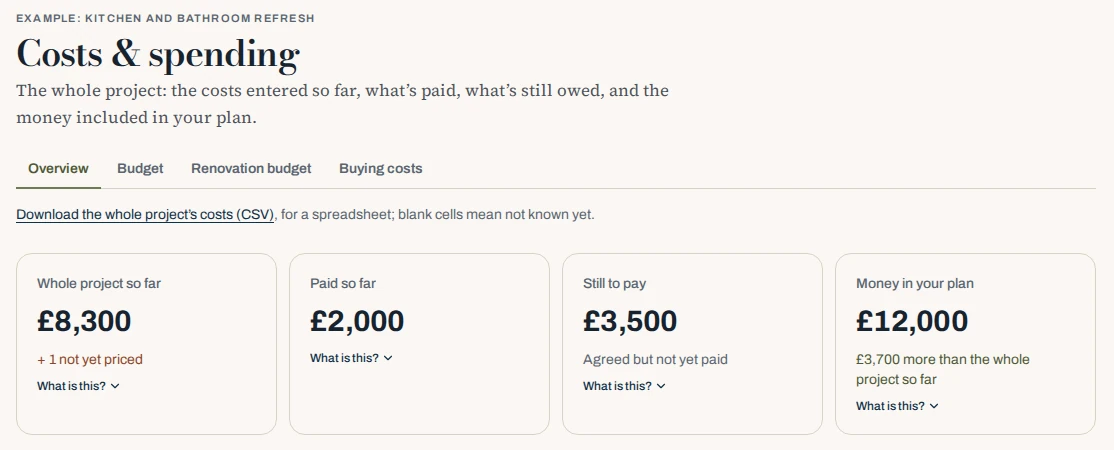
Mekozo's Costs & spending view adds up the whole project, buying costs and renovation together, and shows what is paid, what is still to pay and what is not yet priced, so the €1 price stays in proportion.
Read the call first. Write down the deadline, the deposit, the permitted use and any rules on how the work is approved.
Visit and assess the house. Look at the roof, the walls, the floors, the drainage and the neighbours' walls. Take photos and measurements.
Get an independent assessment before you commit. Use a geometra or structural engineer for a thorough assessment, not a passing look.
Write a scope of works. List what the house needs, room by room, so every quote prices the same job. Our guide to writing a renovation scope shows how.
Price every heading in the table above. Mark each line as an estimate, a quote, agreed or paid.
Add a contingency. For an abandoned property, Jonathan's own cost guide says he would hold back 20 to 25% of the build cost. Our guide to sizing a contingency shows how to set yours from your own risks.
Plan the timetable backwards from the deadline. Allow for design, permissions, contractor availability and materials lead times.
Compare it with a house that needs work but has no scheme. Price both routes in full, then decide.
Tip
Keep the cash you need for the whole project separate from money you hope to get back later. A deposit you expect to recover is still money you need to have at the start.
Paperwork to sort out before you buy
In Italy
You need an Italian tax code, the codice fiscale, to buy property. Agenzia delle Entrate explains how foreign citizens can apply, including through Italian consular authorities in the country where they live, and that a first tax code needs an in-person appointment. The notary completes the deed, and the notaries' council explains the steps and taxes of a purchase. Our guide to buying a house in Italy goes through each stage.
Ask your geometra and notary to check, in writing:
The house matches the cadastral records and the plans
Any past building work was authorised or regularised
What permission the planned work needs, and how long it takes
Any heritage rules in the historic centre that affect materials or appearance
What happens to the deposit, and to work already done, if you miss the deadline
1 euro house or a cheap house on the open market?
1 euro house through a scheme
Cheap house on the open market
Price
€1
A real price, negotiated with the seller
Deadline
Usually two or three years
None set by the seller
Deposit
Usually required
Not required by a scheme
Use afterwards
Set by the call
Your choice, within the rules
Choice of location
Towns running a scheme
Anywhere you can find a house
Renovation
Still the biggest cost
Still the biggest cost
In Jonathan's experience, houses in Sicily that need work but come with no deadline or deposit start at around €30,000 to €70,000. You pay more up front for freedom over the timetable and the use. Our guide to buying a fixer-upper shows how to work out the real cost of any house that needs work before you offer.
On the Operation Sicily villa
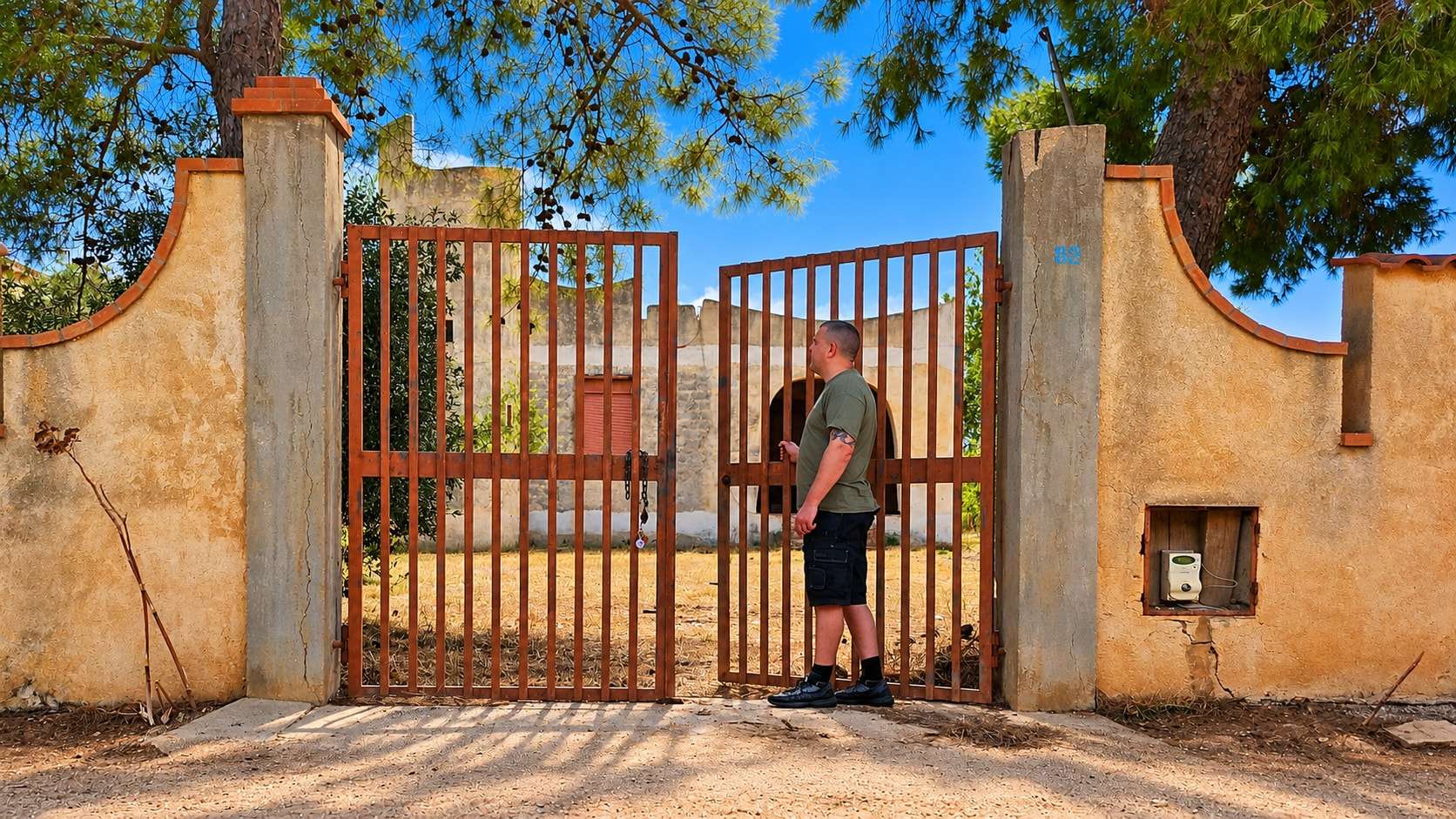
From the villa in Sicily. Jonathan looked at the €1 schemes early in his research, then bought an abandoned villa in the Trapani province on the open market for €21,500, with no scheme conditions or deadlines attached. It had been advertised at €100,000 and on the market for five years. The notary was €1,500, the estate agent €1,500 and the taxes €4,500: €7,500 on top of the price (Episode 9). The purchase was only the start. Before the work could be planned, one test on the old cesspit decided whether it could stay or would need replacing at a cost of upwards of €12,000; it passed (Episode 57). That is the kind of line a 1 euro house budget needs too, whatever the purchase price.
This guide explains a budgeting method and points to official sources. It is not tax or legal advice; check the current rules with the town, a notary and your own advisers before you commit.
Questions people ask
Are 1 euro houses in Italy real?
Yes. Some Italian towns, many of them in Sicily, transfer abandoned houses for a symbolic €1 to fight depopulation. In return the buyer usually agrees to renovate within a set period and lodges a deposit, so the price is real but it is not the cost.
What is the catch with 1 euro houses?
The catch is the commitment. You usually agree to renovate within two or three years, lodge a deposit you can lose if you miss the deadline, and pay the notary, the taxes on the deed, the professionals and the works. Many of the houses have been empty for decades, so the condition is often worse than it looks, and Which? found that once building costs are added the schemes are not much cheaper than other rural Italian homes.
How much does it cost to renovate a 1 euro house?
It depends on the size and condition of the house and how much work you do yourself. Jonathan Smith's 2026 guide to Sicily's €1 homes, written from his own research on Operation Sicily, suggests budgeting at least €80,000 to €120,000 for a full renovation of a property of meaningful size, and says larger buildings with structural problems can reach €150,000 or more.
Can foreigners buy a 1 euro house in Italy?
The schemes are generally open to buyers of any nationality, but each town's call sets its own conditions. You will need an Italian tax code, the codice fiscale, which Agenzia delle Entrate explains how foreign citizens can obtain, and a notary to complete the deed.
Do you have to live in a 1 euro house?
It depends on the town and the call. Some allow a second home or tourist accommodation, others require the buyer to register as a resident for a period. Read the conditions of the call you are applying under before you plan the budget around a use.
Is a cheap house without a scheme a better option?
It can be, if you want control over the timing and use. Houses that need work but carry no deadline or deposit are sold on the open market in many parts of Italy. You pay more for the house, but you set your own timetable, so compare the full project cost of both routes.
Jonathan Smith is the founder of Mekozo and Operation Sicily. Jonathan bought an abandoned villa in Sicily and is rebuilding it on camera, every week. Mekozo is the app Jonathan built to keep that renovation's money in one picture.
The questions that matter across the whole purchase, from the first viewing to the binding contract, grouped by who can answer them, with a checklist you can reuse for every house.
A plain guide to the steps and cost headings of buying a house in Portugal, with the official Portuguese and UK sources for each one, so you can plan the whole purchase before you sign anything binding.
A plain guide to the steps and cost headings of buying a house in France, with the official French and UK sources for each one, so you can plan the whole purchase before you sign anything binding.