Choosing a property
Questions to ask when viewing a house, and what to look for
What to ask, what to look at and how to record every viewing the same way, so you can compare homes fairly afterwards.


The questions that matter across the whole purchase, from the first viewing to the binding contract, grouped by who can answer them, with a checklist you can reuse for every house.
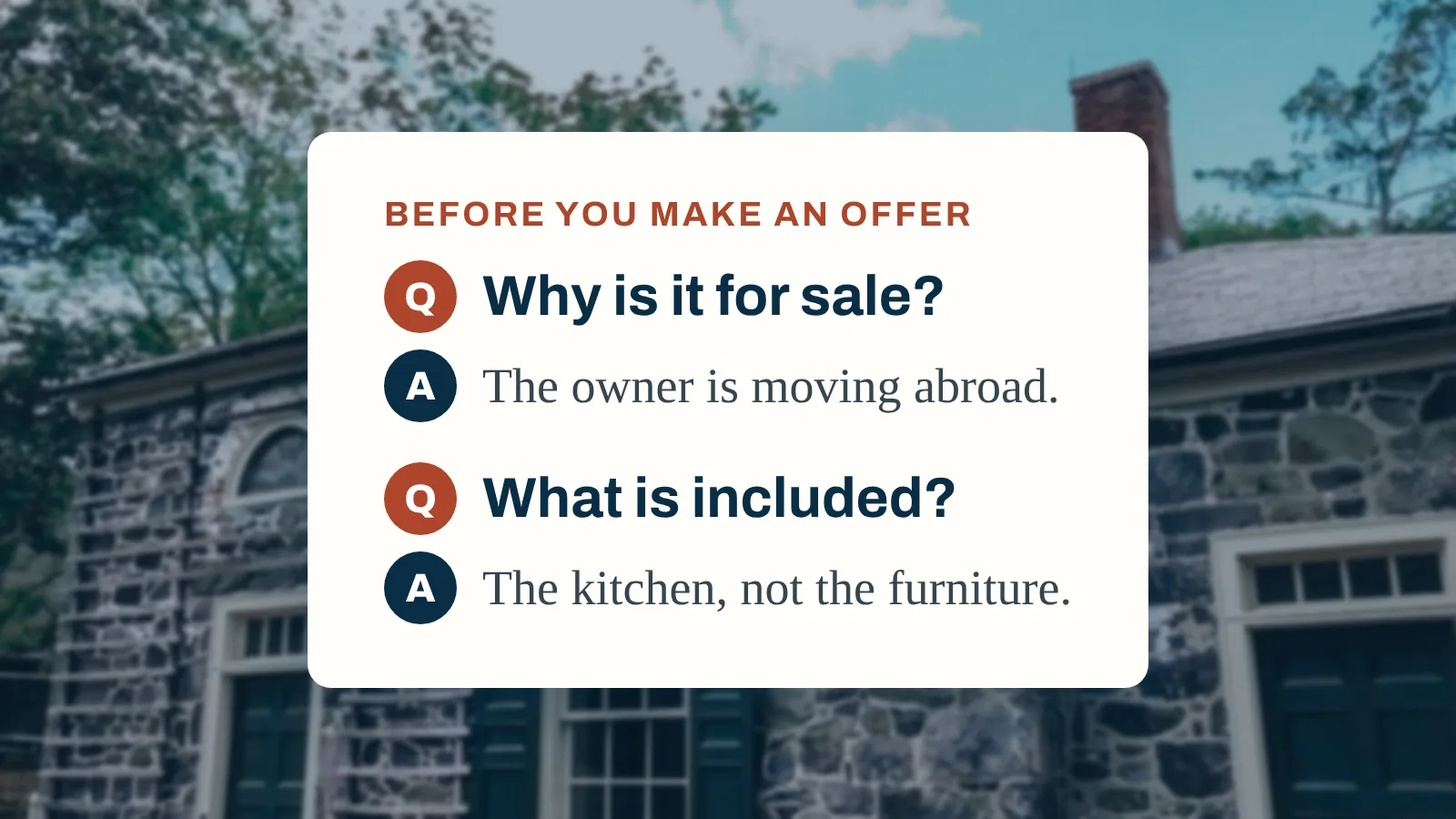
The most important questions to ask when buying a house are why it is for sale, how long it has been on the market, whether there is a chain, what work has been done with what permissions, what it costs to run, what the searches and survey show, and what you are committing to when you sign. Ask each one of the person who can actually answer it.
That last part is what most question lists miss. An estate agent cannot tell you what the local authority searches will show, and a seller cannot tell you how serious a crack is. This checklist groups every question by who answers it, in the order you will need the answers.
| Who | What they can answer | When to ask |
|---|---|---|
| You | What you need, what you can spend, what you will compromise on | Before the first viewing |
| Estate agent | The sale: time on the market, chain, offers, material facts | At the first viewing |
| Seller | The house as lived in: work done, bills, neighbours, quirks | Second viewing or by message |
| Surveyor | The condition of the building and what it needs | After your offer is accepted |
| Conveyancer or legal representative | Searches, title, boundaries, permissions, the contract | During the legal work |
| Specialists | Boiler, electrics, damp, drains, trees | When the survey recommends it |
The best questions start before any viewing. Without your own answers, every house looks like a possible yes.
The agent works for the seller, but they still hold useful facts about the sale. GOV.UK's guide to how to buy a home suggests questions like these:
Our guide to the questions to ask when viewing a house has the full list of questions for the agent at a viewing.
In the UK
Estate agents must pass on the material facts about a property, according to GOV.UK. National Trading Standards withdrew its detailed material information guidance in May 2025, when the Digital Markets, Competition and Consumers Act 2024 took over, but Propertymark explains that agents must still not leave out information that could affect your decision. Even so, an agent may simply not know about something, such as a development planned next door, so treat answers as a starting point for your own checks rather than the last word.
A seller knows how the house behaves in a way nobody else does. Ask at a second viewing or in writing through the agent.
Tip
When someone says "it was all done a few years ago", ask for the paperwork. Work without paperwork is a question for your surveyor and conveyancer, not a fact. You can check a band on GOV.UK's council tax band service rather than relying on memory.
In the UK
For a leasehold flat or house, GOV.UK's how to buy guide suggests asking how long is left on the lease, how much the ground rent and service charge are, whether and when they will change and by how much, and whether there are upcoming works you would have to pay a lump sum towards. It also suggests asking whether the previous owners have paid all service charges, and whether the lease contains restrictions, for example on keeping pets. The seller's legal representative should provide an LPE1 form and supporting documents to help answer these.
These are questions for a survey, not a viewing. You can spot warning signs yourself, and our guides to questions to ask when viewing a house and the house survey checklist cover what to look for. But the answers that change your offer come from a professional.
Ask the surveyor:
Watch out
Read the report, then speak to the surveyor. GOV.UK says that if significant issues come up, you can ask the seller to fix them before you buy, renegotiate your offer to reflect the cost of the work, or withdraw. Each of those needs a figure, so ask for written quotes on anything serious. Our guide to how much to offer on a house covers turning work into an offer.
For an older property, our guide to what to look for when buying an old house lists the questions that matter most.
Your conveyancer or legal representative answers the questions that live in documents. Ask:
In the UK
GOV.UK says local authority searches show restrictions on the land or property, such as tree preservation orders and listed or conservation area status, and some external factors such as new roads or rail schemes, but not development on a neighbour's land. In England, you can also check the long term flood risk for the area yourself.
Every answer above can change the cost of the house. Before you commit, ask yourself:
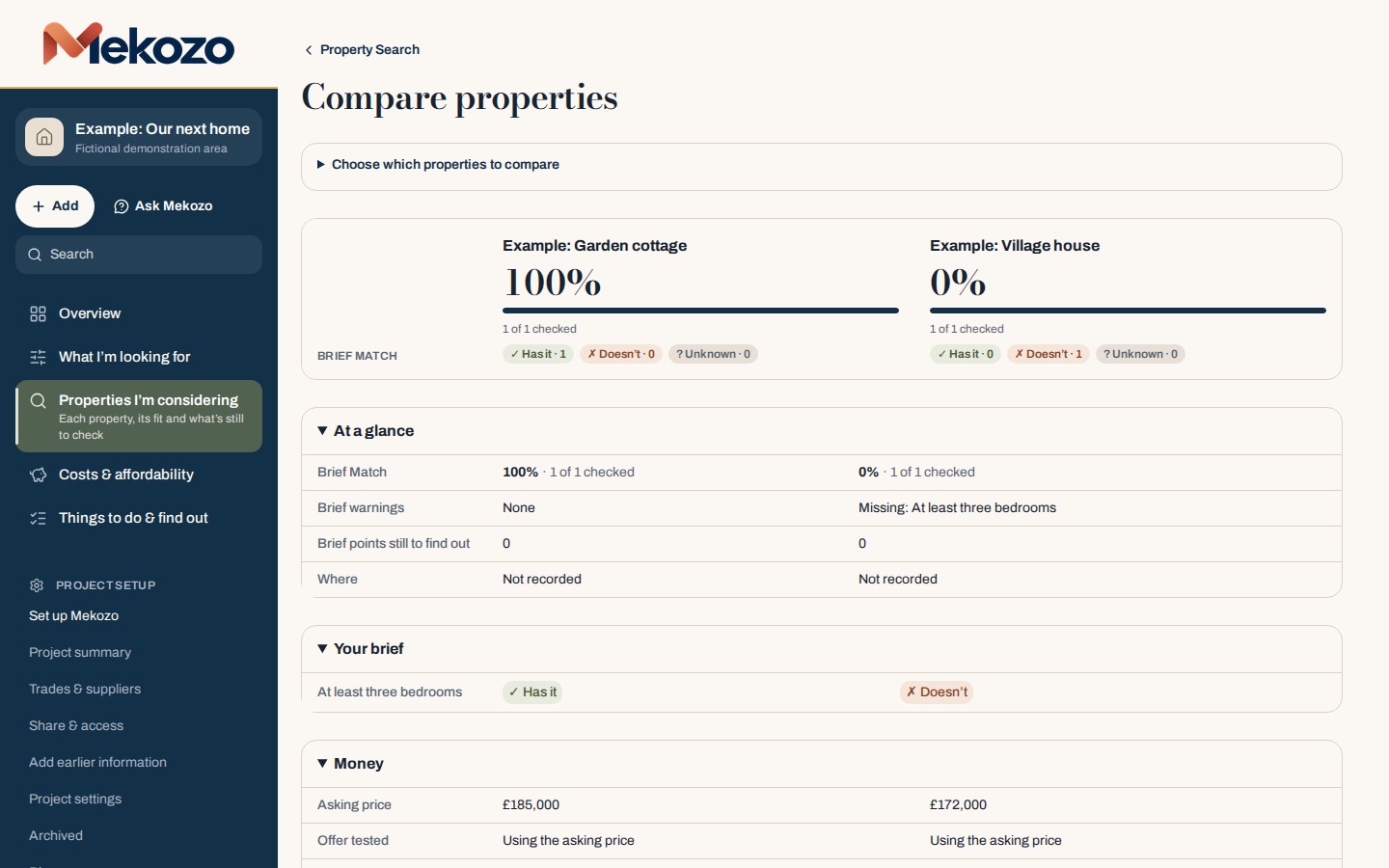
Mekozo compares each property against your Property Brief and shows the points still to find out, so you can see at a glance what is unanswered.
Try it free for 30 days, no card neededA list of questions only helps if you know which ones are answered. By the time the legal work starts, you may have thirty open questions spread across emails, messages and notes from viewings.
Whether you keep it in a house hunting app or a spreadsheet, the method is the same: one list, one owner per question, and nothing left to memory.
On the Operation Sicily villa
From the villa in Sicily. Jonathan Smith, Mekozo's founder, viewed around 50 properties over three months before buying the villa he now films for Operation Sicily, as he describes in Episode 8. Two deals fell apart only because the right questions were asked of the documents: one villa had been built over a forgotten archaeological site that was left out of the paperwork, and a farmhouse had a hidden room missing from every official plan. Neither showed at a viewing, and neither agent volunteered it. His guide to the biggest red flags when buying property in Sicily sets out the warning signs worth checking before you commit. The lesson travels: ask each question of the person or document that can prove the answer.
Playing loads YouTube’s external player.
Watch directly on YouTube ↗The same groups apply in any country, but the people change. In much of Europe a notary completes the sale, and you may need a local tax number, an independent lawyer and translated documents. Add these:
Our guides to buying a house in Spain, buying a house in France, buying a house in Italy and buying a house in Portugal give the steps and official sources for each country.
Ask yourself
Ask the agent
Ask the seller
Ask about a leasehold
Ask the surveyor
Ask your conveyancer
Before you commit
Watch out
In England and Wales, GOV.UK says exchanging contracts is a legal commitment, and that if you withdraw afterwards you may lose your deposit and have to compensate the seller for other losses. Make sure the questions that could change your mind are answered before that point.
For the whole route from offer to keys, see our buying a house checklist, and for the earlier stages, our guide to shortlisting and checking homes before you offer. Mekozo keeps your questions with each property's viewing notes, photos and checklist; see how to compare properties without losing your priorities.
This guide explains what to ask and who can answer it. It is not legal or survey advice; use a qualified surveyor and conveyancer.
Ask the agent why the house is for sale, how long it has been on the market, whether there is a chain and what is included. Ask the seller about work done, consents, running costs and any disputes. Then ask a surveyor about the condition and your conveyancer about searches, boundaries and permissions, before you sign anything binding.
GOV.UK suggests asking for the material facts about the property, how long it has been on the market, whether it is in a chain, how long the owners have lived there, whether earlier sales fell through and whether consents were obtained for past work. Ask whether it is freehold or leasehold too.
Ask what work they have done and who did it, whether they have the paperwork, what the bills cost, what is included in the sale, when they want to move and whether there have been any disputes with neighbours. A seller can tell you how the house behaves in winter or in heavy rain in a way an agent cannot.
Ask what the local authority searches show, whether the property is listed or in a conservation area, whether any extra searches such as flood risk or mining are advised, and whether the boundaries, rights of way and permissions for past work are in order. For a leasehold home, ask about the lease length, ground rent and service charges.
Ask the surveyor how serious each problem is, what the remedy would be and whether a specialist should look at anything, such as the boiler or damp. GOV.UK says you can then ask the seller to fix issues, renegotiate your offer to reflect the cost of the work, or withdraw.
It is never too late to ask, but in England and Wales it becomes much more expensive to act on the answer after exchange of contracts, because GOV.UK warns you may lose your deposit and owe compensation if you withdraw. Clear the questions that could change your decision before you commit.

Jonathan Smith is the founder of Mekozo and Operation Sicily. Jonathan bought an abandoned villa in Sicily and is rebuilding it on camera, every week. Mekozo is the app Jonathan built to keep that renovation's money in one picture.
Real renovation experience and regional guidance from Operation Sicily.
What to ask, what to look at and how to record every viewing the same way, so you can compare homes fairly afterwards.
Old houses are built differently from modern ones. What to check element by element, which permissions to confirm, the survey to ask for and how to turn what you find into a budget before you offer.
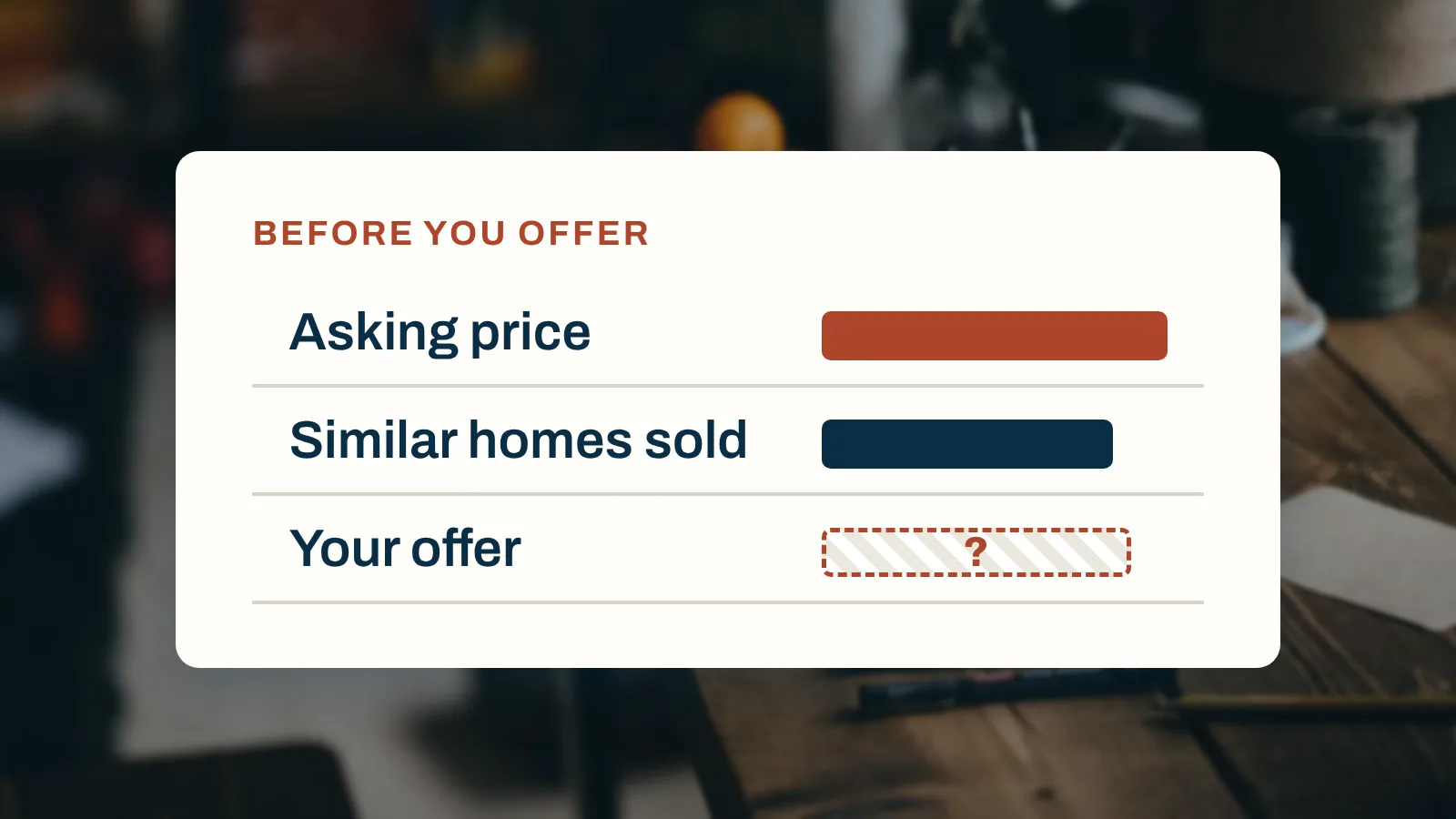
The asking price is where the seller starts, not what the house is worth. How to research sold prices, set your maximum before you negotiate, work out an offer on a house that needs work from the cost of the work, and put your offer in writing.
Budgets, quotes, payments, documents and decisions in one place
30 days free. No card needed.
Monthly, with no annual plan. The Terms of membership set out the details.