Buying a house in Spain usually follows six steps: get an NIE, open a Spanish bank account, have independent legal checks done, sign a private contract with a deposit, sign the public deed before a notary, then register it. Budget for purchase tax, notary, land registry, legal and translation fees, a survey, and running costs on top of the price.
This guide sets out each step, the cost headings to plan for, and the official Spanish and UK sources to check. It explains the method; it is not legal or tax advice, and rates depend on the region and on you.
How to buy a house in Spain: the steps
| Step | What happens | Who is involved |
|---|
| 1. NIE | You get your foreigner's identification number | Spanish consulate, police station or a representative |
|---|
| 2. Bank account | A Spanish account for payments and bills | A bank authorised in Spain |
|---|
| 3. Legal checks | Ownership, debts, planning and licences checked | Your independent lawyer |
|---|
| 4. Reservation | An optional small deposit to take the home off the market | You, the seller or agent |
|---|
| 5. Private contract | A contract with a larger deposit, often called arras | You, the seller, your lawyer |
|---|
| 6. Public deed | The deed of sale is signed and the balance paid | The notary, you, the seller |
|---|
| 7. Registration | The purchase is entered in the land registry | Notary, lawyer, land registry |
|---|
Step 1: get your NIE
GOV.UK describes the NIE (Número de Identidad de Extranjero) as a personal identification number required for any fiscal transaction in Spain, such as opening a bank account or buying property. Buyers from outside Spain can apply at a Spanish embassy or consulate, or through a representative. Apply early: everything else waits for it.
Step 2: open a Spanish bank account
You will use it to pay the deposit, the balance, taxes and, later, utilities and the annual property tax.
Step 3: instruct an independent lawyer
GOV.UK strongly recommends an independent lawyer who specialises in Spanish land law (urbanismo) and works only for you, not for the agent or developer. If the lawyer is in Spain, ask for their registration number and check it with the local bar association (Colegio de Abogados). If you do not read Spanish well, GOV.UK advises having every contract and document translated by an independent translator.
Watch out
GOV.UK warns to use extreme caution if an estate agent, promoter or lawyer urges you to cut corners to save money or time. Do not sign papers or hand over money until you have had independent advice.
Step 4: reserve the property
Some sellers or agents ask for a small reservation deposit to take the home off the market while checks are done. Agree in writing what happens to it if the checks fail.
Step 5: sign the private contract and pay the deposit
The private contract sets the price, the deposit, the completion date and the conditions. Under the common arras form, the deposit is usually forfeited if the buyer pulls out and returned double if the seller does, but the terms are whatever the contract says, so have your lawyer explain them before you sign.
Step 6: sign the public deed before a notary
A Spanish notary prepares the contract of sale and issues the public deed (escritura). GOV.UK says the buyer has the right to choose the notary, and that the notary is a public servant with a duty to give free and impartial advice on the contract. If you borrow to buy, Law 5/2019 requires you to visit the notary before signing, so the notary can check that you have received and understood the loan documents. For anything about borrowing itself, use a qualified adviser.
Step 7: register the purchase
GOV.UK advises registering the property in your name with the land registry as soon as possible after completion, to protect your rights. The notary can send advance notice to the land registry electronically once the deed is signed.
The checks to make before you pay anything
GOV.UK's purchaser's checklist is the best single list. Before you complete, make sure:
- You have seen the land registry extract (nota simple), available from the Colegio de Registradores
- The property and land match the registered details, and the sellers are the registered owners
- There are no debts or charges, such as a mortgage, on the property
- There are no planning proceedings against the property
- The town hall confirms the building has its licences and what type of land it is on
- If the land is rural or not classified for building, the regional government confirms construction is authorised
- The cadastral certificate gives the exact boundaries and area, and matches the land registry description (the Catastro holds cadastral records)
- The previous owner's annual property tax (IBI) is paid, ideally with a town hall certificate of no arrears
- You have the licence of first occupancy or habitation certificate, needed to connect electricity and water
- Utility bills are paid up
- If there is a community of owners, a certificate confirms no outstanding debts (the property itself answers for unpaid community charges for the current year and the three previous years)
- The seller has shown you the energy efficiency certificate, required by law since 2013
Tip
A survey is not compulsory in Spain, but GOV.UK calls it wise to have a chartered surveyor check the property. A survey finding is far cheaper to deal with before you sign than after.
In Spain (location rules)
GOV.UK flags three things to check before buying. Coastal properties may be affected by the 1988 Coastal Law, so ask the regional Coastal Demarcation office for a certificate. Rural land is normally reserved for agricultural use, so confirm full planning permission for residential use. And in some areas near military bases, including all Spanish islands, Ceuta, Melilla and regions bordering France, Andorra and Portugal, UK nationals and other non-EU buyers need a military permit from the Ministry of Defence before buying.
The costs of buying a house in Spain
Every purchase has the same cost headings. The rates and who pays them depend on the region, the type of property and your own situation, so treat this as a list to price, not a set of figures.
| Cost heading | What it is | Where to check |
|---|
| Purchase tax on a resale home | A transfer tax (Impuesto de Transmisiones Patrimoniales, ITP), set by each region | Regional tax agency, Agencia Tributaria |
|---|
| Purchase tax on a new home from a developer | VAT (IVA), 10% on most homes, plus stamp duty (Actos Jurídicos Documentados, AJD), set by each region | Agencia Tributaria VAT rates, regional tax agency |
|---|
| Notary | Fees for preparing and witnessing the public deed | Your chosen notary, in writing |
|---|
| Land registry | Fees for registering the purchase | Your lawyer or the land registry |
|---|
| Independent lawyer | Legal checks, contracts, completion | Written quote from the lawyer |
|---|
| Translation | Independent translation of contracts and documents | Written quote |
|---|
| Survey | Optional, but advised by GOV.UK | Written quote from a surveyor |
|---|
| NIE and representative | Any fees if someone applies on your behalf | Consulate or representative |
|---|
| Lender fees, if borrowing | Charged by the lender | The lender |
|---|
| Currency transfer | Charges and the rate on the day you pay | Your bank or provider |
|---|
| Travel | Viewing trips, notary appointment, handover | Your own estimate |
|---|
In Spain (tax)
GOV.UK says taxes on buying, selling and renting property in Spain can vary widely from one region to the next, and advises speaking to an accountant or professional tax adviser. It also notes that tax is charged on the official valuation of the property rather than only the sale price, which you can check with the cadastral reference on the regional tax agency's site. The Agencia Tributaria publishes information in English on VAT and property transfer tax. On a new home from a developer, VAT is charged at 10% for most homes and 4% only for some officially protected housing, according to the Agencia Tributaria's table of VAT rates, with AJD on top. On a resale home you pay ITP instead, and administracion.gob.es confirms that each region sets its own rates for ITP and AJD and manages the tax. Mekozo does not give tax advice; check the current rules for your region and your circumstances.
Running costs after you buy
Budget for these from the first year:
- Annual property tax. The Impuesto de Bienes Inmuebles (IBI), paid to the town hall.
- Community of owners fees. For homes in a block or development, set by the community's statutes. Under article 9.1.e of the Horizontal Property Law, as amended by Law 8/2013, the property answers for unpaid community charges for the current year and the three previous years, so a new owner can be asked to pay the seller's arrears.
- Non-resident tax return. GOV.UK says non-resident owners must complete a tax return every year, even if they do not rent out the home.
- Insurance, utilities and maintenance. Including any pool or garden upkeep.
- Holiday letting. If you plan to let to tourists, most regions require a licence and some cap the number. A national registration number for short lets has also applied since 1 July 2025 under Royal Decree 1312/2024, as Osborne Clarke explains, though the Supreme Court annulled parts of that decree in 2026, so ask your lawyer for the current position. Check before you buy, not after.
Buying off-plan or from a developer
GOV.UK says off-plan buying carries higher risk than buying a resale home, and lists extra protections:
- A bank guarantee (aval bancario) for every stage payment, individual to you rather than covering the whole development.
- Planning permission in place before any payment, since the guarantee obligation only applies once it is granted.
- Proof the land is registered to the developer, through the land registry.
- Structural defects insurance, included in the building manual (libro del edificio).
- A certificate of completion (certificado final de obra) and the licence of first occupancy before you sign the deed. GOV.UK says developers cannot force you to complete without the licence.
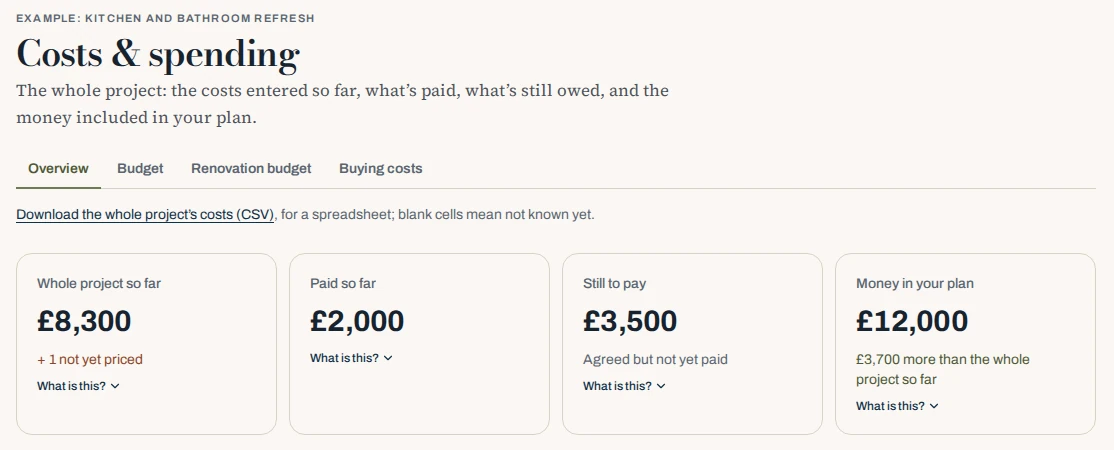
Put every cost in one list before you commit