Full house renovation: plan and budget it room by room
A full house renovation is easier to control as a set of room plans tied together by the whole-house jobs. How to write each room's plan, put the works in the right order and budget it all.
Plan a full house renovation as one plan per room plus a list of whole-house jobs, such as roof, structure, rewiring, plumbing, heating and windows.
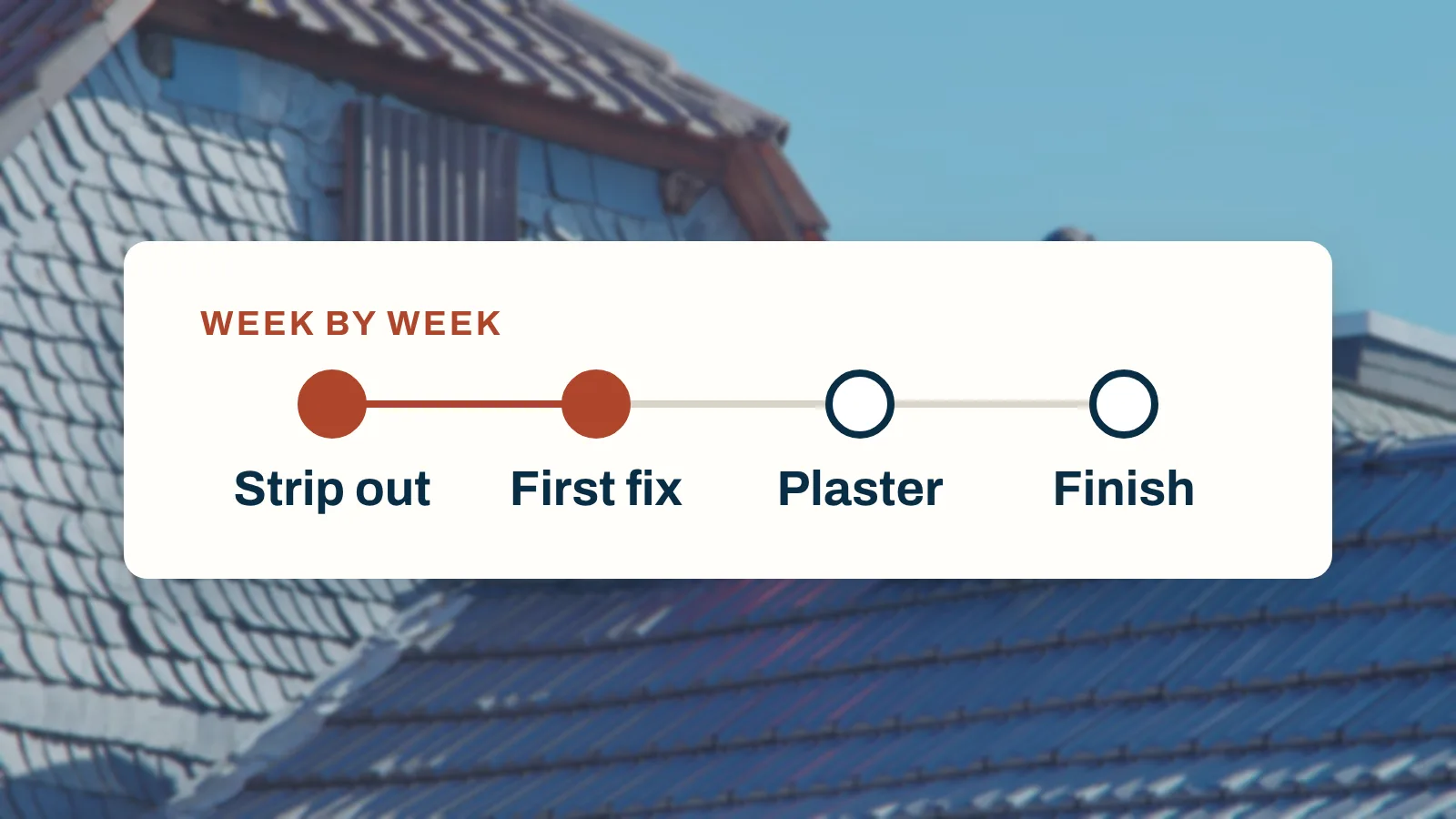
Whole-house jobs come first because they run through every room: structure and weatherproofing, then first fix services, then plastering, then second fix and finishes.
Give every room the same plan: what stays, what changes, services, finishes, fittings, a budget and a status for each line.
Budget the whole-house jobs separately from the rooms, then add fees, living costs and a contingency, so no line is hidden inside another.
Decide where you will live during the work: every extra month of renovation can mean another month of rent or accommodation.
A full house renovation is easiest to plan as one plan per room plus a list of whole-house jobs: roof, structure, rewiring, plumbing, heating and windows. Do the whole-house jobs first, in order, then finish room by room. Budget each room and each whole-house job as separate lines, then add fees, living costs and a contingency.
This guide shows how to split the house into a plan you can manage, the order the work usually has to follow, what goes into each room's plan and budget, and how to keep track as the rooms come together.
What is a full house renovation?
A full house renovation means renovating every room and most of the systems that serve them, often at the same time: electrics, plumbing, heating, and usually some combination of windows, roof, plaster and floors. It differs from doing up one room because the jobs overlap. A new circuit for the kitchen runs through the hallway; a new bathroom upstairs means pipes through the ceiling below. That is why the plan has two layers.
Layer
What it covers
Examples
Whole-house jobs
Work that runs through several rooms or the fabric of the building
Roof, structure, damp, rewiring, plumbing, heating, windows and doors, insulation
Room plans
What happens inside each room once the whole-house jobs allow it
Most full renovations follow the same broad sequence, because each stage depends on the one before it:
Survey and design. Find out the condition, decide what you want, get drawings and approvals in place.
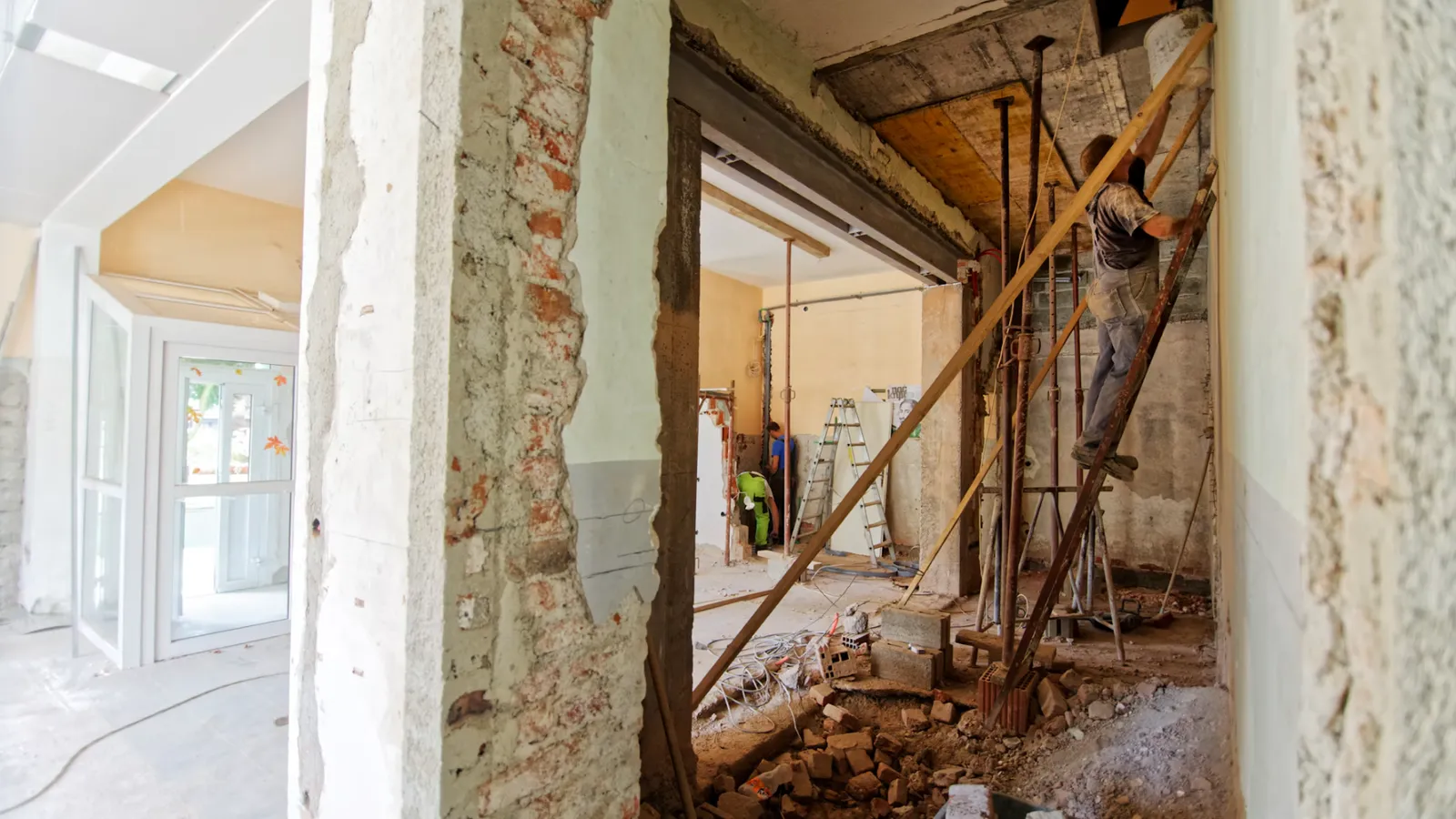
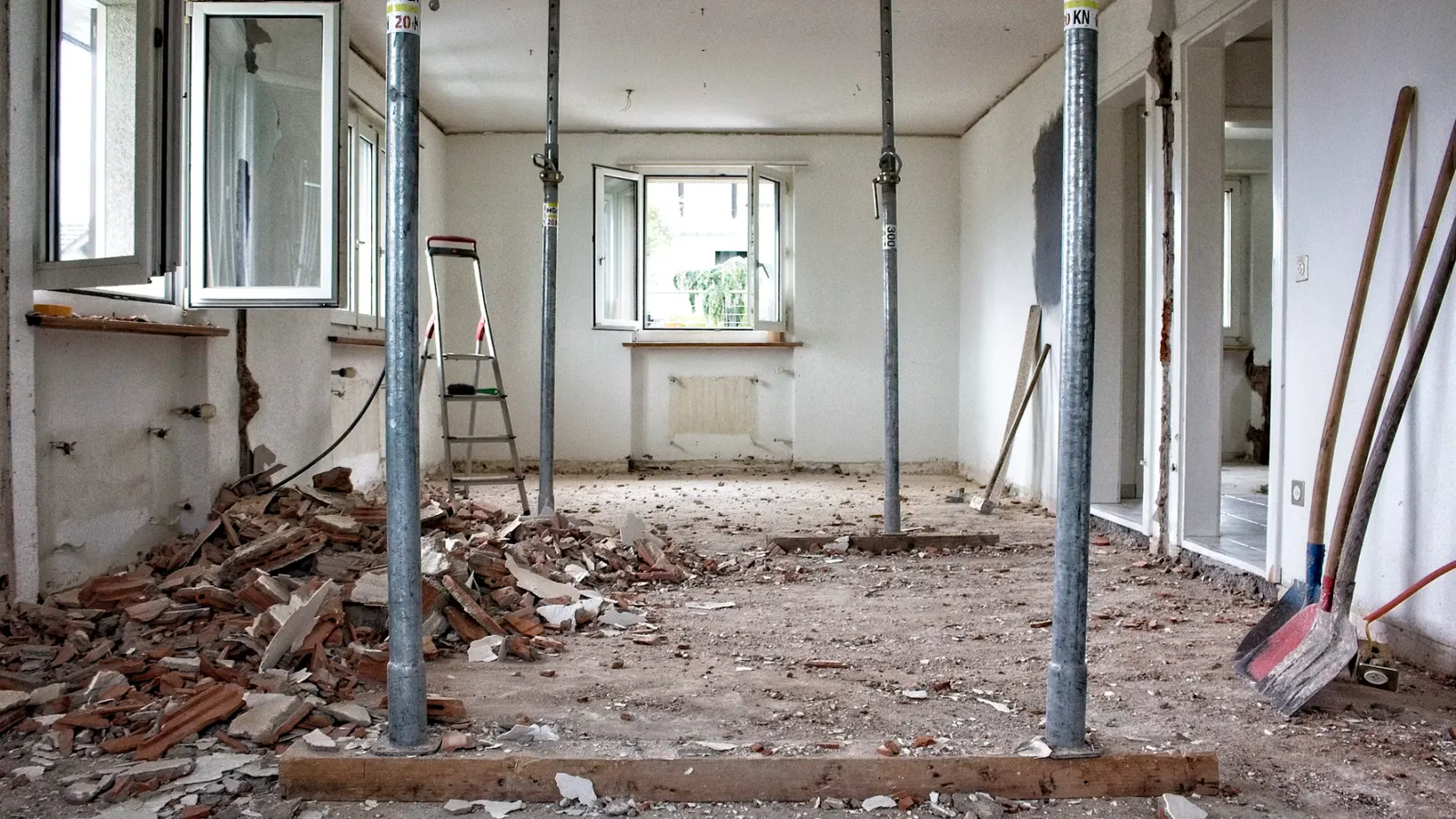
Strip out. Remove what is going. In older homes, check for asbestos first.
Structure and weatherproofing. Roof, walls, lintels, floors, damp. The building has to be sound and dry.
First fix. Cables, pipes, waste and ducting run through open walls, floors and ceilings.
Windows and external doors, often around this stage, so openings are finished before plaster.
Plastering. Only once every first fix trade has finished in that area.
Second fix. Sockets, switches, lights, radiators, sanitaryware connected.
Floors, kitchen and bathrooms. Flooring, then the fitted kitchen and bathrooms.
Decorating and snagging. Paint, final fittings, and a snagging list before final payments.
Watch out
HSE says asbestos can be found in any building built before the year 2000. If you are stripping out an older house, have suspect materials checked before work starts, and do not disturb them yourself.
Before you plan rooms, find out what the building itself needs. A survey tells you about the roof, structure, damp and services, and those answers decide the whole-house jobs. If the house is old, our guide to renovating an old house covers what to check first.
Step 2: list the whole-house jobs
Write down every job that crosses rooms or touches the fabric:
Roof and chimneys
Structural repairs and any walls moving
Damp and drainage
Rewiring and the consumer unit
Plumbing, waste and water supply
Heating and hot water
Windows and external doors
Insulation and ventilation
Plastering throughout, if needed
In the UK (England and Wales)
GOV.UK lists many of these among jobs that might need building regulations approval, including replacing fuse boxes and connected electrics, installing a bathroom that involves plumbing, replacing windows and doors, replacing roof coverings, and installing or replacing a heating system. You do not need to get approval yourself if the work is done by someone registered with a competent person scheme. Without approval, GOV.UK warns, you will not have the certificates you may need when you sell. Scotland and Northern Ireland have their own building rules.
Step 3: write one plan for every room
Give every room the same structure, so nothing is forgotten and rooms can be compared:
Section
What to write
Keeps
What stays: floor, doors, fireplace, built-in units
Choices still to make, with a date they are needed by
Budget
Each line priced, with its status
Go round the house in the same order every time: hallway, living rooms, kitchen, utility, bathrooms, bedrooms, loft, outside. Our guide to writing a renovation scope shows how to turn each room plan into a description trades can price.
Tip
Mark the services on the walls before first fix, room by room. It is far easier to agree a socket position with spray paint on bare plaster than on a drawing, especially if you and the electrician do not share a first language.
Step 4: put it all in order
Lay the whole-house jobs and the room work on one timeline. Whole-house jobs set the pace: no room can be plastered until its first fix is done, and no kitchen can be fitted until the floor is down. Note which jobs wait on approvals, deliveries or a particular trade, and which can run in parallel.
Step 5: budget the rooms and the whole-house jobs
Mekozo's Costs & spending view shows the renovation's costs room by room or by piece of work, with the whole-project total, what is paid and what is still to pay.
Budget in three blocks so no line hides inside another:
Whole-house jobs. Each one priced from a quote or a named, dated figure.
Room budgets. Each room's fittings, surfaces and labour.
Everything else. Design and professional fees, approvals, scaffolding, skips, living costs and a contingency.
Published figures help with single lines. For example, Which? found 12-unit kitchens ranging from about £1,500 to £9,000 across seven retailers in May 2025, before worktops, appliances or fitting, and Which? puts new boiler installation at around £1,400 to £7,000 (October 2026). Our guides to the kitchen renovation budget and the bathroom renovation budget break those rooms down, and our guide to estimating the cost of renovating a house shows how to build the whole-house figure.
Mark every line as estimate, quote, agreed price or paid, and keep unknowns visible in the total.
Step 6: decide where you will live
A full renovation usually makes much of the house unusable for a time: no water during replumbing, no power during rewiring, dust everywhere during plastering. Decide early whether you will stay, move between rooms or live elsewhere, and budget for it. Every month the work runs over is another month of that cost.
Step 7: get quotes on the same scope and agree payments
Ask for written quotes from more than one trade or builder on the same room plans and whole-house list. Citizens Advice suggests a quote should have a fixed total, a breakdown of the work and materials, separate costs for each part, how long the price is valid and whether it includes VAT, and suggests paying in stages. Our guide to comparing builders' quotes on the same scope shows how to line them up.
A room by room budget, worked through
This shows the structure, not a recommended spend. Replace every line with your own figures.
Area
Line
Figure
Status
Whole house
Roof repairs
From survey and roofer
Quote
Whole house
Rewiring
From electrician
Quote
Whole house
Plumbing and heating
From heating engineer
Quote
Whole house
Windows and doors
From installer
Quote
Whole house
Plastering
From plasterer
Quote
Kitchen
Units, worktops, appliances, fitting
From kitchen budget
Estimate
Bathroom
Suite, tiling, plumbing, ventilation
From bathroom budget
Estimate
Living room
Flooring, decorating, lighting
Your pricing
Estimate
Bedrooms
Flooring, decorating, wardrobes
Your pricing
Estimate
Hall and stairs
Flooring, decorating, balustrade
Your pricing
Estimate
Outside
Drainage, paths, garden
From trades
Unknown
Fees
Design, engineer, building control
From professionals
Quote
Living costs
Where you live during the work
Weeks times weekly cost
Estimate
Contingency
Sized from your risks
Set aside
Set aside
Keeping a full renovation on track
Review the whole plan weekly. What is done, what is next, what is waiting and on whom.
Log decisions as you make them, with the date, so trades work from the latest version.
Price changes before they happen. A change after ordering or after first fix costs more. Price and agree each variation or extra (change order) in writing before the work goes ahead, as our guide to variations and extras explains.
Keep the agreed price, invoices and payments apart. An invoice is the bill for agreed work; record it, then the payment against it. Our guide to tracking purchases and payments explains why it matters.
Photograph each room before it is closed up, so you know where every pipe and cable runs.
On the Operation Sicily villa
From the villa in Sicily. The abandoned villa that Mekozo's founder, Jonathan Smith, films for Operation Sicily is a full house renovation from the ground up, and his real timeline of the renovation sets out the order it has followed: structural assessment and repair, electrical first fix, plumbing first fix, drainage, removing old windows and preparing the reveals, plastering, second fix electrics, floor tiling, then kitchen and bathroom fitting. Each stage depended on the one before. Mains electricity came about ten to twelve months in, and plastering about twenty months in, because it could not start until every first fix trade was complete. By Episode 86, the electrics were fully working, the air conditioning was in, every wall was plastered, the new windows and doors were due, the kitchen was ordered and the bathroom was next. The timeline also names the cost that most often goes unexamined: every extra month of renovation is another month of accommodation. Jonathan did much of the work himself, which is part of why it has taken the time it has.
This guide explains a planning method. Figures are published prices, not quotes, and nothing here is building, legal or financial advice; get written prices and use qualified people for regulated work.
Questions people ask
How do you plan a full house renovation?
Start with a survey of the condition, then list the whole-house jobs and write a plan for each room covering what stays, what changes, services, finishes and fittings. Put the work in order, structure and services first and finishes last, price every line, and add fees, living costs and a contingency.
How do I work out what a full house renovation will cost?
It depends on the size of the house, how deep the work goes and the finish. Rather than trusting one average, price each room and each whole-house job from named, dated figures or quotes. Our guide to estimating the cost of renovating a house shows how to build that figure.
Should I renovate a whole house at once or room by room?
Doing the whole house at once lets the trades work through every room in sequence and avoids redoing finished rooms when a pipe or cable has to pass through. Room by room suits living in the house and spreading the cost, but plan the whole-house jobs first so you do not dig up a finished room later.
Can you live in a house during a full renovation?
Sometimes, if at least one room, a bathroom and some way to cook stay usable and safe. Rewiring, replumbing, plastering and floor work make most rooms unusable for a time. Ask the people responsible for the site what is safe, and budget for somewhere else to stay if needed.
How long does a full house renovation take?
Longer than most first plans assume, because each stage waits for the one before. On Jonathan Smith's abandoned villa, filmed for Operation Sicily, mains electricity came about ten to twelve months in and plastering about twenty months in, with a lot of the work done by one person. A house in better condition, with a full team, can move much faster.
Jonathan Smith is the founder of Mekozo and Operation Sicily. Jonathan bought an abandoned villa in Sicily and is rebuilding it on camera, every week. Mekozo is the app Jonathan built to keep that renovation's money in one picture.
A renovation goes better when the decisions come in the right order. A phase-by-phase checklist from first idea to handover: what to decide, what to check, who to book and what order the work goes in, with the sources behind each step.
There is no honest single figure for renovating a house. Here is how to build your own estimate from the size, the depth of work and the finish, using named, dated figures for each job.
A renovation schedule is more than a list of dates. How to build one from the jobs, their dependencies, lead times and decision dates, and how to keep it on track when something slips.