To track renovation costs, keep four facts apart for every job and purchase: agreed, invoiced, paid and, for goods, delivered.
Every cost moves through the same stages: estimate, quote, agreed price, final cost and paid, with invoices recorded against them and still to pay worked out from the rest.
The number that matters most is still to pay: the agreed price or final cost minus what you have paid.
Work with no price yet is not zero; until it is priced, your real total is higher than any figure on the page.
Pay against work that has been done, not against an invoice alone.
To track renovation spending, keep four facts apart for every job and purchase: what you agreed to pay, what has been invoiced, what you have paid and, for goods, delivery. Each moves on its own timeline. A good way of tracking costs gives each job a line and shows the number that matters most: what is still to pay.
This guide shows you the stages to track, how to set up a tracker, and the checks to run each week while work is underway.
Why "spent so far" is the wrong number to watch
When building work starts, most people watch their bank balance. The trouble is that money paid is only part of the story. By the middle of a project you have usually agreed to far more than you have paid: the builder's contract, a kitchen on order, a deposit on windows, and changes agreed on site.
You see
What it misses
£18,000 paid
£41,000 agreed in contracts and orders
Kitchen deposit paid
The balance due on delivery
An invoice for this week
Two changes agreed verbally, not yet invoiced
Nothing paid for the rewire
The rewire has no price yet
The number that tells you whether the budget still works is the committed total, plus anything still unpriced. "Spent so far" is just the part of it that has already happened.
The stages every renovation cost goes through
Every cost passes through stages. Track each one separately.
Estimate: what you think it might cost.
Quote: what a trade or supplier has priced.
Agreed price: what you have committed to, by accepting a quote or placing an order.
Final cost: what it came to in the end, including agreed changes.
Paid: what has left your account, with the date and how you paid.
Still to pay: the final cost where it is known, otherwise the agreed price, minus what you have paid.
Invoices sit alongside these stages. An invoice is the bill for agreed work; record it, then the payment against it. Work with no price yet is not zero: until it is priced, your real total is higher than any figure on the page.
Watch out
An invoice is not the same as a payment, and a payment is not the same as completed work. Pay against what has been done, not against the invoice alone.
Purchases have their own timeline
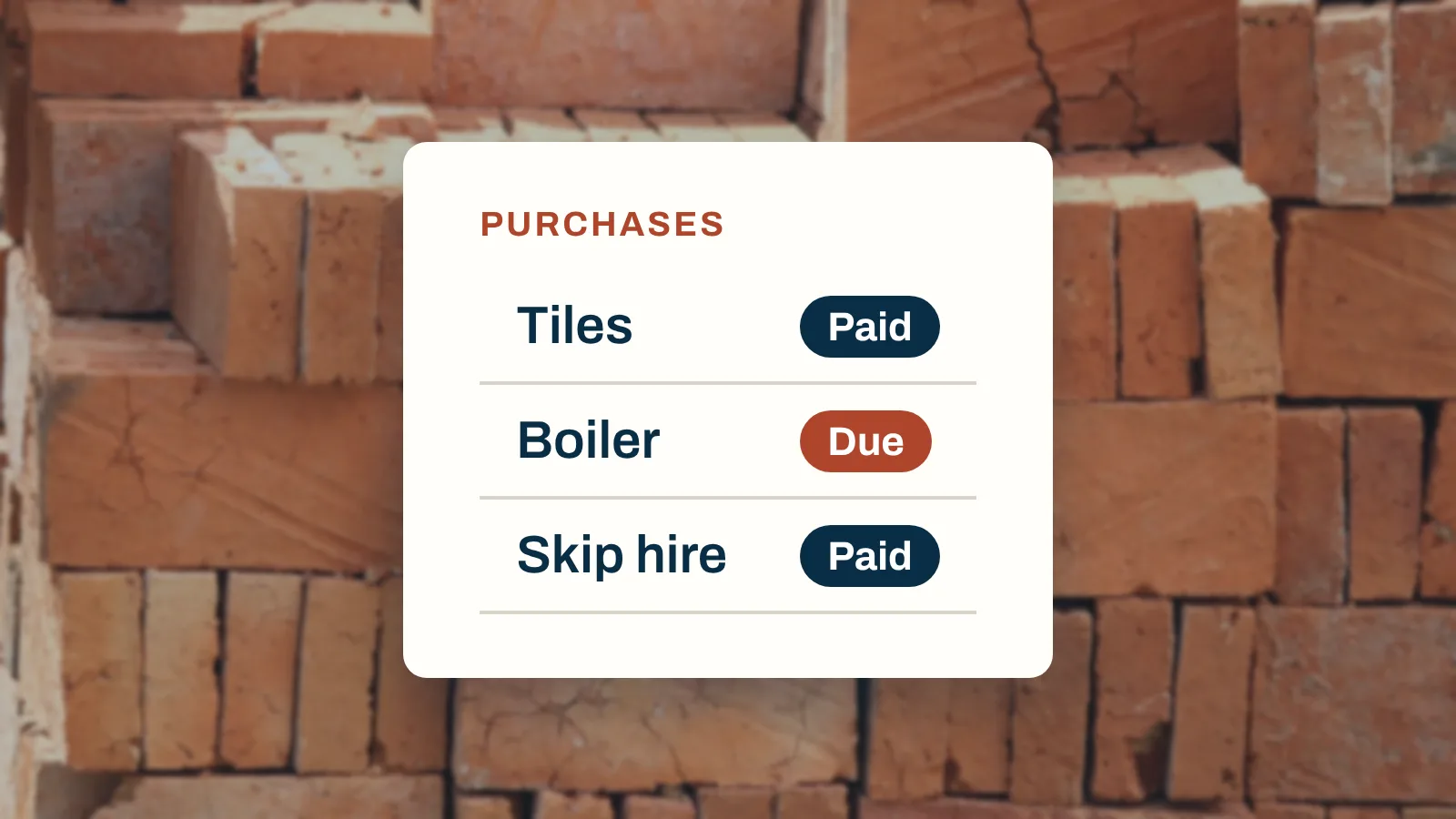
Goods add a fourth fact: whether they have arrived. Ordering a kitchen, paying for it and receiving it can happen months apart.
Fact
Question it answers
Ordered
Have we committed, and to what specification?
Paid
How much has left our account, and how much is due on delivery?
Delivered
Has it arrived, complete and undamaged?
Fitted
Is it installed and working?
Treating these as one event makes it harder to understand both your cash and your progress. A kitchen marked "paid" might be weeks from delivery; a tile order marked "delivered" might still have a balance to pay.
In the UK
Citizens Advice says that if you buy something from a business to be delivered, it is the seller's responsibility to make sure it arrives, and explains when you can ask for a full refund: if an essential delivery date was missed, if an agreed date and a second date were both missed, or if no date was agreed and a second chance to deliver also failed. Keep the order confirmation and the agreed date with the purchase so you can show it.
How to set up your cost tracking
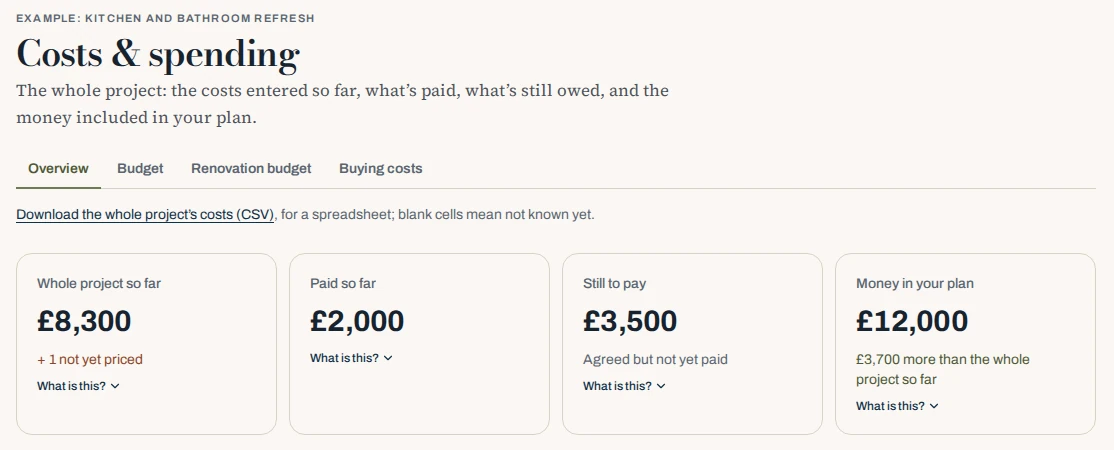
Mekozo's Costs & spending view keeps the whole project so far, what is paid and what is agreed but still to pay as separate totals, and flags work with no price yet.
You can do this in a spreadsheet or an app. The method is what matters.
One line per job or purchase. Not one line for "builder". Split it by the stages or items in the quote.
Group by room or area. It makes it easier to see where money is going and to find a line when an invoice arrives.
Record the agreed price from the quote or order. Keep the quote with the line; our guide to what a good builder quote includes shows how to get one broken down so it maps onto your lines.
Add invoices as they arrive. Against the line they belong to, not as a separate list.
Add payments with date and method. Card, bank transfer, and the reference.
Flag anything with no price. So it is never counted as zero.
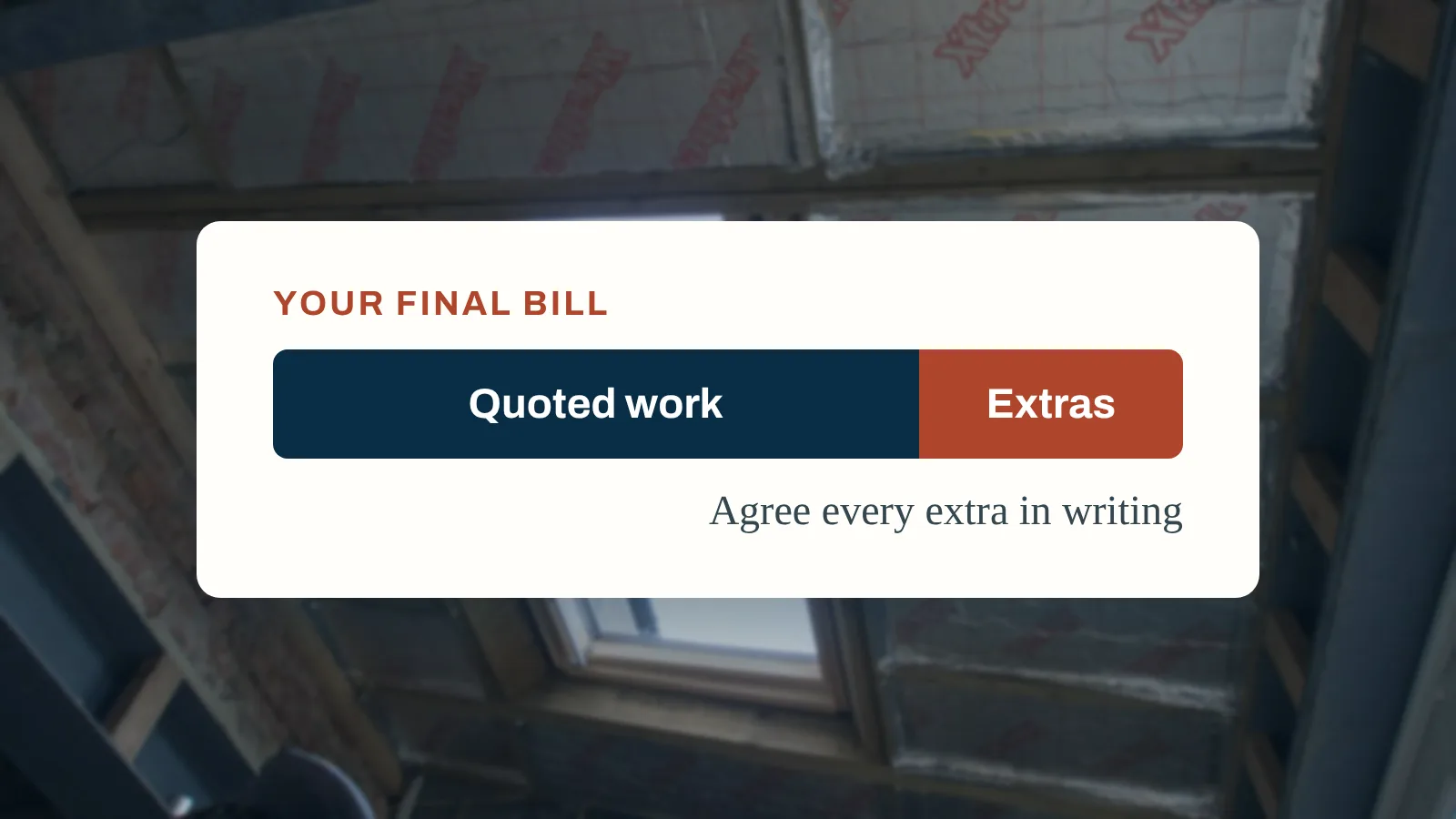
Record changes as their own lines. An extra is a new commitment with its own price, not a quiet change to an old figure.
A simple tracker looks like this:
Area
Item
Agreed price
Invoiced
Paid
Still to pay
Status
Kitchen
Units and worktops
£9,400
£4,700
£4,700
£4,700
Ordered, due in 6 weeks
Kitchen
Fitting
£2,200
£0
£0
£2,200
Not started
Bathroom
Builder stages 1 to 3
£7,800
£5,200
£5,200
£2,600
Stage 3 in progress
Bathroom
Extra: move radiator
£350
£0
£0
£350
Agreed on site, confirm in writing
Whole house
Rewire
No price yet
Unknown
Quote awaited
Total
£19,750 + rewire
£9,900
£9,900
£9,850 + rewire
Illustrative figures only.
Tip
Keep receipts and invoices with the line they belong to. When a supplier queries a payment or something is missing, you can check the order, delivery and payment records in one place before you chase.
How to pay as the work goes on
How you pay affects how well your tracker protects you.
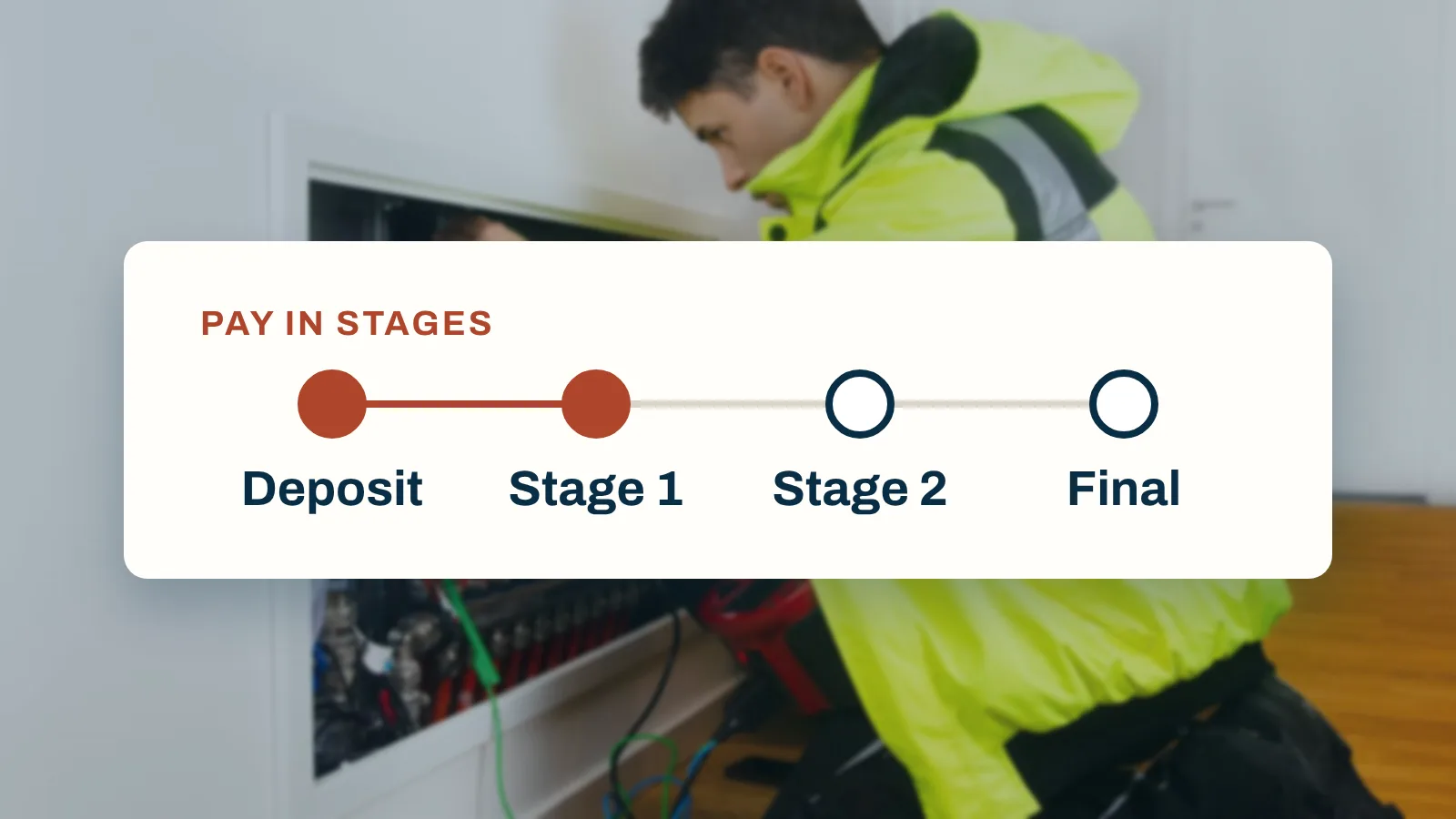
Pay in stages linked to work done. Citizens Advice suggests paying in stages, so problems can be put right before you make the final payment, and being clear about the points in the work when payments are due (Before you get work done on your home).
Avoid cash. Citizens Advice suggests paying by debit or credit card if you can, then bank transfer, and not with cash.
Keep deposits small. It suggests avoiding deposits where possible, offering to buy materials yourself instead, and not agreeing to more than 25% if a deposit is unavoidable. Always get a receipt.
Agree a payment schedule tied to stages you can check before work starts, as our guide to how to pay a contractor explains.
Your weekly check while work is underway
Ten minutes once a week keeps the tracker honest.
Add every invoice and payment from the week to its line.
Update delivery status for anything on order.
Add any change agreed on site as a new line, and ask for it in writing.
Chase prices for anything still unpriced, biggest first.
Compare still to pay with the money you have available.
Check how much contingency is left after this week's commitments.
Note any question or decision you are waiting on, and who owes the answer.
Changes deserve special care. RICS warns that changes after work starts are usually very expensive. Each one is a variation or extra (change order), and our guide to variations and extras explains how to price it before you agree, and our guide to renovation contingency shows how to keep track of what is left.
On the Operation Sicily villa
From the villa in Sicily. The kitchen at the villa Mekozo's founder, Jonathan Smith, is renovating shows why ordered, paid and delivered are different facts. He ordered and paid for the units months before they could be fitted, because there was a three month lead time. On the day, the kitchen arrived by van and was unloaded on a hand trolley, with the appliances still in their boxes, as he shows in Episode 92 of Operation Sicily, where he films the renovation. For those months, the money was gone but the kitchen was not there. Smaller purchases need the same care: early in the project he bought a 3000 watt generator for about €350 at a DIY store in Palermo (Episode 14), the kind of cost that slips out of a budget if it is not recorded the day it is paid. You can follow the work as it happens in his renovation deep dives.
This guide explains a method for tracking building costs. It is not legal or financial advice; payment protections differ by country, so check the official guidance where you live.
Questions people ask
How do I track renovation costs?
Give every job and purchase its own line, and record each stage separately: the estimate, the agreed price, what has been invoiced and what has been paid. For purchases, add the order and delivery status. Still to pay is the agreed price minus what you have paid, and it is the figure that tells you what you can still afford.
What is the difference between committed and spent on a renovation?
Committed is everything you have agreed to pay, through accepted quotes and orders. Spent is what has already left your account. On a project underway, committed is usually much bigger than spent, and it is the committed figure that tells you whether the budget still works.
What should I record for each renovation cost?
For each line: the room or area, the supplier or trade, the agreed price, invoices received, payments made with dates and method, what is still to pay, and for goods the order and delivery dates. Keep the quote, invoices and receipts with the line they belong to.
Should I pay renovation costs by card or bank transfer?
Citizens Advice suggests paying for building work by debit or credit card if you can, then bank transfer, and not with cash. Paying by card can give you a way to get money back if something goes wrong; it notes that cash and bank transfer cannot be claimed through chargeback or section 75.
What do I do if something I paid for has not been delivered?
Check your order, the agreed delivery date and your payment record first, then contact the seller. Citizens Advice says it is the seller's responsibility to make sure the item is delivered, and explains when you can ask for a full refund if an agreed or essential delivery date is missed.
Jonathan Smith is the founder of Mekozo and Operation Sicily. Jonathan bought an abandoned villa in Sicily and is rebuilding it on camera, every week. Mekozo is the app Jonathan built to keep that renovation's money in one picture.
A good payment schedule keeps your money roughly level with the work done. How to set the deposit, the stages and the final payment, how to pay safely, and what to record each time.
A simple system for renovation paperwork: capture every receipt and invoice the day it arrives, file it against the job it belongs to, check it, and keep what you will need later.
Changes and extras are where renovation budgets drift. What a variation is, the four kinds of change, a five step way to agree each one before the work, and a change log you can copy.