Renovation work underway
Committed, invoiced, paid: how to track renovation costs
Agreed, invoiced, paid and delivered are four different facts. Here is how to track renovation spending so each one stays visible.


A simple system for renovation paperwork: capture every receipt and invoice the day it arrives, file it against the job it belongs to, check it, and keep what you will need later.

Organise renovation receipts in four steps: capture each receipt and invoice the day it arrives, file it against the job or room it belongs to, check it against the agreed price and mark whether it is paid, then keep it with the guarantees and certificates for that job. One home for every document, filed by job rather than by date.
A renovation produces paper fast: builder's invoices, merchant receipts, delivery notes, online orders, deposit receipts and the odd handwritten note. Most of it arrives on site, in a van, in a hurry. This guide gives you a simple system that works whether you use a folder, a spreadsheet or a receipt organiser app.
A renovation receipt is not just proof of a purchase. It is part of the record of what was done to your home, who did it and what it cost.
| You will need it to | Because |
|---|---|
| Know what you have spent | The bank statement shows payments, not what they were for |
| Check an invoice against the quote | Differences are easier to spot with the quote alongside |
| Return or replace faulty goods | Proof of purchase makes a return or a claim simpler |
| Make a guarantee claim | The guarantee usually starts from the purchase or fitting date |
| Raise a problem with a trader | Citizens Advice says to gather paperwork and receipts first |
| Sell the house | Buyers ask what was done and when |
In the UK (England)
If there is a problem with building work, Citizens Advice suggests gathering any paperwork and receipts, taking photos as evidence and making notes with dates and times before you talk to the trader. A receipt you can find in a minute is worth far more than one somewhere in the van.
Most of what arrives falls into one of four types. Knowing which is which stops you paying twice or not at all.
Watch out
An invoice is not a receipt. An invoice is the bill for agreed work; record it, then the payment against it. If you file invoices as if they were paid, your records will show money as spent that is still owed, and you will lose track of what is still to pay.
The single habit that matters most is capturing each document on the day you get it. A week later you will not remember which receipt was for the bathroom and which was for the hall.
Tip
Keep one envelope in the car or the toolbox for the day's paper receipts. Empty it every evening by photographing what is in it.

Mekozo lets you add a pile of receipts, invoices, quotes and photos at once; each one waits in review until you say what it is and which job it belongs to.
Try it free for 30 days, no card neededFiling by date or by shop is how receipts become a heap. File each one against the job or room it belongs to, because that is the question you will ask later: what did the bathroom cost, and is the tiler's invoice right?
A simple structure that works in folders, a spreadsheet or an app:
| Level | Example |
|---|---|
| Project | 14 Station Road renovation |
| Room or area | Bathroom |
| Job | Tiling |
| Document | Invoice 0231, Tiler, £1,450, due 12 March, not paid |
Name every file the same way, so it sorts itself and you can find it by search:
`2026-03-05 Bathroom Tiling Invoice Tiler 1450.pdf`
That is date, room, job, document type, supplier and amount. It takes ten seconds and saves the hunt later.
Tip
If a receipt covers several rooms, such as a big merchant order, file it under the main job and add a note listing the other rooms. Do not split the paper; split the figure in your records.
Each document has a status, and the status is what keeps your figures honest. For every invoice and receipt, record:
Before you pay any invoice, set it next to the quote:
Our guide to keeping agreed prices, invoices and payments apart explains why those figures need to stay separate for every job.
In the UK
How you pay affects what you can do if something goes wrong. Citizens Advice explains that if you paid by credit card for a single item costing more than £100 and no more than £30,000, you can ask your card provider for your money back under Section 75 of the Consumer Credit Act; for debit cards there is the chargeback scheme. Keep the card receipt with the invoice it paid.
When a job finishes, its paperwork changes from "money" to "home record". Gather it together:
In the UK
GOV.UK notes that work needing building regulations approval, such as replacing windows or installing a new bathroom involving plumbing, should come with certificates, and that without approval you will not have the certificates you may need when you sell. File the certificate with the job, not in a drawer.
Once the renovation is over, keep these documents in one home file with the rest of your house papers.
All three work if you use them every time. Pick the one that fits the size of the job.
| Method | Works well for | Watch out for |
|---|---|---|
| Folder or envelope per room | A single room, a few receipts | No totals; easy to lose a slip |
| Spreadsheet plus a photo folder | A few rooms, one person keeping the records | Photos and figures drift apart |
| Receipt organiser app | Several rooms or trades, more than one person | It only helps if adding a receipt takes seconds |
Whatever you use, it should let you:
Tip
Test your system with the next three receipts you get. If you have not filed them by the end of the day, the system is too slow.
If you are halfway through a renovation with a carrier bag of receipts, you can still sort it out in an afternoon.
From then on, the daily habit keeps it tidy.
On the Operation Sicily villa
From the villa in Sicily. Many of the purchases at the villa Mekozo's founder, Jonathan Smith, is renovating happened on long drives to the big DIY store in Palermo. One trip filmed for Operation Sicily brought back a 3000 watt generator for about €350, an SDS drill with a hammer function, a big mixing bucket, trowels, WD40 and a shovel (Episode 14): one receipt covering several future jobs, exactly the kind that needs a note on where each item belongs. The last of his nine budgeting steps in that episode is to monitor spending regularly with a spreadsheet, an app or a notebook, so overspending shows up early. He also points out that formal receipted invoices matter, because informal work offers limited recourse if it needs to be corrected (his cost guide).
Playing loads YouTube’s external player.
Watch directly on YouTube ↗For the rest of this stage, see our guide to managing builders, payments and changes, how to compare builder quotes so every invoice has something to check against, and how to plan stage payments that keep you in control. In Mekozo you can add a pile of receipts and photos with Catch-up, and the renovation budget tracker keeps receipts, invoices and payments together by job.
This guide explains a practical record-keeping method. It is not legal, tax or financial advice.
Give every receipt and invoice one home, filed against the job or room it belongs to rather than by date alone. Capture it the day it arrives, note the supplier, amount, date and whether it is paid, and keep it next to the quote it relates to. A weekly ten-minute check catches anything missing.
An invoice is a request for payment: it says what you owe, for what and by when. A receipt is proof that you have paid. On a renovation you usually get an invoice first and a receipt or payment record after, so keep both together against the same job.
Photograph or scan paper receipts the day you get them and keep the digital copy as your working record. Keep the paper originals for large purchases, anything with a guarantee and anything you might return, in one envelope or folder per room or job.
Keep receipts, invoices, guarantees and certificates for as long as you own the home. They show what was done, when and by whom, which helps with a guarantee claim, an insurance claim or a sale. Pass the relevant ones on to the next owner when you sell.
Use whichever you will actually keep up on site. Look for an app that captures a photo in seconds, lets you file each receipt against a job or room, records whether it is paid and keeps quotes, invoices and guarantees together. A folder and a spreadsheet can do the same on a small job.

Jonathan Smith is the founder of Mekozo and Operation Sicily. Jonathan bought an abandoned villa in Sicily and is rebuilding it on camera, every week. Mekozo is the app Jonathan built to keep that renovation's money in one picture.
Real renovation experience and regional guidance from Operation Sicily.
Agreed, invoiced, paid and delivered are four different facts. Here is how to track renovation spending so each one stays visible.
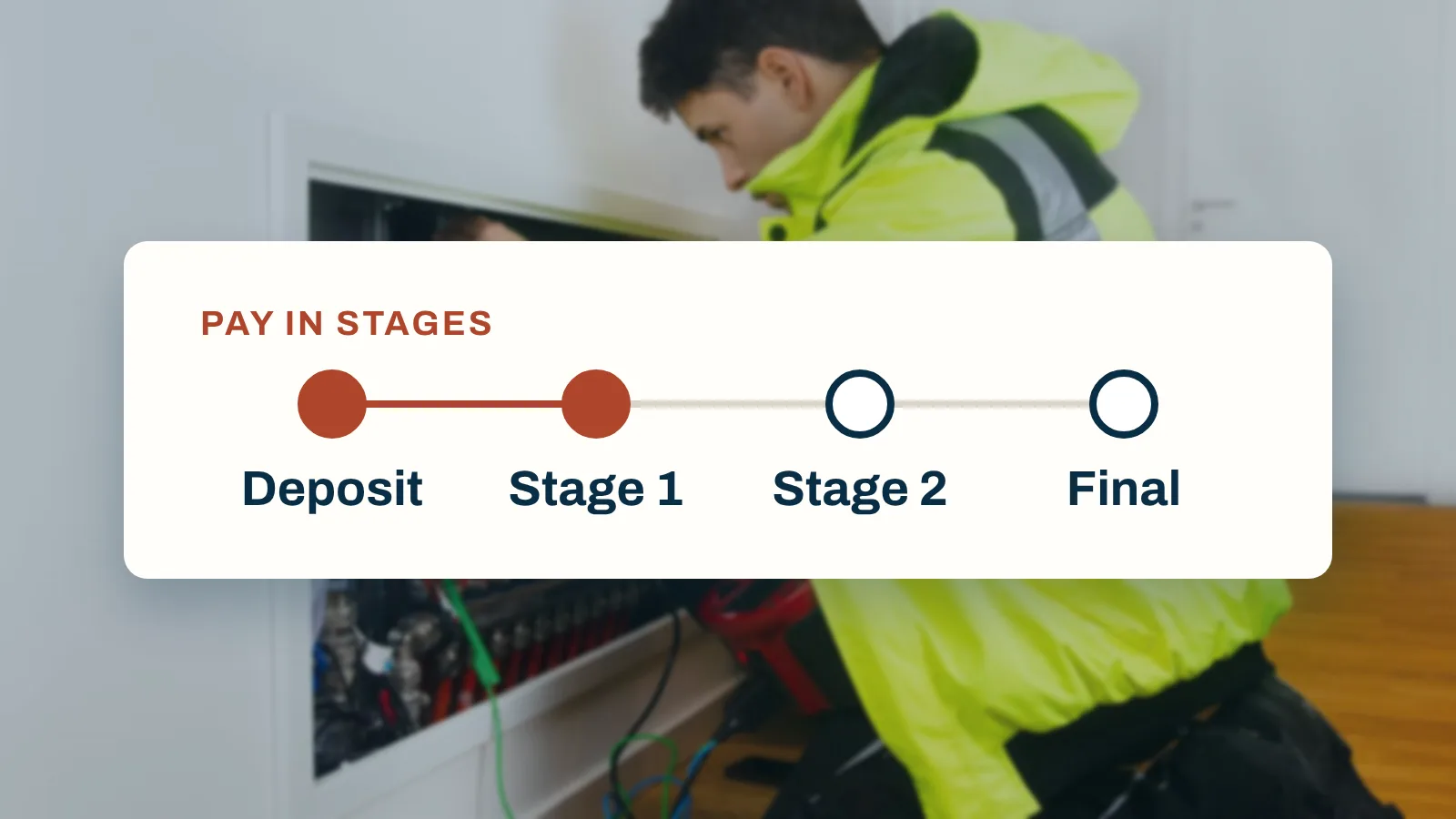
A good payment schedule keeps your money roughly level with the work done. How to set the deposit, the stages and the final payment, how to pay safely, and what to record each time.
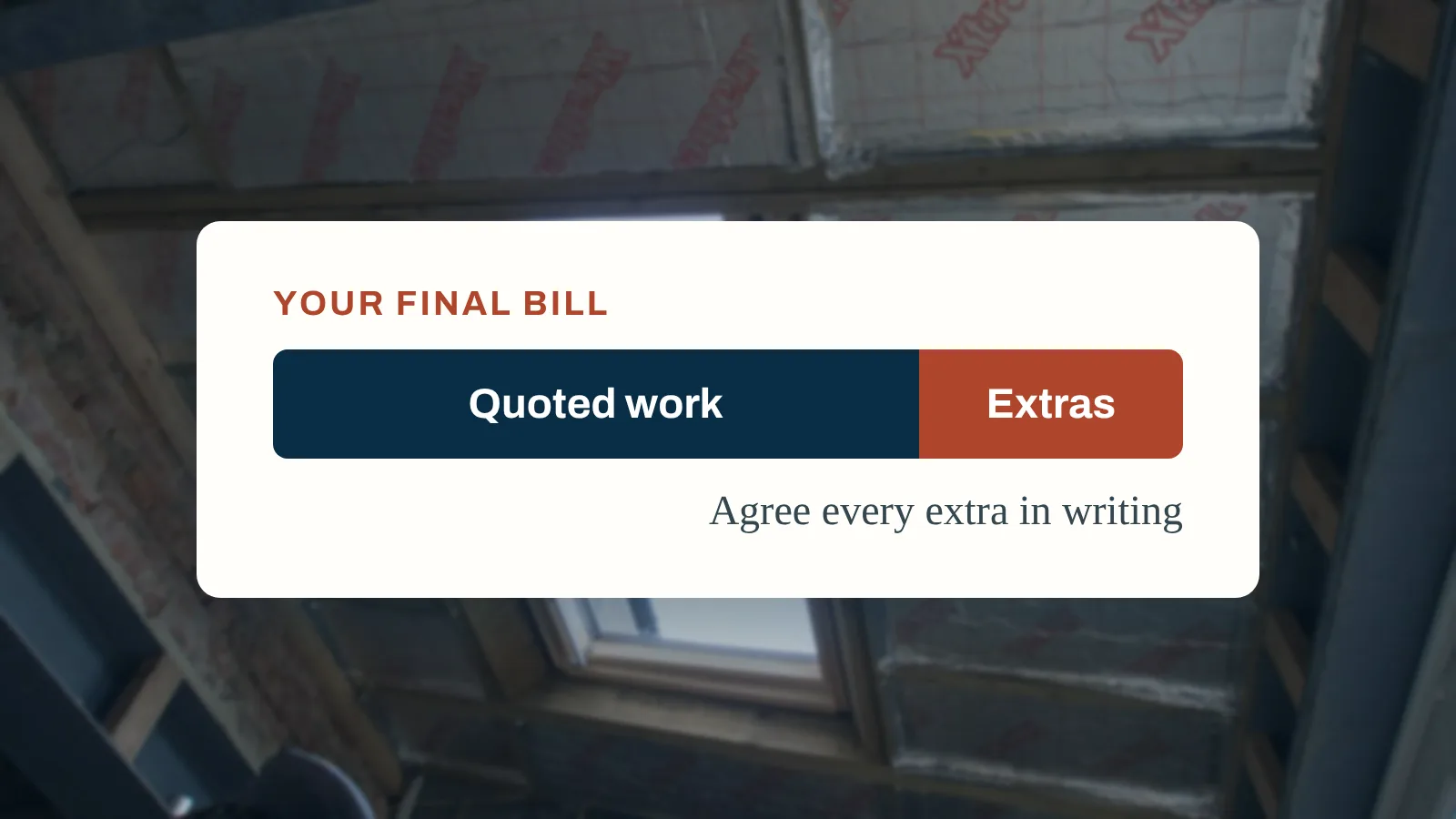
Changes and extras are where renovation budgets drift. What a variation is, the four kinds of change, a five step way to agree each one before the work, and a change log you can copy.
Budgets, quotes, payments, documents and decisions in one place
30 days free. No card needed.
Monthly, with no annual plan. The Terms of membership set out the details.