Home renovation checklist: plan it in the right order
A renovation goes better when the decisions come in the right order. A phase-by-phase checklist from first idea to handover: what to decide, what to check, who to book and what order the work goes in, with the sources behind each step.
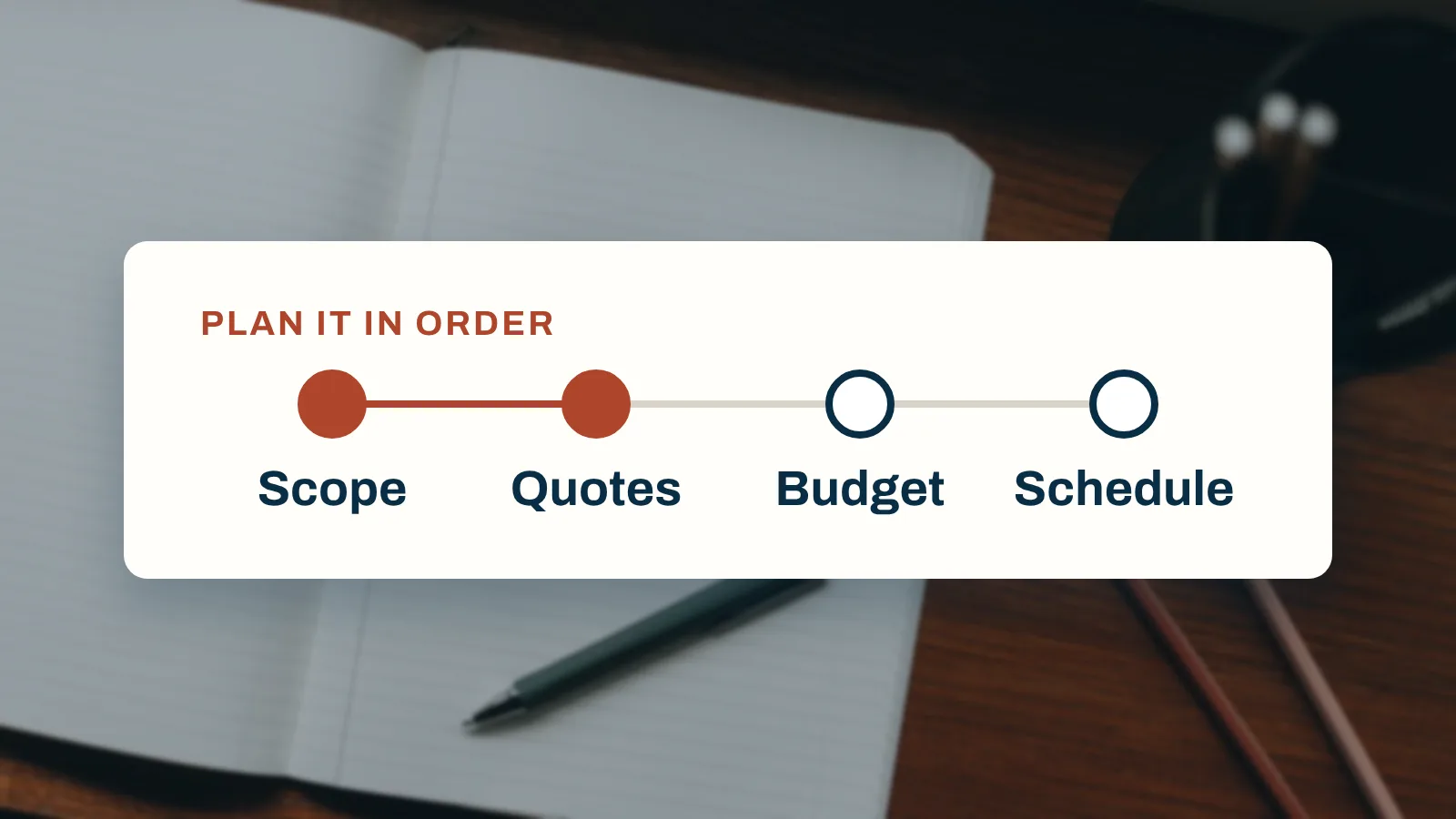
Plan a renovation in this order: goals, survey, scope, budget, permissions, quotes and trades, programme, then the work itself and a proper handover.
Do the work from the outside in and the bottom up: make the house sound and dry, renew services, then plaster, floors, kitchens, bathrooms and decorating.
GOV.UK says building regulations approval is different from planning permission, and you might need both; check before work starts.
Which? advises at least three quotes, a contract with the total cost, payment schedule and dates, and keeping a significant part of the payment until the work is complete (May 2026).
Hold a separate contingency: the HomeOwners Alliance suggests around 10% of the total, more for an old or neglected house (September 2026).
What is the right order for a home renovation?
Plan a home renovation in this order: set your goals, survey the house, write the scope, set a budget with a contingency, check permissions, get quotes and book the trades, agree a programme, then do the work from the outside in: make it sound and dry, renew the services, then plaster, floors, kitchens, bathrooms and decorating.
Most renovation problems are problems of order. A kitchen fitted before the rewire, a floor laid before the plumbing, a budget set before anyone looked under the floorboards. This checklist takes you phase by phase from first idea to handover, with what to decide, check and book at each stage.
Phase 1: decide what you want
What is wrong with the house now, room by room
What each room needs to do when it is finished
What must be done, and what would be nice
What can wait for a later phase
How long you plan to stay, which affects what is worth doing
Who else needs to agree, and who decides when you disagree
The Federation of Master Builders' house renovation checklist starts the same way: inspect the property properly, list essential repairs, define your goals and decide what can wait.
Phase 2: find out what the house needs
Your wish list and the house's needs are different lists. Find out the second before you price the first.
Full survey of the house's condition
Electrical inspection report
Heating, plumbing and drainage checked
Asbestos checked if the house was built or refurbished before 2000
Listed status, conservation area and past permissions checked
Measurements and photos of every room
The HomeOwners Alliance (September 2026) puts a full structural survey at £500 to £1,500 and calls it the best way to find out about damp, structural work or rewiring. The Health and Safety Executive says asbestos can be found in any building built before 2000.
Phase 3: write the scope and set the budget
Write the scope room by room. What stays, what goes and what is new, plus work that runs between rooms such as rewiring and heating. Our scope of works guide shows how.
Put a figure against every line. Rough estimates are fine at this stage; a line with no figure should be marked as not priced, not left out.
Add the lines people forget. VAT, professional fees, skips, scaffolding, making good, temporary living and moving costs.
Add a contingency. Give it its own line, before you ask for quotes; older houses need more. Our guide to how much renovation contingency to allow shows how to size it.
Check it fits. If the essential work alone does not fit, change the scope now, not halfway through.
Contract agreed with the total, payment stages and dates
Who is responsible for each part agreed in writing
GOV.UK says building regulations approval is different from planning permission and you might need both. Which? (May 2026) recommends at least three quotes, says major work should come with a contract covering the total cost, payment schedule and start and completion dates, and that traders should have public liability insurance. Our guide to finding a good builder covers the questions to ask.
Watch out
Which? advises questioning any request for full or most of the payment upfront, and making sure a significant amount is only due when the work is complete.
Phase 5: the order of works
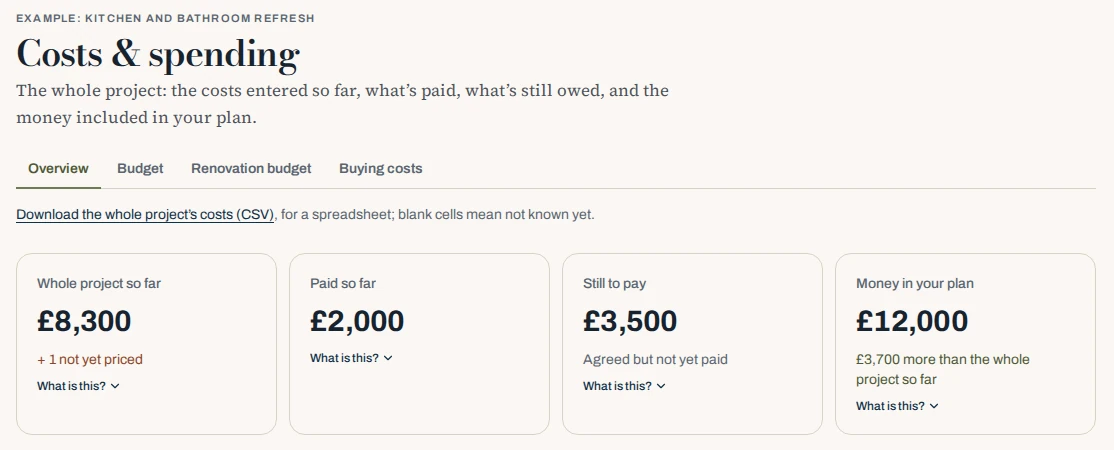
Mekozo's Costs & spending view shows the renovation's costs room by room or by piece of work, with what is paid and still to pay, so each phase has its own lines.
The house has to be dry before anything inside lasts
3
Structural repairs and alterations
Walls, lintels, floors and openings before services run through them
4
Damp and drainage
Fixed at the cause before new plaster goes on
5
First fix electrics, plumbing, heating
While walls are open and floors are up
6
Insulation and ventilation
Before walls and floors are closed
7
Plastering and screeding
Once services are in and tested
8
Floors and tiling
After wet trades have dried
9
Kitchens and bathrooms
Onto finished floors and walls
10
Second fix and joinery
Sockets, switches, doors, skirting
11
Decorating
Last indoors, so nothing marks it
12
Outside and garden
Once skips and deliveries have stopped
The 2026 cost breakdown by Jonathan Smith, Mekozo's founder, who films his villa renovation on Operation Sicily, says electrics, plumbing and drainage are best installed before plastering and floor laying, and that starting finishes before the building is stable and dry typically means repeating the work later. It adds that some tasks can overlap safely and others depend on inspection or drying, so agree the sequence with the people doing the work. Our checklists for the kitchen and the bathroom apply the same order to those rooms, and our guide to the renovation schedule covers keeping it on track.
Tip
Order long lead items early. Kitchens, windows and some bathroom products can take months, and a late delivery holds up every trade after it.
Phase 6: living through the work
Where you will live during the worst stages
Which rooms stay usable, and how they are protected from dust
How you will cook and wash without a kitchen or bathroom
Storage for furniture and deliveries
Neighbours told about noise, skips and parking
One place for every decision, question and change, with the date and who agreed it
Changes during the work are where budgets drift. Price and agree each one in writing before it happens, and keep the agreed price, the invoices and the payments apart. An invoice is the bill for agreed work; record it, then the payment against it.
Electrical, gas and building control certificates collected
Guarantees, warranties and manuals collected
Photos of hidden pipes and cables kept
Final account agreed, including every extra
Final payment made when the agreed list is closed
Everything filed with the home's records
GOV.UK notes that without building regulations approval you will not have the certificates of compliance you may need when you sell.
Country notes
The order of works is the same everywhere. Permissions and timings are not.
In the UK (England and Wales)
GOV.UK lists alterations that might need building regulations approval, including replacing fuse boxes and connected electrics, installing a bathroom that involves plumbing, replacing windows and doors, replacing roof coverings and installing or replacing a heating system. You do not need to get approval yourself if the work is done by someone registered with a competent person scheme. Scotland and Northern Ireland have their own rules.
In Italy
The same cost breakdown gives four to eight months for a light renovation of a house in reasonable condition in rural Sicily and ten to eighteen months for a full structural renovation of an abandoned one, and calls August effectively a lost month. It advises having your geometra classify the whole scope, since some work is free building work and other work needs a CILA, SCIA or a permission.
Elsewhere
Check with the local planning or building department where the house is before you fix the design.
On the Operation Sicily villa
From the villa in Sicily. In Episode 14, Jonathan sets out the order he plans in: a structural survey first, structure, plumbing and electrics before finishes, labour, materials, and permits and fees as separate lines, and a backup fund of 10% to 15%. His permits were still in progress, and no permitted work could start until they came through. When they did, covering the water, the electrics, the windows and doors and the tower staircase, he planned the rewire room by room, marking every socket and switch on the walls (Episode 15). By the time the kitchen fitters arrived, the floor was tiled and grouted and the last sockets were in, and the units had been ordered months earlier because of a three month lead time (Episode 92). Each job was planned so it was ready before the trade after it arrived.
This checklist explains a planning method. It is not professional advice; check permissions locally and use qualified trades.
Questions people ask
What order should you renovate a house in?
Start with anything that makes the house safe, secure and weathertight, then structural repairs and damp. Next come first fix electrics, plumbing and heating, then insulation, plastering and flooring. Kitchens, bathrooms and second fix follow, and decorating comes last, so finished work is not damaged by the trades before it.
What should be on a home renovation checklist?
Your goals for each room, a survey of the house, a written scope, a budget with a contingency, the permissions you need, at least three quotes, contracts and payment stages, a programme of work, plans for living through it, and a handover with certificates, guarantees and a snagging list.
Do I need planning permission to renovate my house?
Most internal work does not, but extensions, some external changes, listed buildings and conservation areas can. GOV.UK says building regulations approval is a separate thing from planning permission, and you might need both. Check with your local authority before you commit to a design.
How long does a home renovation take?
It depends on the size of the job, the condition of the house and the trades' availability. For rural Sicily, Jonathan Smith's 2026 guide on Operation Sicily gives four to eight months for a light renovation and ten to eighteen months for a full structural renovation of an abandoned property. Ask for a written programme with every quote.
When should the contingency go into a renovation plan?
At the budget stage, before you ask for quotes, as a line of its own that is kept separate from the money already planned for each job. Then check what is left in it every time you agree a change. Our guide to renovation contingency covers how much to allow.
Should I live in the house during a renovation?
Only in parts that are safe, usable and separated from the work. Living on site is cheaper but slower, and some stages, such as a rewire, new heating or floors coming up, may leave you without power, water or a kitchen. Budget for somewhere else to stay for those stages if you need to.
Jonathan Smith is the founder of Mekozo and Operation Sicily. Jonathan bought an abandoned villa in Sicily and is rebuilding it on camera, every week. Mekozo is the app Jonathan built to keep that renovation's money in one picture.
AI can help you plan a renovation, read a quote, explain a figure and test a what-if. It cannot see your house, price your job reliably or replace a surveyor, builder or registered engineer. How to use it well, and how to check what it tells you.
A simple room by room method to work out how much paint you need for walls, ceilings and woodwork, with a worked example, the coverage figures to use and how to keep a whole-house paint list.
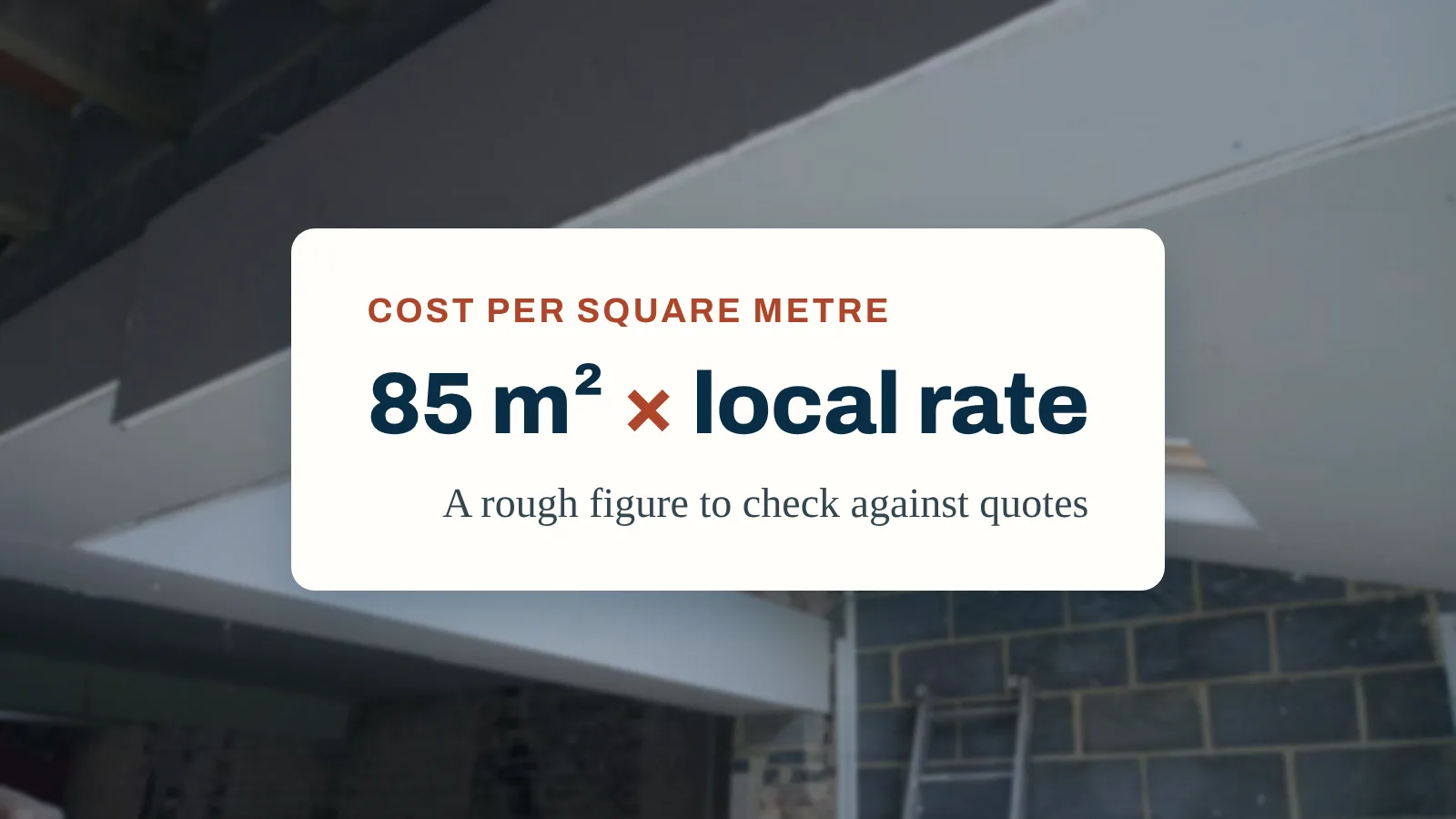
A cost per square metre is a quick first figure, not a budget. What published rates cover, how to measure the right area, the six ways a rate misleads, and how to turn it into a budget you can rely on.