How much paint do I need? Work it out room by room
A simple room by room method to work out how much paint you need for walls, ceilings and woodwork, with a worked example, the coverage figures to use and how to keep a whole-house paint list.
Litres of paint needed = area to paint in square metres x number of coats / coverage per litre from the tin.
Wall area is the room's perimeter times its height, minus doors and windows; the ceiling is length times width.
Coverage varies: emulsion and trim paints Which? listed in April 2026 claimed 12 to 20 square metres per litre, and porous surfaces take more.
Plan for at least two coats; Which? advises a minimum of two coats on ceilings.
Round up to whole tins, buy one batch per colour, and keep the colour, finish and batch number with your home records.
How do I work out how much paint I need?
To work out how much paint you need, measure the area you will paint in square metres, multiply it by the number of coats, and divide by the coverage per litre printed on the tin. For walls, take the room's perimeter times its height, minus doors and windows. Round up to whole tins.
That is the whole method. The rest of this guide shows how to measure each part of a room, which coverage figure to use, a worked example you can copy, and how to turn the answer for each room into one paint list for the whole house.
The paint formula
Litres needed = area (m²) x coats / coverage (m² per litre)
Measure the area of each surface you are painting.
Multiply by the number of coats, usually two.
Divide by the coverage printed on the tin, in square metres per litre.
Round up to whole tins.
In feet and gallons the formula is the same: square feet x coats / coverage in square feet per gallon from the can.
Tip
Do the sum separately for walls, ceiling and woodwork. They often use different paints with different coverage, and you will buy them separately.
How to measure a room for paint
Walls
Measure the length of each wall at skirting height and add them together. That is the perimeter.
Measure the height from the floor to the ceiling.
Multiply perimeter by height for the total wall area.
Measure each door and window (width x height) and take them off.
Watch out
Only take off large openings such as doors, windows and fitted wardrobes. Small things like sockets and switches make no real difference, and the paint you would save is lost cutting in around them.
Ceiling
Multiply the room's length by its width. For a sloping ceiling, measure each slope as its own rectangle.
Woodwork
For skirting, multiply its total length by its height. For doors, measure each face you will paint; a door painted on both sides counts twice. For window frames, a rough measurement is enough because trim paint goes a long way.
What coverage figure to use
Use the figure on the tin you are buying. Which? advises checking the side of the tin or the brand's website for coverage, and notes that it depends on the surface and how porous it is (Which?, April 2026).
For a sense of the range, the 2.5 litre paints Which? listed in April 2026 claimed:
Paint type in the Which? list
Claimed coverage
An emulsion
Up to around 12 m² per litre
A kitchen and bathroom emulsion
14 m² per litre
Satin trim paints, water and solvent based
14 to 20 m² per litre
Because coverage depends on the surface, expect to need more on:
New or patched plaster, which absorbs the first coat
Bare wood, which needs primer and undercoat first
Rough or textured surfaces, which have more surface area
Strong colour changes, especially dark to light
Tip
If you have not chosen a paint yet, do the sum with a cautious coverage figure, such as the lower end above, then redo it once you know the product.
Worked example: one room
An example bedroom, 4 m x 3.5 m, with a 2.4 m ceiling, one door (0.8 x 2.0 m) and one window (1.2 x 1.2 m). Two coats throughout. Coverage of 12 m² per litre for walls and ceiling, the emulsion figure Which? quotes.
Surface
Sum
Area
x 2 coats
Litres at 12 m²/L
Walls
(4 + 3.5 + 4 + 3.5) x 2.4 = 36.0, minus door 1.6, minus window 1.44
32.96 m²
65.9 m²
5.5 L
Ceiling
4 x 3.5
14.0 m²
28.0 m²
2.3 L
So the walls need about 5.5 litres: two 2.5 litre tins (5 litres) would fall short, so buy three, or a 5 litre tin and a 2.5 litre tin. The ceiling needs about 2.3 litres, so one 2.5 litre tin, with little to spare. Woodwork is worked out the same way with the trim paint's coverage, and usually fits in a small tin.
Watch out
A small shortfall is the expensive kind. Running out on the last wall means a trip mid-job and possibly a different batch, which can show as a slight colour difference.
How many coats you need
Plan for two coats on walls and ceilings. Which? advises a minimum of two coats on a ceiling, and suggests leaving four hours between coats to prevent peeling, though drying times depend on the paint and the room, so check the tin. You may need a third coat if:
You are covering a strong or dark colour
The surface is new, patched or porous
The first coat looks patchy in daylight
You are painting bare wood (primer and undercoat come first)
Make a whole-house paint list
Mekozo lets you add a pile of receipts, invoices and photos at once, so every paint and materials purchase can be filed with the room and job it belongs to.
When you are painting more than one room, do the sum for each room, then group by paint. One line per room and surface keeps it clear:
Room
Surface
Area
Coats
Paint and colour
Finish
Litres
Tins
Bedroom 1
Walls
2
Bedroom 1
Ceiling
2
Bedroom 1
Woodwork
2
Hall
Walls
2
Then add up the litres for each paint and colour, and buy it in one go so it comes from one batch. Keep the colour name, finish and batch number: you will want them for touch-ups, and the next owner will too. Our guide to keeping a home record covers what else is worth keeping.
Tip
Paint is rarely the only cost. Which? suggests budgeting for brushes, rollers, an extension pole, a tray, dust sheets, filler and sandpaper, and puts a roller and pole at around £15 to £25 and a tray at £5 to £10 (April 2026). Add them to the same list.
DIY or a decorator?
If you are pricing a decorator rather than doing it yourself, Which? surveyed nine Trusted Traders in November 2025 for repainting walls and ceiling with two coats of light-coloured emulsion, assuming the plaster is in good condition, excluding VAT:
Room
Price range
Time
Small room, 2.1 x 2.2 m
Around £200 to £900
1 to 2 days
Medium room, 3.3 x 3 m
Around £250 to £1,100
2 days
Large room, 6.1 x 5 m
Around £350 to £1,650
2 to 3 days
Which? says prices are likely to be at the upper end in London and the South East, and suggests asking for a breakdown and more than one quote. Our guide to comparing builders' quotes on the same scope shows how to line quotes up, and our guide to DIY home renovation helps you decide which jobs to do yourself.
Painting an older home: check for lead first
In the UK
The Health and Safety Executive says lead pigments were widely used in paints for homes until the 1960s, and lead was not removed from all commonly used paint until the early 1980s, so it can be found under existing paintwork in older buildings. Which? advises not using a heat gun on lead paint and seeking professional advice instead.
In the US
The Environmental Protection Agency says approximately three-quarters of US homes built before 1978 still contain some lead-based paint, and that renovation, repair or painting work that disturbs it can easily create dangerous lead dust. Anyone paid to do that work in a pre-1978 home must be certified under the EPA's Renovation, Repair and Painting Rule.
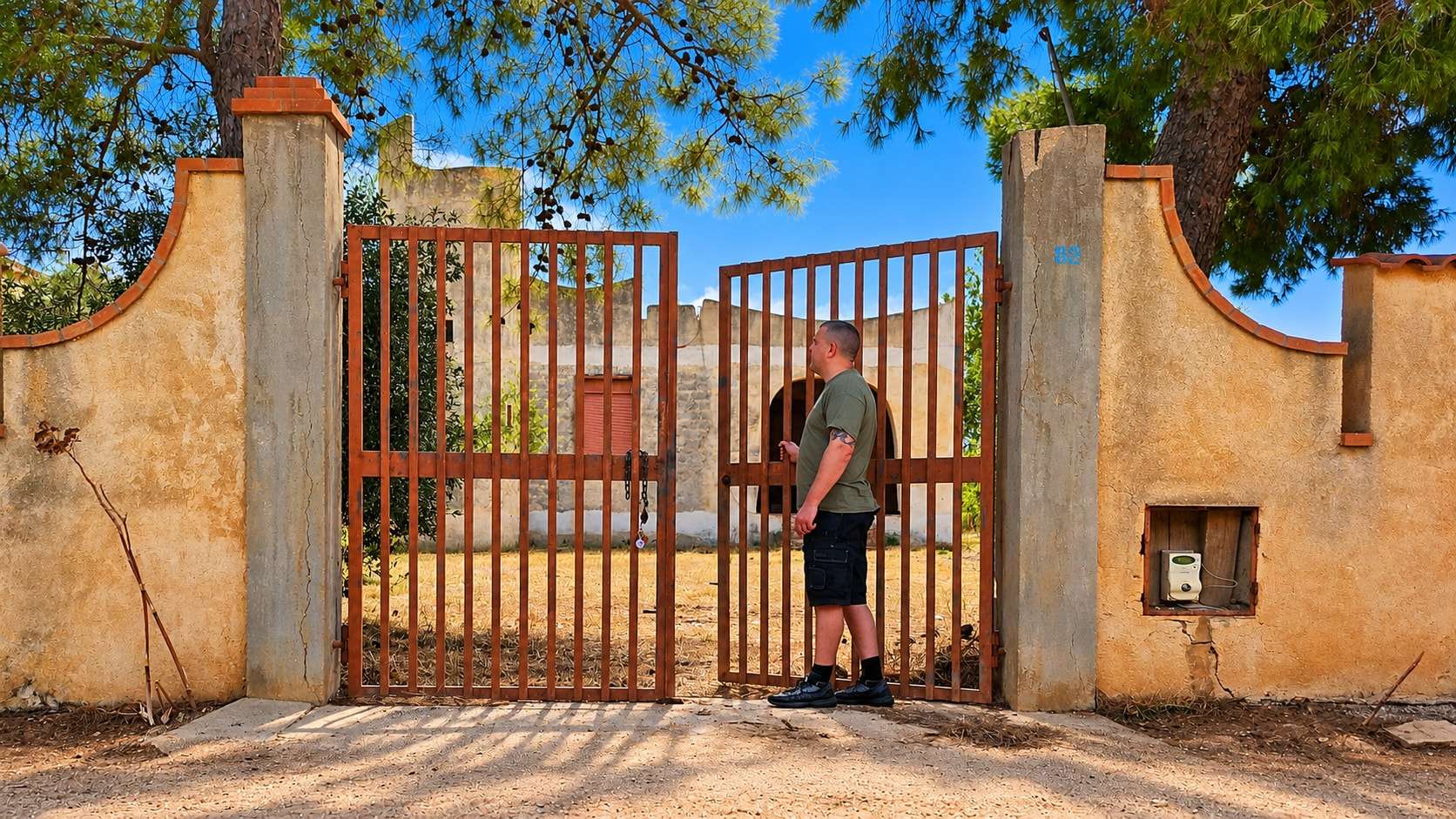
From the villa in Sicily. At the villa Mekozo's founder, Jonathan Smith, is renovating, the walls were measured and marked long before anything was painted. He sprayed green crosses on every wall and ceiling that needed skimming, so the plasterers could see exactly what to price, as he shows on Operation Sicily (Episode 29): the same idea as measuring a room for paint, done for the trade. The plasterers then used a mineral and lime based plaster, so all the walls and ceilings are fully breathable, and two bathroom walls were left unplastered because they will be tiled (Episode 70). Both points change a paint list: tiled walls come off the area, and on breathable walls it is worth asking the plasterer which finishes keep them that way. Jonathan explains why breathable materials suit old walls in his guide to traditional lime mortar and Sicilian stonework.
This guide explains a measuring method. Coverage and drying times vary by product, so always follow the guidance on the tin.
Questions people ask
How much paint do I need for a room?
Measure the wall area (perimeter times height, minus doors and windows), multiply by the number of coats, and divide by the coverage per litre printed on the tin. For an example room of 4 by 3.5 metres with a 2.4 metre ceiling, one door and one window, two coats at 12 square metres per litre need about 5.5 litres for the walls.
How many square metres does a litre of paint cover?
It depends on the paint and the surface. Which? found claimed coverage of around 12 square metres per litre for one emulsion and 14 to 20 square metres per litre for the trim and kitchen and bathroom paints it listed in April 2026. Porous surfaces such as new or patched plaster absorb more, so use the figure on your tin and expect less on bare surfaces.
How many coats of paint do I need?
Plan for two coats on walls and ceilings; Which? advises a minimum of two coats on a ceiling. You may need more if you are covering a strong colour, painting bare or porous surfaces, or changing from dark to light. Check the guidance on the tin.
How much paint do I need for a ceiling?
Multiply the room's length by its width to get the ceiling area, then multiply by the number of coats and divide by the coverage on the tin. Which? suggests using ceiling paint, which is often thicker than wall paint, so check its coverage separately rather than using the wall figure.
Should I buy extra paint?
Rounding up to whole tins usually gives you a small margin. Keep any leftover paint for touch-ups, and buy enough of each colour at once so it all comes from the same batch. Record the colour name, finish and batch number so you can match it later.
Jonathan Smith is the founder of Mekozo and Operation Sicily. Jonathan bought an abandoned villa in Sicily and is rebuilding it on camera, every week. Mekozo is the app Jonathan built to keep that renovation's money in one picture.
A practical way to split a renovation between your own hands and qualified trades: which jobs suit DIY, which need a professional by law or by sense, and how to plan the mix.
Renovating on a budget is less about finding cheap materials and more about avoiding the costs that ambush you. Where to spend, where to wait, and how to keep surprises small.
A home renovation budget is a spending limit, a scope and a list of every cost, with a contingency on top. Eight steps to set one, the lines people miss, and how to keep it honest once work starts.