Planning a renovation

Renovation cost per square metre and how not to be misled

A cost per square metre is a quick first figure, not a budget. What published rates cover, how to measure the right area, the six ways a rate misleads, and how to turn it into a budget you can rely on.

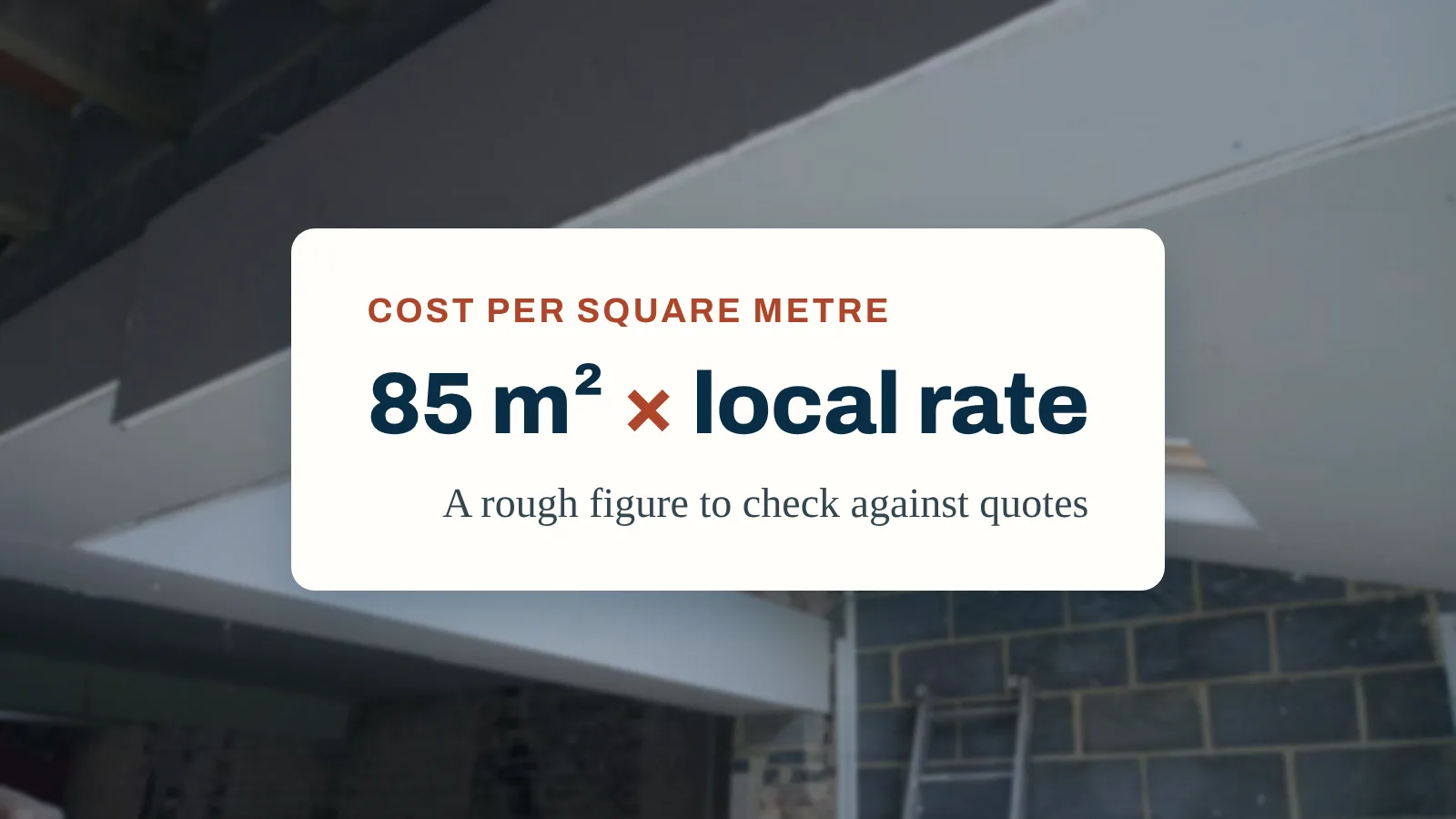
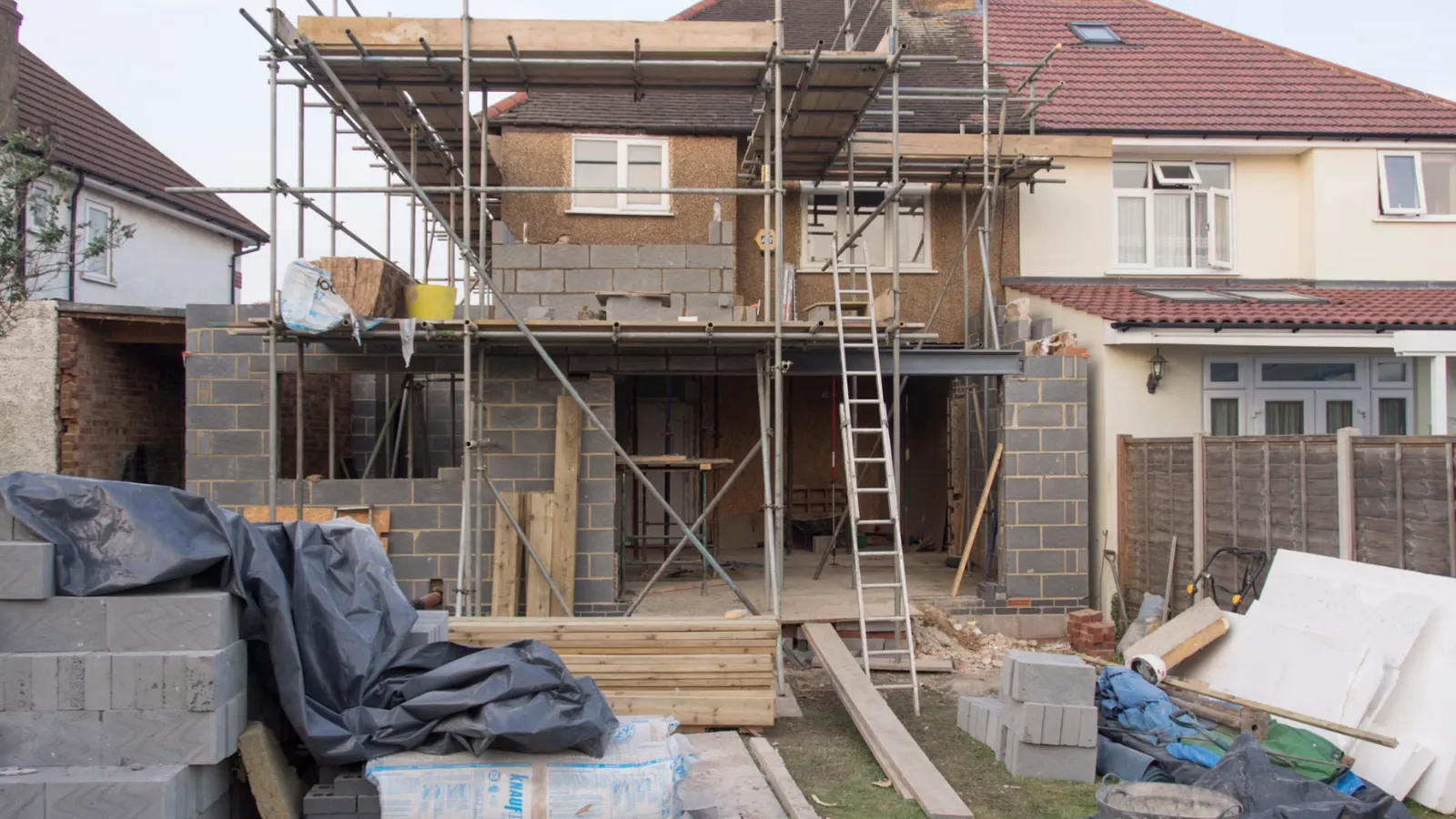
Cost per square metre: 85 square metres times the local rate gives a rough figure to check against quotes
Contents

Key points

  • A cost per square metre multiplies a floor area by a published rate to give a first figure, useful for testing whether a project is roughly affordable, never as a budget.
  • Published rates differ by job: the HomeOwners Alliance puts a UK single-storey extension at £1,800 to £3,000 per square metre and a loft conversion at around £1,250 to £2,500 (July 2026).
  • In his 2026 cost breakdown, Mekozo's founder, Jonathan Smith, who films his villa renovation on Operation Sicily, cites industry estimates of €1,200 to €1,800 per square metre for structural renovation of an 80 to 120 square metre rural property in Sicily.
  • Rates mislead when the area, the scope, the specification, what is included (fees, VAT, fit-out) or the size of the job differ from the figure's assumptions.
  • Kitchens, bathrooms, drainage and connections do not scale with floor area, so small projects cost more per square metre.

What is a renovation cost per square metre?

A renovation cost per square metre is a published rate you multiply by a floor area to get a first figure. It is useful for one thing: testing whether a project is roughly affordable before you pay for drawings or quotes. It is not a budget, because the rate rarely matches your house, scope or what you want included.

In the US and Canada the same idea is quoted per square foot. This guide shows what published rates cover, how to measure the right area, the ways a rate misleads, and how to turn a first figure into a budget built from your own lines and quotes.

Published rates, and what they assume

These are rates from named sources with their dates. Each one assumes a particular type of work, so use the one that matches your job.

Type of workRateSource
Single-storey extension, UK£1,800 to £3,000 per m²HomeOwners Alliance, July 2026
Single-storey extension, London£2,300 to £3,400 per m²HomeOwners Alliance, July 2026
Two-storey extension, standard finishFrom about £1,900 per m²HomeOwners Alliance, July 2026
Loft conversion, UKAround £1,250 to £2,500 per m² of usable floorHomeOwners Alliance, July 2026
Structural renovation, rural Sicily, 80 to 120 m² property€1,200 to €1,800 per m²Jonathan's 2026 breakdown on Operation Sicily, citing industry estimates (one owner's research, not an independent survey)

Notice what is missing: a single trustworthy UK rate for renovating an existing house. New floor area, as in an extension or a loft, can be priced per square metre because the job is similar each time. Renovating existing rooms is not: two houses of the same size can need completely different work. For whole-house renovation, our guide to how much it costs to renovate a house builds an estimate from the jobs instead.

Tip

Before using any rate, write down what it is for (new build, conversion or refurbishment), where, when, and what it includes. If you cannot answer those four questions, do not rely on it.

How to measure the right area

A rate is only as good as the area you multiply it by. Use the same kind of area the source used:

  1. Internal floor area of the space being worked on. Measure inside the walls, room by room, and add them up.
  2. Usable area for a loft. The HomeOwners Alliance says to use the usable gross internal area, meaning floor with headroom of 1.5 metres or more, and to deduct the space lost below for the new staircase.
  3. New floor only for an extension. Count the new area, not the existing room it opens into, and price the work to the existing room as its own lines.
  4. Only the rooms in scope. If you are renovating the kitchen, bathroom and two bedrooms, do not multiply by the whole house.

To convert, one square metre is about 10.76 square feet. Multiply a rate per square foot by 10.76 to get a rate per square metre.

Six ways a cost per square metre misleads

1. The scope is different

A rate assumes a typical job. Your job may include structural work, a rewire, new heating, damp repairs or a new roof that the rate never covered, or it may leave out things the rate included.

2. Fixed costs do not scale with area

A kitchen, a bathroom, a staircase, drainage, a new connection and planning fees cost roughly the same whether the space is large or small. Jonathan's 2026 breakdown notes that electrical connection, drainage and planning fees do not scale linearly with size, and the HomeOwners Alliance warns that very small loft conversions can be expensive per square metre. Small projects look expensive per square metre; large ones can look cheap.

3. What is included varies

Some rates cover the build only. Others include fees, fit-out or VAT. An extension rate, for example, usually describes the build, while the kitchen, flooring, decorating, furniture and professional fees can add a large share on top.

Ask of every rateWhy it matters
Is VAT included?It can change the total considerably
Are professional fees included?Design, structural engineer, building control, surveys
Is fit-out included?Kitchen units, sanitaryware, flooring, decorating
Are services included?Rewiring, plumbing, heating, drainage
Is preparation included?Clearance, skips, scaffolding, protection

4. Specification moves the price more than size

The same square metre can be finished with a budget floor or a premium one, standard sockets or a lighting scheme, a stock kitchen or a bespoke one. Two quotes for the same area can differ widely for that reason alone.

5. Condition and access

Hidden defects, difficult access, a listed building or a site with no parking all add cost that no average reflects. On an old house, condition is usually the biggest variable.

6. Place and date

Rates differ between regions and countries, and they age. The HomeOwners Alliance gives a higher London range for extensions. A rate from another country reflects its labour, materials and rules, so a per square foot figure from the US cannot simply be converted and used in the UK or Italy.

Watch out

A per square metre figure from a builder's website is a marketing estimate, not a quote. Use it to start a conversation, then ask for an itemised price for your own scope.

How to turn a rate into a budget

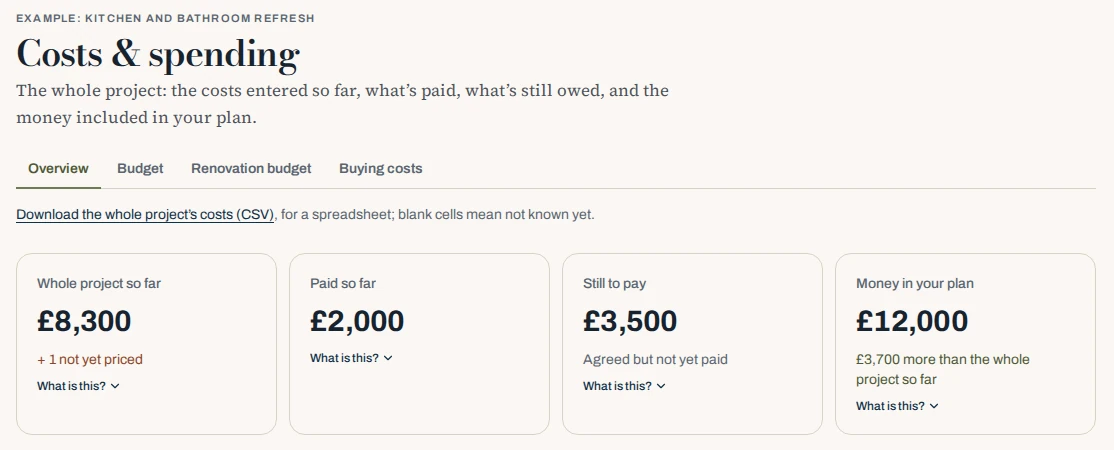
Costs & spending in Mekozo, close up: whole project £8,300 plus one unpriced item, paid £2,000, still to pay £3,500, £12,000 in the plan

Mekozo's Costs & spending view shows the whole project so far against the money in your plan, and flags what is not yet priced, so a first per square metre guess never quietly becomes the budget.

Try it free for 30 days, no card needed
  1. Use the rate once, for a first range. Area times the published range, written down with its source and date.
  2. Write the scope room by room. What stays, what goes and what is new. Our scope of works guide shows how.
  3. Price the fixed items separately. Kitchen, bathroom, staircase, connections, drainage, fees. These do not belong in a per square metre figure.
  4. Price the services across the house. Rewiring, plumbing and heating run between rooms, so count them once. Our guide to the cost to rewire a house shows one example.
  5. Replace estimates with quotes. Ask for itemised quotes on the same scope; our guide to comparing builders' quotes shows how.
  6. Add a contingency. The HomeOwners Alliance suggests setting aside around 10% of the total for unexpected costs; old or abandoned houses can need more. Our guide to renovation contingency shows how to size it.
  7. Compare the result with your first range. If the real budget is far above the rate, find out which lines explain it rather than assuming the quotes are wrong.

For room-by-room planning, see our full house renovation guide, and for the job-specific rates, our guides to house extension cost and loft conversion cost.

Country notes

The method is the same everywhere. The units, what rates include and how they are quoted differ, so they sit in these boxes.

In the UK

Published rates are usually quoted per square metre, and you should check whether they include VAT and professional fees. Which? publishes extension costs based on BCIS data in its 2026 extension cost guide, and explains that a two-storey extension works out cheaper per square metre than a single storey because much of the cost is in the foundations.

In Italy

Jonathan's 2026 breakdown cites €1,200 to €1,800 per square metre for structural renovation of an 80 to 120 square metre rural property in Sicily, and says labour typically makes up 40% to 60% of the total. It recommends pricing safety and weather protection, usability and deferrable work as separate groups, with the same specification across contractors, rather than relying on a headline total.

In the US and Canada

Rates are usually quoted per square foot. Check whether a figure is for a whole-house remodel, a single room or new construction, and whether permits and design are included. Your local building department sets the permit rules.

On the Operation Sicily villa

From the villa in Sicily. Jonathan's villa is about 110 square metres (Episode 11), close to the 80 to 120 square metre property his cost breakdown uses for its tables, and the guide says his project tracks within its published ranges. Even so, it does not budget the villa with a single rate. It warns that some costs, such as electrical connection, drainage and planning fees, do not scale linearly with size, and that labour can be 40% to 60% of the total, depending on how much you do yourself. In Episode 14, he splits his budget into labour, materials, and permits and fees, with a backup fund on top, starting from a structural survey. That is the shape a per square metre figure eventually has to become.

Playing loads YouTube’s external player.

Watch directly on YouTube ↗

Cost per square metre checklist

  • Rate chosen for the same type of work, place and year
  • Source and date written next to the figure
  • Area measured the same way as the source
  • Only rooms in scope included
  • VAT, fees, fit-out and services checked: in or out
  • Fixed items (kitchen, bathroom, connections) priced separately
  • Condition and access risks listed
  • Contingency added
  • First range replaced with itemised quotes

For the wider plan, see our guide to turning rough figures into a renovation plan and our guide to setting a home renovation budget. To keep rough figures, quotes and agreed prices apart as the budget firms up, see the renovation budget tracker and how to build a whole-project budget in Mekozo.

This guide explains how to use published rates. Figures are averages and estimates from the named sources, not quotes; get written prices for your own project.

Questions people ask

How do you calculate renovation cost per square metre?

Measure the floor area being renovated, then multiply it by a published rate for the same type of work, such as a loft conversion or an extension. For a loft, the HomeOwners Alliance says to use the usable gross internal area, meaning floor with headroom of 1.5 metres or more. The result is a first range to test quotes against, not a price.

What is a typical renovation cost per square metre in the UK?

It depends on the job. The HomeOwners Alliance puts a typical single-storey extension at £1,800 to £3,000 per square metre and a loft conversion at around £1,250 to £2,500 per square metre, in guides updated in July 2026. There is no single reliable rate for renovating an existing house, because condition and scope vary so much.

Does cost per square metre include kitchens and bathrooms?

Often not, and you should never assume it does. A per square metre rate for an extension usually describes the build, while the kitchen, flooring, decorating and fees can add a large share on top. Ask every source and every builder exactly what the rate includes.

Why are small renovations more expensive per square metre?

Some costs are the same whatever the floor area: a kitchen, a bathroom, a staircase, drainage, a new connection or a planning fee. Spread over fewer square metres they push the rate up. The HomeOwners Alliance notes that very small loft conversions can be expensive per square metre for this reason.

How do you convert cost per square foot to cost per square metre?

One square metre is about 10.76 square feet. To turn a rate per square foot into a rate per square metre, multiply it by 10.76; to go the other way, divide by 10.76. Convert the currency separately, and remember that a rate from another country reflects that country's labour, materials and rules.

Sources

  1. HomeOwners Alliance, House extension costs: breakdown by size and type · Updated 30 July 2026
  2. HomeOwners Alliance, Loft conversion costs and how to reduce them · Updated 28 July 2026
  3. HomeOwners Alliance, UK house renovation costs · 4 September 2026
  4. Which?, How much does a house extension cost in 2026? (BCIS data) · 14 May 2026
  5. Operation Sicily, How much does it really cost to renovate a house in Sicily? (2026 real-world breakdown) · 2026, checked 18 November 2026
  6. Operation Sicily, Episode 11: Italian building amnesty (condono edilizio) and my villa · Checked 18 November 2026
  7. Operation Sicily, Episode 14: How to budget for a renovation in Italy · Checked 18 November 2026
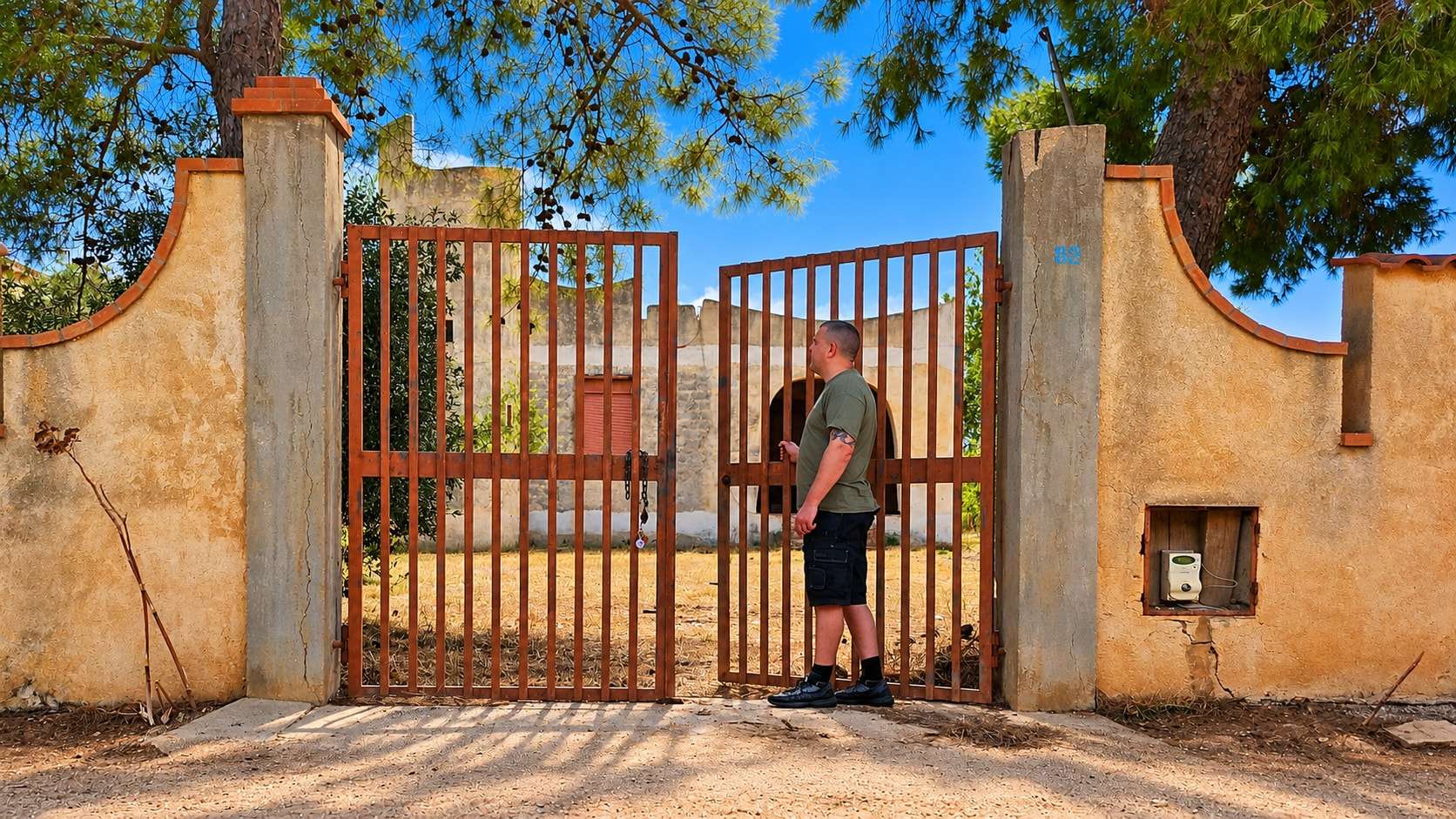
Jonathan Smith opening the gate of the villa in Sicily

About the author:

Jonathan Smith is the founder of Mekozo and Operation Sicily. Jonathan bought an abandoned villa in Sicily and is rebuilding it on camera, every week. Mekozo is the app Jonathan built to keep that renovation's money in one picture.

Related from Operation SicilyHow much does it really cost to renovate a house in Sicily? (2026)

Real renovation experience and regional guidance from Operation Sicily.

Blog

Related reading

All Blog posts →

Bring the whole picture home.

Budgets, quotes, payments, documents and decisions in one place

30 days free. No card needed.

Monthly, with no annual plan. The Terms of membership set out the details.