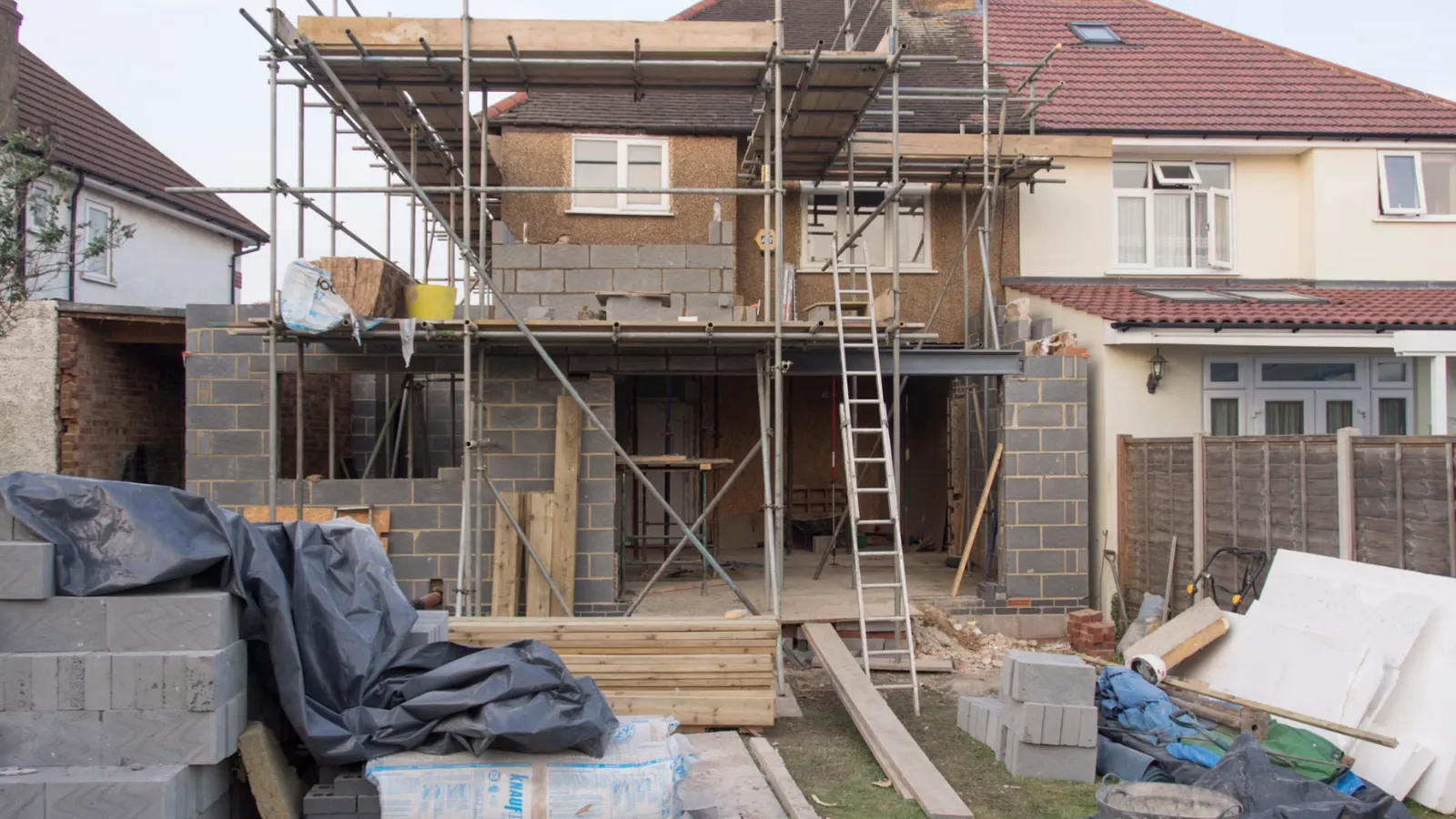
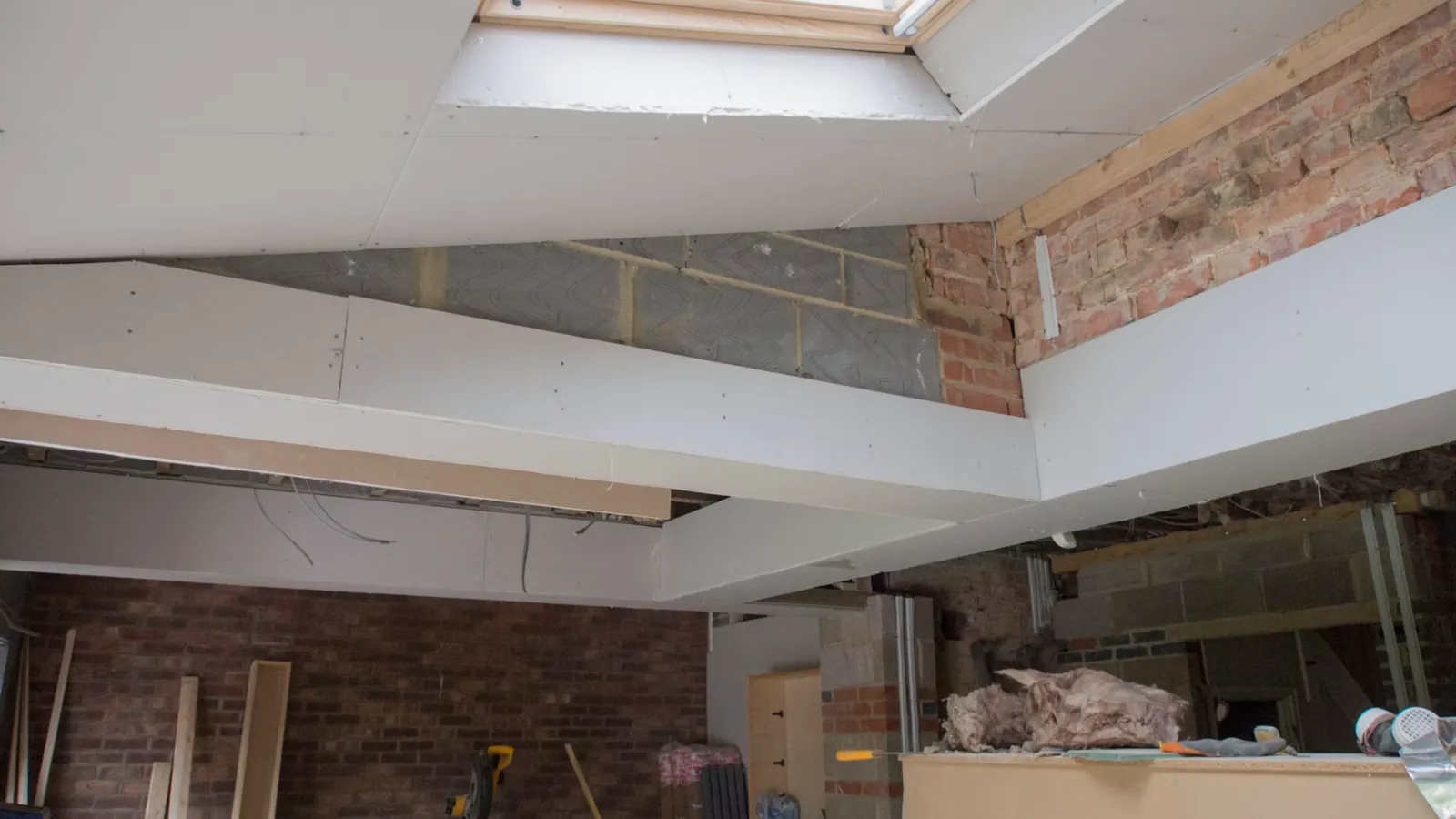
What is a renovation cost per square metre?
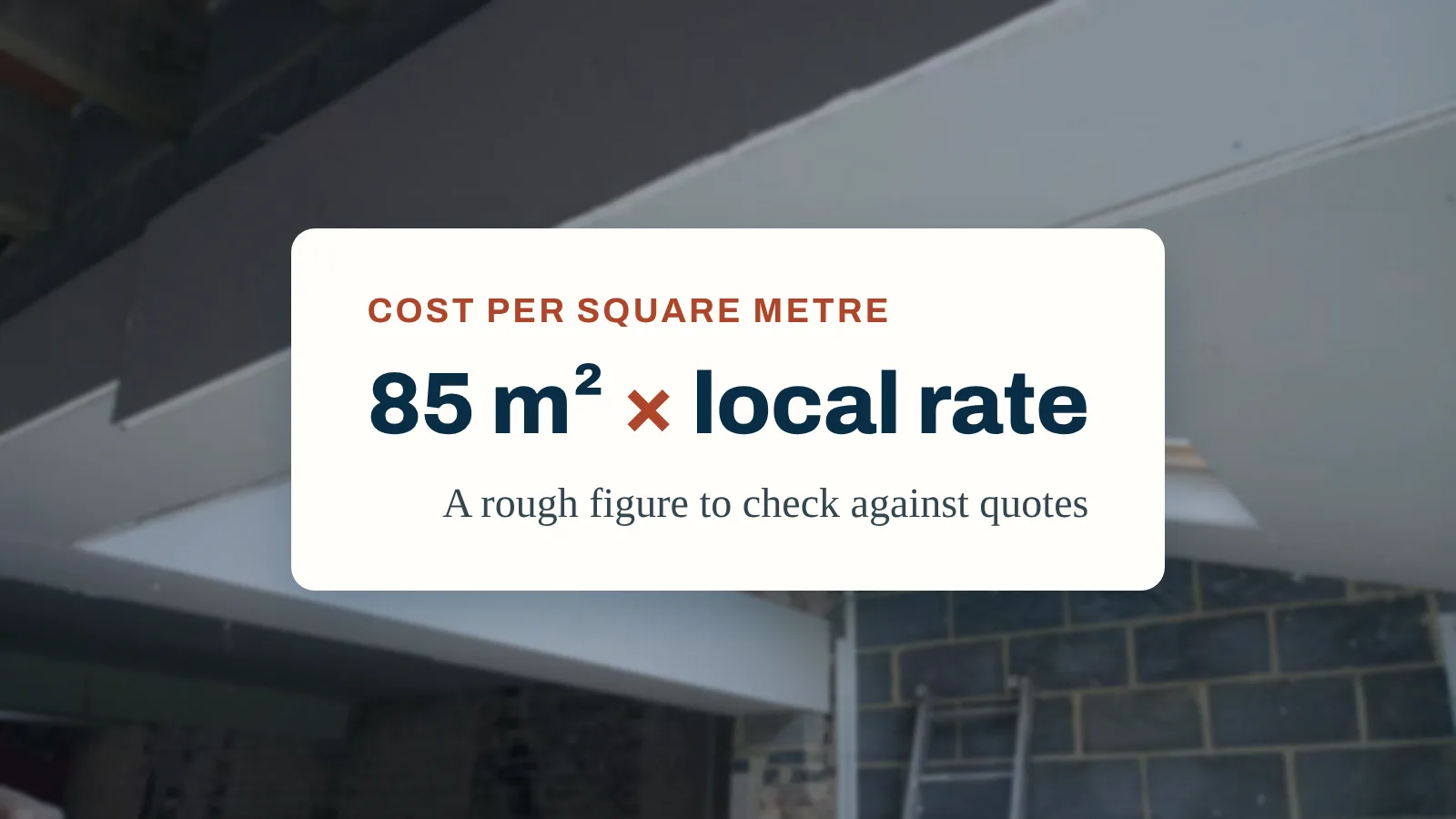
A renovation cost per square metre is a published rate you multiply by a floor area to get a first figure. It is useful for one thing: testing whether a project is roughly affordable before you pay for drawings or quotes. It is not a budget, because the rate rarely matches your house, scope or what you want included.
In the US and Canada the same idea is quoted per square foot. This guide shows what published rates cover, how to measure the right area, the ways a rate misleads, and how to turn a first figure into a budget built from your own lines and quotes.
Published rates, and what they assume
These are rates from named sources with their dates. Each one assumes a particular type of work, so use the one that matches your job.
| Type of work | Rate | Source |
|---|
| Single-storey extension, UK | £1,800 to £3,000 per m² | HomeOwners Alliance, July 2026 |
|---|
| Single-storey extension, London | £2,300 to £3,400 per m² | HomeOwners Alliance, July 2026 |
|---|
| Two-storey extension, standard finish | From about £1,900 per m² | HomeOwners Alliance, July 2026 |
|---|
| Loft conversion, UK | Around £1,250 to £2,500 per m² of usable floor | HomeOwners Alliance, July 2026 |
|---|
| Structural renovation, rural Sicily, 80 to 120 m² property | €1,200 to €1,800 per m² | Jonathan's 2026 breakdown on Operation Sicily, citing industry estimates (one owner's research, not an independent survey) |
|---|
Notice what is missing: a single trustworthy UK rate for renovating an existing house. New floor area, as in an extension or a loft, can be priced per square metre because the job is similar each time. Renovating existing rooms is not: two houses of the same size can need completely different work. For whole-house renovation, our guide to how much it costs to renovate a house builds an estimate from the jobs instead.
Tip
Before using any rate, write down what it is for (new build, conversion or refurbishment), where, when, and what it includes. If you cannot answer those four questions, do not rely on it.
How to measure the right area
A rate is only as good as the area you multiply it by. Use the same kind of area the source used:
- Internal floor area of the space being worked on. Measure inside the walls, room by room, and add them up.
- Usable area for a loft. The HomeOwners Alliance says to use the usable gross internal area, meaning floor with headroom of 1.5 metres or more, and to deduct the space lost below for the new staircase.
- New floor only for an extension. Count the new area, not the existing room it opens into, and price the work to the existing room as its own lines.
- Only the rooms in scope. If you are renovating the kitchen, bathroom and two bedrooms, do not multiply by the whole house.
To convert, one square metre is about 10.76 square feet. Multiply a rate per square foot by 10.76 to get a rate per square metre.
Six ways a cost per square metre misleads
1. The scope is different
A rate assumes a typical job. Your job may include structural work, a rewire, new heating, damp repairs or a new roof that the rate never covered, or it may leave out things the rate included.
2. Fixed costs do not scale with area
A kitchen, a bathroom, a staircase, drainage, a new connection and planning fees cost roughly the same whether the space is large or small. Jonathan's 2026 breakdown notes that electrical connection, drainage and planning fees do not scale linearly with size, and the HomeOwners Alliance warns that very small loft conversions can be expensive per square metre. Small projects look expensive per square metre; large ones can look cheap.
3. What is included varies
Some rates cover the build only. Others include fees, fit-out or VAT. An extension rate, for example, usually describes the build, while the kitchen, flooring, decorating, furniture and professional fees can add a large share on top.
| Ask of every rate | Why it matters |
|---|
| Is VAT included? | It can change the total considerably |
|---|
| Are professional fees included? | Design, structural engineer, building control, surveys |
|---|
| Is fit-out included? | Kitchen units, sanitaryware, flooring, decorating |
|---|
| Are services included? | Rewiring, plumbing, heating, drainage |
|---|
| Is preparation included? | Clearance, skips, scaffolding, protection |
|---|
4. Specification moves the price more than size
The same square metre can be finished with a budget floor or a premium one, standard sockets or a lighting scheme, a stock kitchen or a bespoke one. Two quotes for the same area can differ widely for that reason alone.
5. Condition and access
Hidden defects, difficult access, a listed building or a site with no parking all add cost that no average reflects. On an old house, condition is usually the biggest variable.
6. Place and date
Rates differ between regions and countries, and they age. The HomeOwners Alliance gives a higher London range for extensions. A rate from another country reflects its labour, materials and rules, so a per square foot figure from the US cannot simply be converted and used in the UK or Italy.
Watch out
A per square metre figure from a builder's website is a marketing estimate, not a quote. Use it to start a conversation, then ask for an itemised price for your own scope.
How to turn a rate into a budget