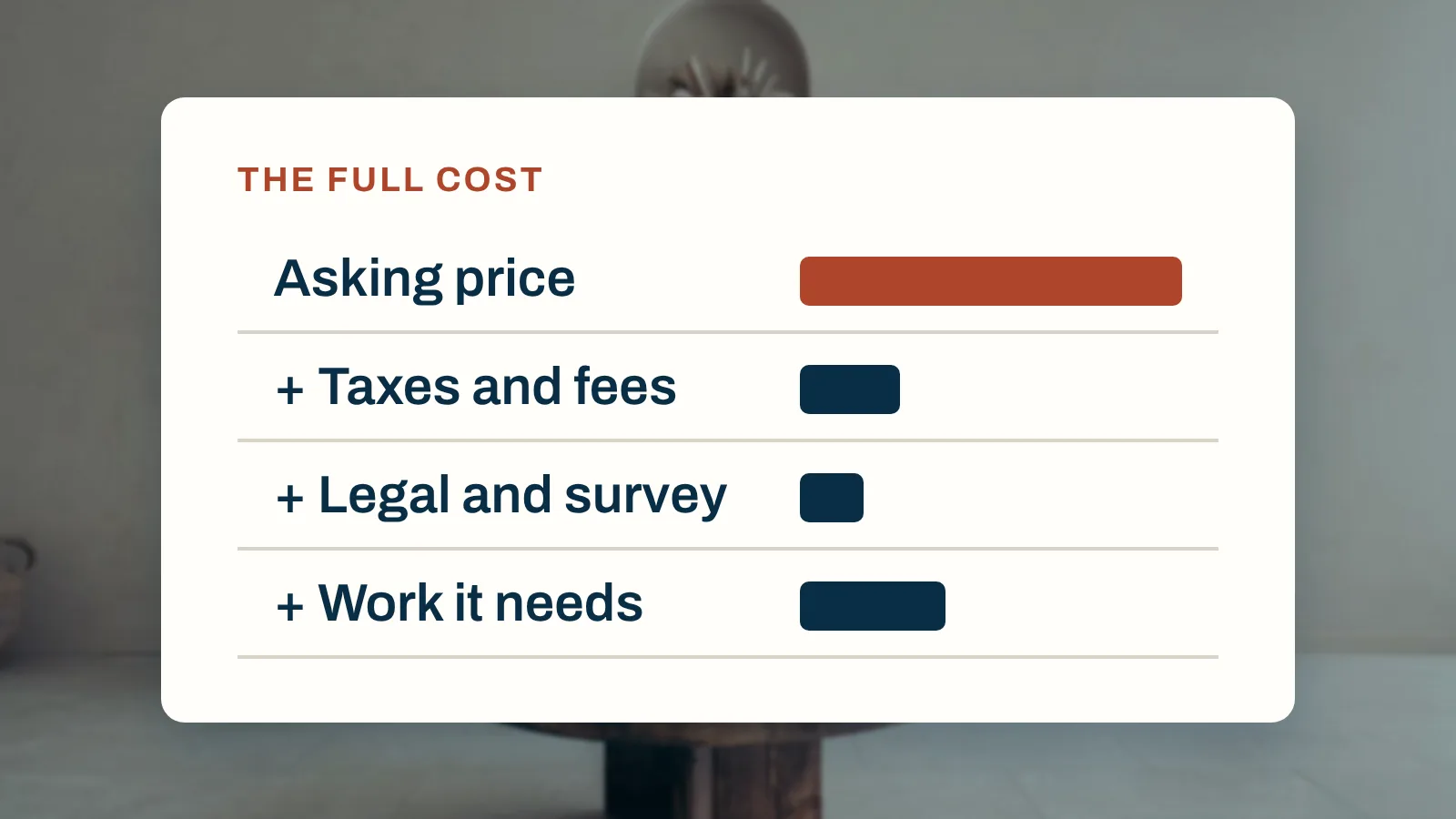
The costs of buying a house go well beyond the price: tax on the purchase, legal and conveyancing fees, searches, a survey, any lender fees, a registration fee and removals, then decorating, furniture and repairs after you move in. In the UK, Which? put average conveyancing at £2,182 and a survey at £510 for home movers in May 2026, before any tax.
The safest approach is one list with every cost beside the price, each marked as estimated, agreed or paid.
This guide gives you that full list, the figures behind each line, and the hidden costs buyers most often miss.
The costs of buying a house at a glance
| Cost | When it is paid | Typical size |
|---|
| Deposit | Exchange or signing | A share of the price |
|---|
| Tax on the purchase | At or soon after completion | Depends on country, price and buyer type |
|---|
| Legal or conveyancing fees | Completion | Hundreds to a few thousand |
|---|
| Searches | Early in the legal work | Usually included in, or added to, legal fees |
|---|
| Survey | Before exchange | A few hundred to over a thousand |
|---|
| Lender fees, if borrowing | Set by the lender | Ask the lender |
|---|
| Registration fee | Completion | Set by a published fee scale |
|---|
| Removals | Moving day | Hundreds |
|---|
| After-move costs | First weeks and months | Varies widely |
|---|
The detail of each line depends on where you buy. The sections below explain the general method first, then the UK details in clearly marked boxes.
Tax on the purchase
Most countries charge a tax or duty when property changes hands. It is usually the largest buying cost after the deposit, and it often depends on the price and on whether you already own a home.
In the UK (England and Northern Ireland)
Stamp Duty Land Tax is charged on portions of the price. For someone who will own only this property, GOV.UK sets the rates at 0% up to £125,000, 2% on the next £125,000, 5% from £250,001 to £925,000, 10% from £925,001 to £1.5 million and 12% above that. GOV.UK's worked example: a £295,000 house costs £4,750. Different rates apply to first-time buyers and to people who will own more than one home; use GOV.UK's calculator for your purchase. Which? notes the tax must be paid within 14 days of completion in England and Northern Ireland, with an automatic £100 fine if you miss it.
In Scotland and Wales
The tax is different. Scotland has Land and Buildings Transaction Tax, run by Revenue Scotland, and Wales has Land Transaction Tax, with rates set by the Welsh Government. Which? notes that buyers in both have 30 days to pay.
Watch out
Never assume another country works like the UK. Rates, who pays and when can all differ, and some countries add notary or registration charges on top. Check the official source for the country you are buying in, and ask a qualified local professional.
Legal and conveyancing fees
A solicitor or licensed conveyancer handles the contract, the searches, the transfer of money and the registration of your ownership. In many countries a notary does part of this job.
What drives the cost: the price, whether the property is freehold or leasehold, whether you are borrowing and how complex the title is. Always ask for a written quote that lists the fee, VAT and every disbursement (money they pay out on your behalf).
Searches
Searches check for things that could affect the property, such as planning issues, roads, drainage and environmental risks. Ask your conveyancer which searches they recommend and whether they are in the quote.
Registration fee
Your ownership is recorded in the land register. In England and Wales, HM Land Registry charges a fee on a published scale based on the price. Your conveyancer usually pays it and adds it to the bill.
Survey and valuation
A lender's valuation, if you borrow, is for the lender; it is not a survey of the condition. A survey is for you.
In the UK
RICS sets out three levels of Home Survey. Level 1 suits conventional, newer homes in good condition; Level 2 suits conventional homes in reasonable condition; Level 3 is the most comprehensive and suits large, older or run-down homes or buyers planning major works. RICS says costs start at a few hundred pounds for Level 1 and some bespoke Level 3 services cost over £1,000. Which? put the average house survey at £510 for home movers.
Tip
Choose the survey for the house, not the price. A survey that finds a roof problem before you exchange gives you the facts to renegotiate or walk away.
If you are borrowing, give lender fees one line of their own and get any advice on borrowing from a qualified adviser.
Moving costs
Removals depend on how much you are moving and how far. Which? put average removals at £709 for home movers in May 2026. Add packing materials, storage if your dates do not line up, time off work and the cost of the first few days, such as takeaways or a pet sitter. Our moving house checklist covers the day itself, and our guide to how long it takes to buy a house shows when each stage, and each payment, is likely to land.
The hidden costs of buying a house
The costs that catch people out usually arrive after the legal work is done. In a Which? survey of 647 people who had moved home in the previous three years (carried out by Deltapoll in August 2025, published November 2025), one in five said they had unexpected costs. The most common were:
| Unexpected cost | Share of movers who named it |
|---|
| Decorating | 8% |
|---|
| New furniture and appliances | 8% |
|---|
| Curtains and blinds | 7% |
|---|
| Tradespeople | 7% |
|---|
| Stamp duty | 6% |
|---|
Other costs worth a line of their own:
- Repairs found by the survey that you agree to take on.
- Buildings and contents insurance from exchange or completion.
- Service charges and ground rent for a leasehold flat.
- Running costs before you move in, if the dates overlap with your current home.
- Living costs during work, if you cannot live there while it is put right.
- Changing locks, setting up broadband and redirecting post.
Watch out
A cost you have not priced yet is not zero. Write "unknown" against it and find out, rather than leaving the line empty and the total looking smaller than it is.
Worked example: the full cost of a £295,000 house
Here is how the list looks for a home mover in England replacing their main home with a £295,000 house, using the published figures above. The other lines are placeholders to show the method; replace each with your own quotes.
| Line | Amount | Source or status |
|---|
| Price | £295,000 | Agreed |
|---|
| Stamp Duty Land Tax | £4,750 | GOV.UK example |
|---|
| Conveyancing | £2,182 | Which? average for home movers (replace with your quote) |
|---|
| Survey | £510 | Which? average for home movers (replace with your quote) |
|---|
| Removals | £709 | Which? average for home movers (replace with your quote) |
|---|
| Registration fee | From HM Land Registry scale | Ask your conveyancer |
|---|
| Lender fees, if borrowing | Unknown | Ask the lender |
|---|
| Decorating and furniture | Unknown | Your estimate |
|---|
| Repairs from survey | Unknown | After the survey |
|---|
Even before the unknown lines, the published items add £8,151 to the price. That is the gap between "can we afford the house?" and "can we afford to buy it and live in it?".
How to keep every buying cost in one list
Before you make an offer
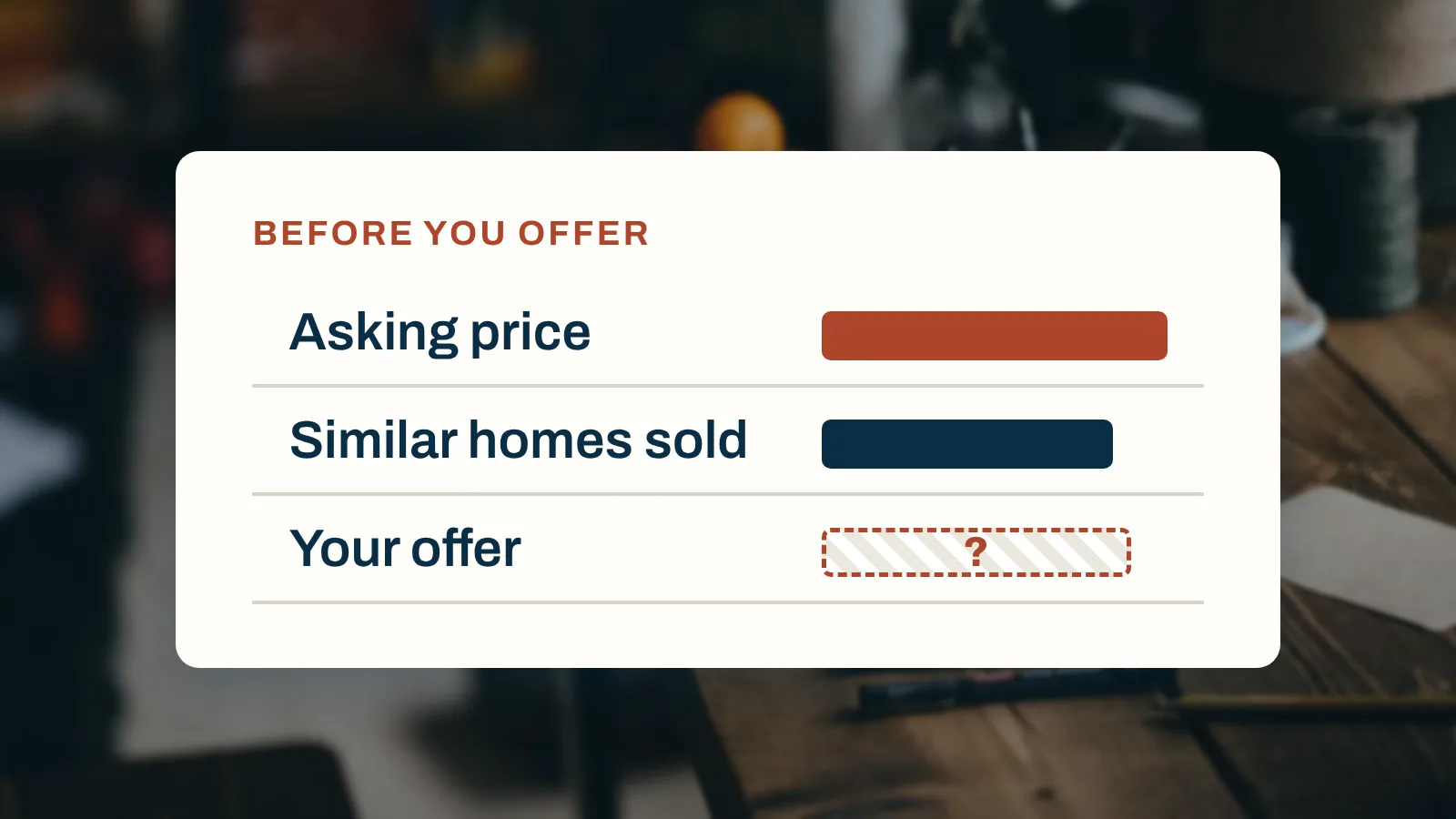
Run the full list before you settle on a figure, not after. If the survey or the work needed raises the total, that is a reason to review your offer, not just your savings.
- Price every known cost, even roughly.
- Mark every unknown, and find out the biggest first.
- Check when each cost falls due against when your money is available.
- Keep a reserve for what the survey finds.
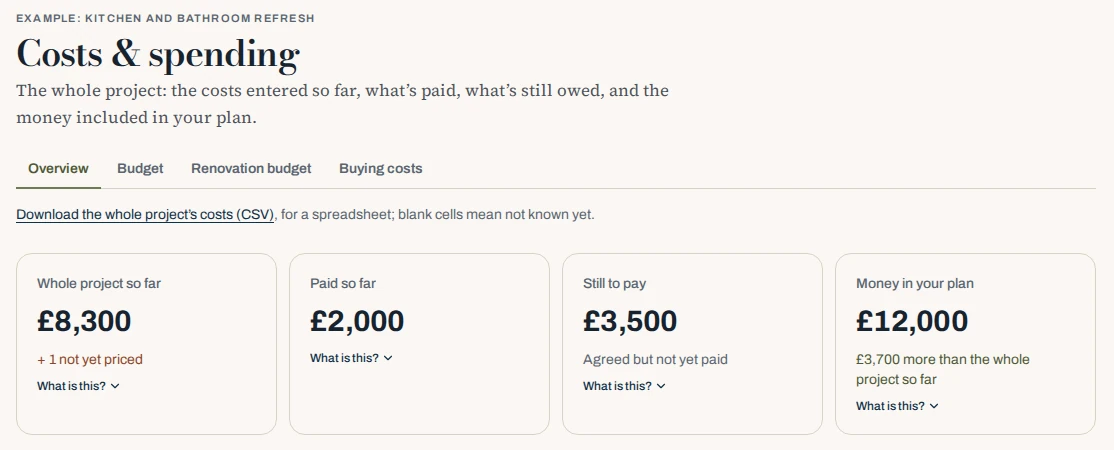
For the rest of the buying journey, see our guide to offers, surveys, conveyancing and completion, our guide to comparing houses on their full cost, and how to build a whole-project budget in Mekozo, with every buying cost in one list.
This guide explains a planning method. It is not legal, tax or financial advice; check the rules that apply to your purchase with a qualified professional.