Appliance manuals and warranties: how to organise them
How to find a lost appliance manual, what to keep for a warranty claim, and a simple way to file every manual and warranty with the item it covers, so the next breakdown starts with the paperwork to hand.
File each appliance manual and warranty with the item it covers, not in one pile, so the next breakdown starts with the right papers.
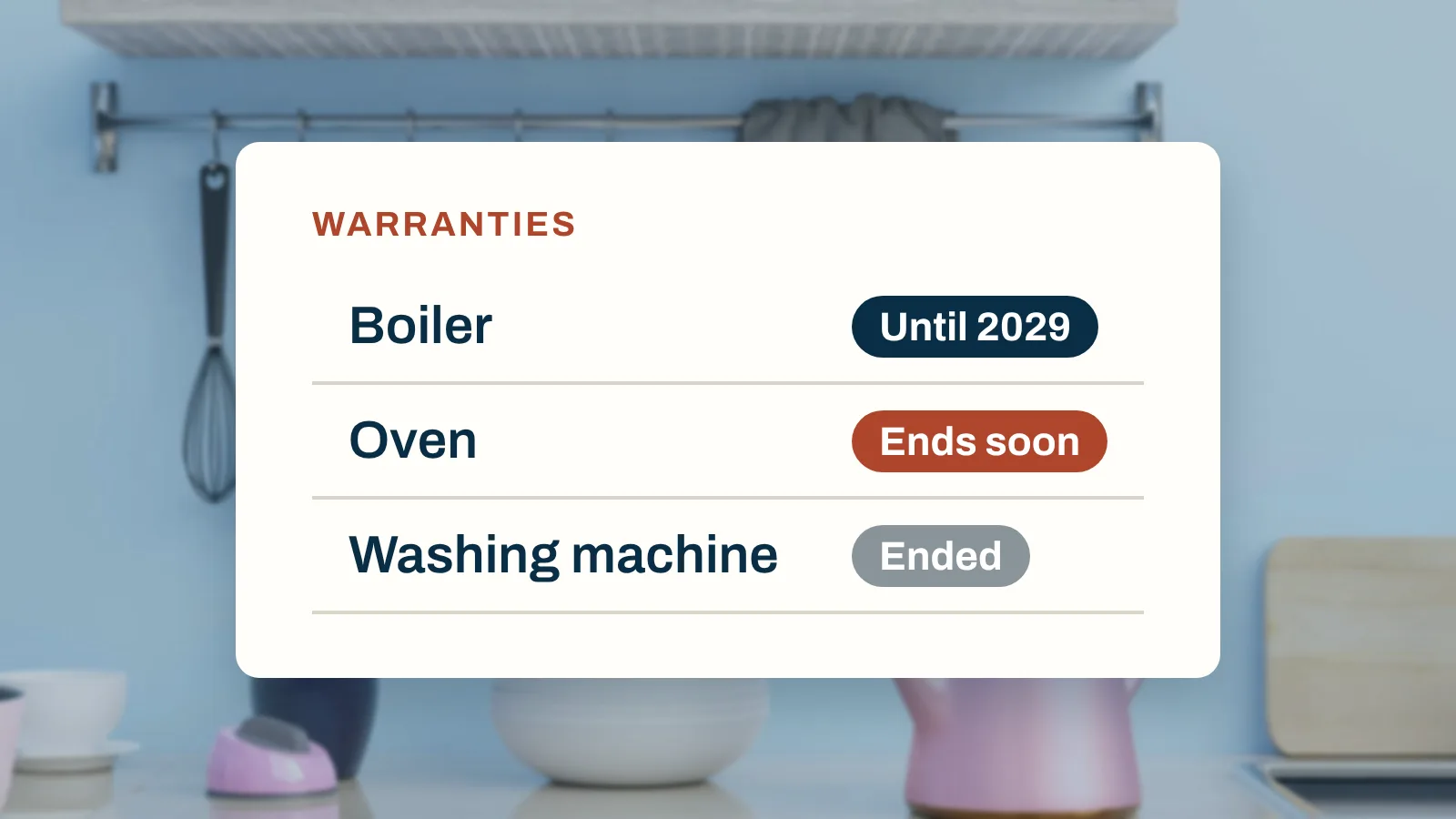
For every appliance, record the model and serial number, where and when you bought it, the price, and when the warranty ends.
Citizens Advice says a warranty claim usually needs proof of purchase, details of the problem and a copy of the warranty.
Most lost manuals can be found again on the manufacturer's website using the model number from the rating plate.
Start with the boiler and the built-in appliances, because they are the costliest to repair and the hardest to identify later.
Keep appliance manuals and warranties organised by filing each one with the item it covers. For every appliance, record the model and serial number, where and when you bought it, the price and when the warranty ends, and keep the receipt with it. Lost a manual? Find it again on the manufacturer's website using the model number.
That one habit answers the questions that come up when the washing machine stops mid-cycle: what model is it, is it still under warranty, and where is the receipt? This guide shows what to keep, where to find a lost manual, and how to file it all so it takes seconds to find.
Why appliance paperwork matters
Manuals and warranties feel like clutter until the day you need them. They matter at four moments:
When something breaks. The manual lists error codes and simple fixes, and the warranty says who pays for the repair.
When you claim. Citizens Advice says that to claim using a warranty or guarantee you will usually need proof of purchase showing where and when you bought the goods, details of the problem and a photocopy of the warranty.
When it needs servicing. Boilers and some built-in appliances have servicing intervals in the manual, and some warranties depend on them.
When you sell. Buyers expect manuals for anything included in the sale, especially the boiler and the built-in kitchen.
In the UK
Citizens Advice says you have legal rights for up to 6 years (5 years in Scotland) if goods are faulty, and that using those rights can be easier than a warranty within the first 6 months. A warranty or guarantee adds to your rights; it does not replace them.
What to keep for each appliance
You do not need to list everything you own. Focus on the items that are fitted, expensive or serviced: the boiler, oven, hob, extractor, dishwasher, washing machine, tumble dryer, fridge-freezer, water heater and any pumps. For each one, keep:
Finding the right manual, parts and recall notices
Receipt or invoice
Proof of purchase for a claim
Warranty or guarantee
What is covered, for how long and how to claim
Warranty end date and reference
So you know at a glance whether it still applies
Registration confirmation
Some manufacturer guarantees need registering
Installer and date fitted
Who to call, and when the clock started
Service records
Evidence a service-dependent warranty was kept up
Photo of the rating plate
The model number without pulling the appliance out
Tip
Photograph the rating plate the day an appliance arrives. On a built-in fridge or dishwasher it can be hidden once the doors and plinths are fitted.
Where to find a lost appliance manual
Lost manuals are the commonest problem, and usually the easiest to solve.
Find the model number. It is on the rating plate, a sticker or small metal plate that usually also shows the serial number. On washing machines and dishwashers look inside the door or along its edge; on fridges, inside the main compartment; on ovens, around the door frame.
Search the manufacturer's website. Most publish manuals, installation guides and quick start guides under their support or customer service pages. Use the exact model number, not the product name.
Check your emails and orders. Online retailers often attach the manual or link to it on the product page of your order.
Ask the installer. For a boiler or built-in appliance, the installer may have the installation manual on file.
Save it straight away. Download the PDF and file it with the appliance's record, so you never search twice.
Watch out
A manual for a similar model can give the wrong error codes or servicing intervals. Always match the full model number.
What to keep for a warranty claim
Warranties come in different forms, and Citizens Advice notes that the paperwork could be on your receipt, in an email or given to you as a separate leaflet. Whatever form it takes, file these together:
The receipt or invoice, showing the seller, the date and the price
The warranty or guarantee document, or the email that confirms it
The warranty's end date and reference or policy number
Proof you registered it, if the manufacturer required registration
Service records, if the terms require regular servicing
Photos of the appliance and its rating plate
Citizens Advice also flags three things to check in the small print: the time limit, whether you pay postage, packing and transport to send something back, and who can claim. Only the person who bought the item can claim unless the warranty uses the phrase third party rights, which matters for anything you bought second hand or inherited with a house.
In the UK
If you bought an extended warranty for electrical goods lasting at least 12 months at the same time as the goods, Citizens Advice says you can change your mind and get a refund within the first 45 days. Note the purchase date on the warranty record so that window is easy to check.
How to organise appliance manuals and warranties
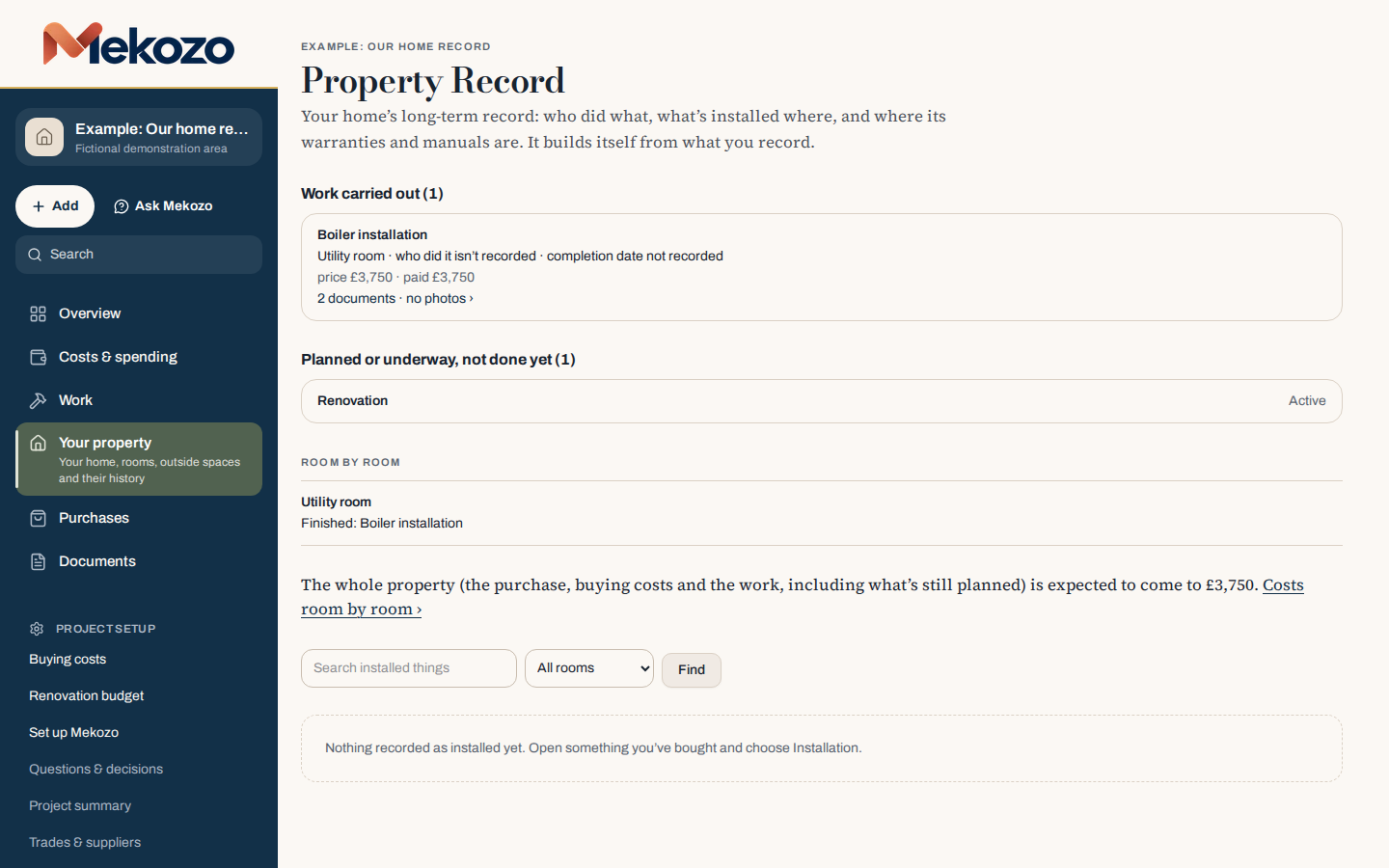
Mekozo's Property Record shows each installation, like this boiler, with the room it is in, what it cost and the documents connected to it, so the manual and warranty are there when something breaks.
Most people look things up by what broke, not by when they bought it. So organise the paperwork around the home itself.
File by room. Kitchen, utility, bathroom, loft, garage. The oven's manual lives with the kitchen, the boiler's with the utility room.
Keep each item's papers together. Manual, receipt, warranty, registration and service records as one record, not in four different places.
Name files for what they are. "Dishwasher manual, model and serial number" is easier to find than "Document 3".
Write the end date on the record. The warranty end date matters more than the purchase date, because it tells you at a glance whether you can claim.
Keep originals you may need to show. Scan or save everything, and keep paper originals only for guarantees that ask for them.
Share access. If you own the home with someone, make sure you can both find the boiler manual without asking each other.
This is one part of a wider home record. Our guide to organising your house documents in one home file covers the ownership papers, certificates and records of work that sit alongside your appliance paperwork.
Paper, digital or both?
A practical mix works for most homes:
Digital for searching. Saved PDFs and photos can be searched, shared and kept safe if a drawer floods.
A small paper folder for any original guarantee certificate you may need to show.
Links for manuals where the manufacturer keeps an up to date version online, with a saved copy in case the link changes.
Check for recalls and safety notices
Your model numbers have one more use. In the UK, the Office for Product Safety and Standards publishes product safety alerts, reports and recalls on GOV.UK, searchable by product category, including electrical appliances. Electrical Safety First also points people to that database for current recalls. With the model number already on file, a check takes a minute rather than a trip behind the fridge.
Tip
Registering an appliance with its manufacturer is one way to hear about safety notices. Citizens Advice adds that some manufacturer guarantees may not be valid unless you returned the registration card, so register big appliances when they arrive.
When you buy or sell a home
Appliances change hands with houses, and so should their paperwork.
When you move in, ask the seller for the manuals and any warranties for the boiler and anything left behind, and note what is missing. Our new home checklist covers this alongside the other first jobs, such as finding the stop tap and reading the meters.
When you sell, leave the manuals for everything included in the sale. Before you tell a buyer a warranty transfers, check whether it includes third party rights. Our guide to documents needed to sell a house lists the rest of the paperwork buyers ask for.
Keep it up to date
Paperwork stays useful only if it keeps up with the house. Spend five minutes whenever:
A new appliance arrives: save the receipt, manual and warranty, photograph the rating plate and register it.
It is serviced: add the service record and the next due date. Our home maintenance checklist shows when each service usually comes round.
It is repaired: note the date, the fault, who fixed it and the cost in your home maintenance log.
It is replaced: keep the old record, marked as replaced, so the history of the house stays complete.
During a renovation, new appliances arrive in a rush. Keep their receipts with the rest of the project's spending, as our guide to tracking renovation purchases and payments explains, then move the manuals and warranties to the home record once the work is finished.
On the Operation Sicily villa
From the villa in Sicily. At the villa Jonathan Smith, Mekozo's founder, is renovating on camera for Operation Sicily, the new kitchen units were ordered and paid for months before they were fitted, with a three month lead time, and the appliances arrived on the fitting day still in their boxes: a built-in oven, a built-in microwave, a fridge-freezer, a washing machine and a five-ring gas hob (Episode 92). Built-in appliances are the ones whose rating plates disappear behind doors and plinths once fitting is done, so the day they arrive is the day to save their manuals and warranties. The episode also carries a warning for buyers: in Italy the kitchen is often treated as furniture and may leave with the seller, so check whether it, and its appliances and paperwork, are included before you sign.
This guide explains how to keep household paperwork. It is not legal advice; for a dispute about a faulty product or a warranty, contact Citizens Advice or the equivalent service where you live.
Questions people ask
Should I keep appliance manuals?
Keep the manual, or a saved digital copy, for anything installed or expensive: the boiler, the oven, the hob, the dishwasher, the washing machine and the fridge-freezer. Manuals hold the model number, servicing intervals, error codes and the manufacturer's contact details, which you will want when something goes wrong or when you sell.
Where can I find a manual for my appliance?
Look on the manufacturer's website first, using the exact model number from the rating plate. Many manufacturers publish manuals, installation guides and quick start guides for current and older models. Save a copy with the appliance's record as soon as you find it.
Do I need a receipt to claim on a warranty?
Usually, yes. Citizens Advice says that when you make a claim you will usually need proof of purchase showing where and when you bought the goods, details of the problem and a photocopy of the warranty or guarantee. Keep the receipt with the warranty for as long as the warranty runs, and longer for expensive items.
How long should I keep appliance warranties?
Keep each warranty for at least as long as it lasts, with its end date written on the record. Citizens Advice notes that in the UK you have legal rights for up to 6 years (5 in Scotland) if goods are faulty, so many people keep receipts for big appliances for that long.
Do I need to register an appliance for the warranty?
Not for your legal rights, which come from the retailer you bought from. Some manufacturers' guarantees, especially extended ones, only apply if you register within a set time, so check the guarantee terms when the appliance arrives. Registering also lets the manufacturer contact you about a safety recall.
What happens to warranties when you sell a house?
Appliance warranties are usually personal to the buyer. Citizens Advice says only the person who bought the item can claim unless the warranty includes third party rights, so check the small print before you tell a buyer it transfers. Leave the manuals for anything included in the sale.
Jonathan Smith is the founder of Mekozo and Operation Sicily. Jonathan bought an abandoned villa in Sicily and is rebuilding it on camera, every week. Mekozo is the app Jonathan built to keep that renovation's money in one picture.
A spreadsheet and a home maintenance app can both keep track of your house, if they record the right things. Here is what to track, a spreadsheet layout to copy, what a good app should do, and how to choose.
There is no single right figure for home maintenance. Build the budget from your own house in three parts: regular servicing, an allowance for small repairs and a fund for the big replacements, checked against named UK prices.
A step by step method for tracing the history of your house, from the title register and old maps to census returns, local archives and planning files, and a way to keep what you find.