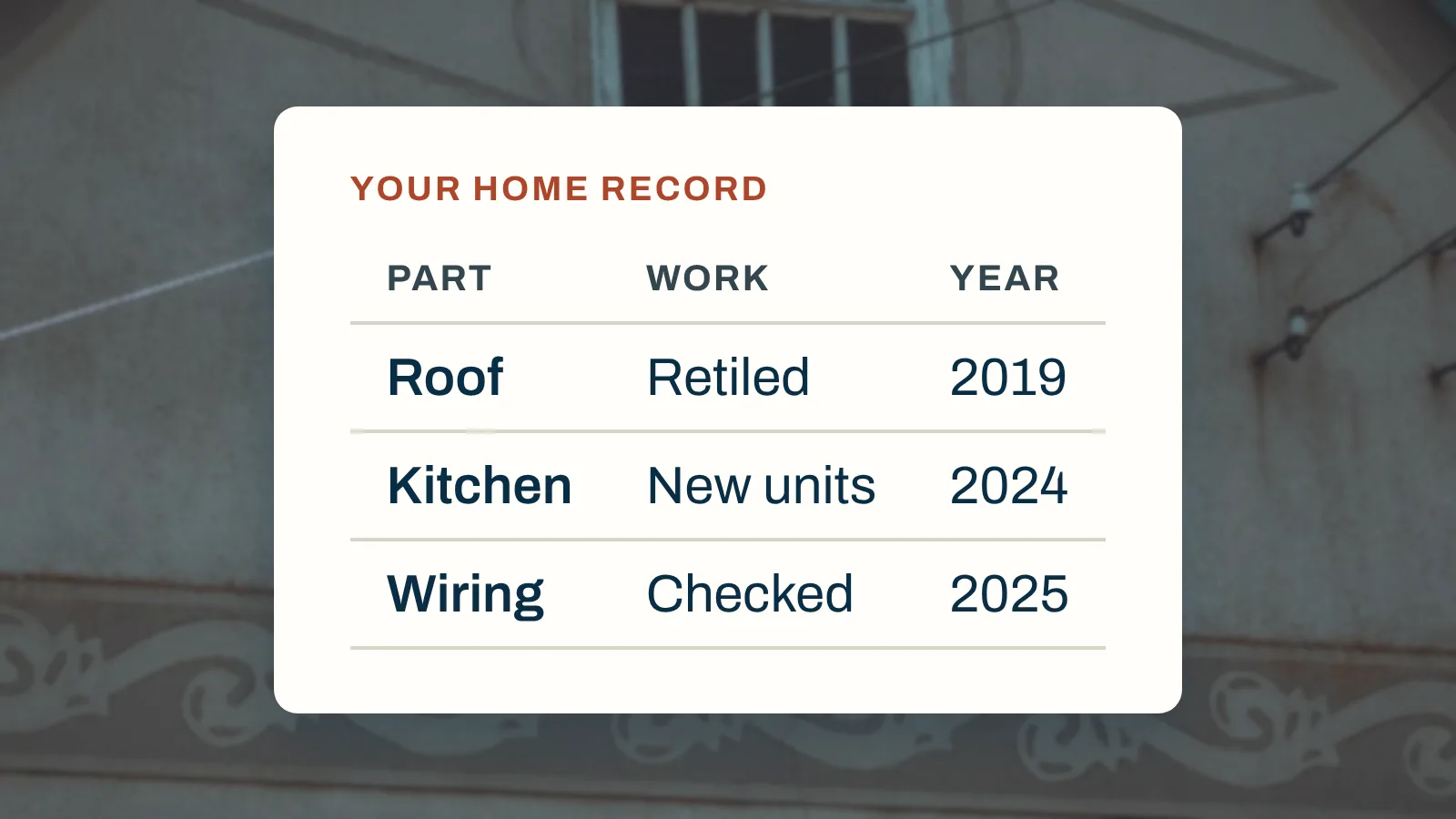
Managing your home
How to organise your house documents in one home file
What goes in a home file, how to organise it so you can find things fast, and which documents matter most when you repair, claim or sell.


The paint colour, the tile batch, where the stopcock is, what is behind the walls: ten details about your home that slip from memory, what to record for each one and why it matters later.
The things you forget about your own house are rarely the big ones. You forget the paint colour on the hall walls, the batch number on the bathroom tiles, which bulb fits the landing light and who fitted the boiler. Write each one down with the room or item it belongs to, the day it happens.
Here are the ten that slip most often, what to record for each, and why it matters later.
A scuffed wall needs touching up, and the tin in the shed has lost its label. "Off white" is not a colour: most ranges have dozens.
For each room, record:
Tip
Photograph the tin's label before it gets splashed. It holds the name, code, finish and often a batch number on one small sticker.
Our guide to how much paint you need shows how to work out quantities room by room.
Tiles are made in batches, and the shade can vary from one batch to the next. When a tile cracks years later, the batch or shade code on the box gives you the best chance of a close match. Carpet and flooring names are just as easy to lose once the boxes go to the tip.
Record the product name, the supplier, the batch or shade code, the date it was laid and who laid it. Keep a few spare tiles or a box of flooring if you can, and note where you stored them.
In an emergency, nobody wants to search. The stopcock is often under the kitchen sink, but not always. Our new home checklist puts finding the shut-offs on the first day for that reason.
Record where each one is, with a photo:
Once a wall is plastered or tiled, the pipes and cables inside it disappear. Years later you want to hang a cupboard, and nobody remembers where anything runs.
Before a wall is closed, photograph every pipe and cable run, with a tape measure in the shot so you can see the distance from a corner or the floor. File the photos by room, with the date. Our guide to renovation before and after photos shows how to take them.
Watch out
Photos are a guide, not a guarantee. Before drilling, use a detector and ask a qualified electrician or plumber if you are unsure.
These are the small things that cost a second trip to the shop. Note, for each item:
A photo of the old bulb or filter beside its packaging is often enough.
A warranty only helps if you can find it and it is still running. Citizens Advice says that to claim using a warranty or guarantee you will usually need proof of purchase, details of the problem and a copy of the warranty.
For each one, record the item it covers, the start and end dates, the reference number and where the receipt is. Note whether it needs servicing to stay valid, and whether it can pass to a new owner. Our guide to appliance manuals and warranties explains what to check in the small print.
The kitchen fitter was excellent. Five years later, you cannot remember their name, or which company you swore never to use again.
For every piece of work, keep the company or person, their phone number and email, any registration number, and a short note of how it went. Keep the contact with the job, so when the shower leaks you can see who fitted it, and when.
Service dates blur quickly. Gas Safe Register recommends an annual safety check and service for any gas appliance, unless the manufacturer's guidelines say otherwise, carried out by a Gas Safe registered engineer.
Record the date, who did it, what they found, the cost and when the next one is due. Do the same for a chimney sweep if you use an open fire or stove, and for anything else with a routine. Our home maintenance checklist shows when each job usually comes round, and our guide to keeping a home maintenance log shows how to record it.
The model number is on a rating plate that is often hidden once an appliance is built in. You need it for the right manual, the right spare part and any safety recall.
Photograph the rating plate the day an appliance arrives. Save the manual, or a link to it, with the appliance's record, and note the installer and the date it was fitted.
This matters most when you sell. Buyers' conveyancers ask about past work, and certificates are hard to chase years later. GOV.UK warns that without building regulations approval you will not have the certificates of compliance you may need when you sell your home (Building regulations approval).
For each job, record what was done, when, by whom and what it cost, with the quote, invoice, guarantee and any certificate attached. Our guide to documents needed to sell a house lists what buyers usually ask for.
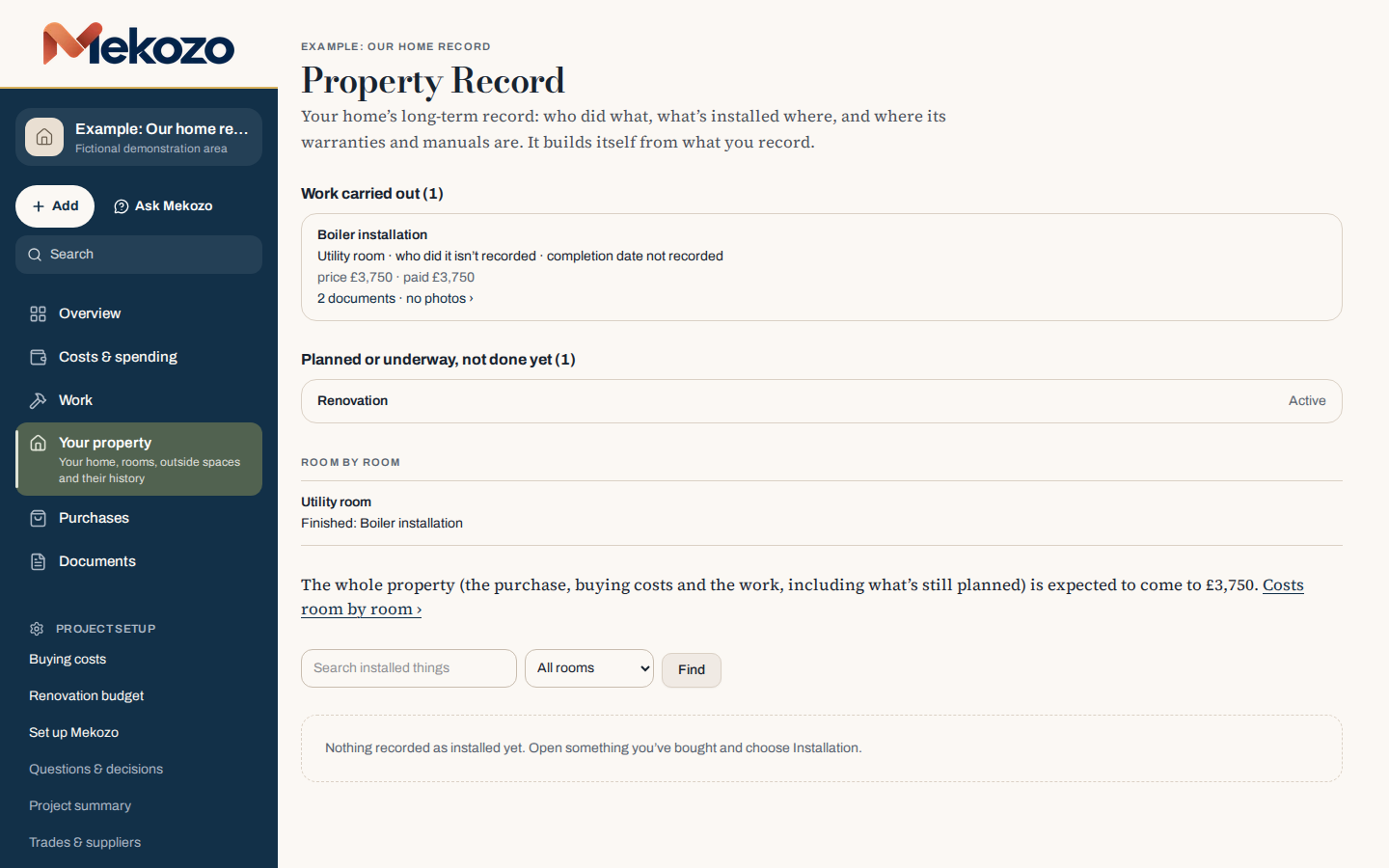
Mekozo's Property Record shows the work carried out in your home, with the room, what it cost and the documents connected to it, so the details on this list sit with the item they belong to.
Try it free for 30 days, no card neededYou do not need to catalogue the house in one weekend. File each detail by room and by item, not by date, because most people look things up by what broke. Add it the day it happens, use photos wherever you can, and share the record with anyone who looks after the house. Our guide to organising your house documents in one home file covers the ownership papers that sit alongside these details.
Mekozo keeps a record of your home, built from what you add. Each item can hold its product or reference, such as a paint colour name and code or a tile batch, with a link, notes, the room it is in and the supplier or fitter. Photos and documents sit with it, including warranties with their dates and references, and manuals. Maintenance is kept as planned or done, and past work shows who did it, when and what it cost.
You can ask Mekozo a question about your home, such as what colour the hall is painted or when the boiler was last serviced. It answers from your own records and shows which ones it used. Its answers can be wrong, so check the record before you order paint or book an engineer. Family can be invited free, and when you sell, the owner can offer the project to the new owner, so the history stays with the house. The new owner accepts it with a free Mekozo account.
Mekozo is not a home inventory for insurance.
On the Operation Sicily villa
From the villa in Sicily. Forgotten details turned up at the villa that Mekozo's founder, Jonathan Smith, films for Operation Sicily. His real-world breakdown of renovation costs in Sicily records electrical back boxes that had been plastered over and forgotten, and drainage nobody had documented, both needing unplanned spending. When he fitted the new bathroom plumbing, the hidden work was filmed before it disappeared: recessed valves for the shower, shower head, bath, sink and a bidet spray, each set to the right depth with a mock tile, and the new pipework flushed and held under pressure before the chases were filled (Episode 79). Once the walls are tiled, that record is the only way to see what is behind them.
Playing loads YouTube’s external player.
Watch directly on YouTube ↗Pick one room and spend ten minutes on it: the paint colour and code, the flooring, the bulbs, and a photo of anything hidden or hard to reach. Then do the stopcock and the shut-offs for the whole house. For more on this stage, see our guide to the records and upkeep of a home you own, how to keep manuals, warranties and home documents together in Mekozo, and how Mekozo keeps each maintenance job and its history.
This guide explains which details are worth recording about your home. It is not legal or professional advice; have gas, electrical and structural work done and checked by a qualified professional, and ask your solicitor or conveyancer what your own sale needs.
Record the details you will need again and are unlikely to remember: paint colours and codes, tile batch numbers, where the shut-offs are, what is behind the walls, warranty end dates, who fitted what, service dates, model numbers, and every piece of work with its certificate.
Check old tins, receipts or emails from the decorator, which often show the colour name and code. If none survive, a paint supplier may be able to match a small sample. Then record the name, code, finish and supplier for that room.
Tiles are made in batches and the shade can vary between them. If a tile cracks, the batch or shade code from the box gives you the best chance of a close match. Keep the code, the product name and the supplier, and a few spare tiles if you can.
Buyers' conveyancers usually ask about past work, certificates and guarantees. Keep a record of what was done, when, by whom and what it cost, with its paperwork attached. Your own conveyancer will tell you what your sale needs.

Jonathan Smith is the founder of Mekozo and Operation Sicily. Jonathan bought an abandoned villa in Sicily and is rebuilding it on camera, every week. Mekozo is the app Jonathan built to keep that renovation's money in one picture.
Real renovation experience and regional guidance from Operation Sicily.
What goes in a home file, how to organise it so you can find things fast, and which documents matter most when you repair, claim or sell.
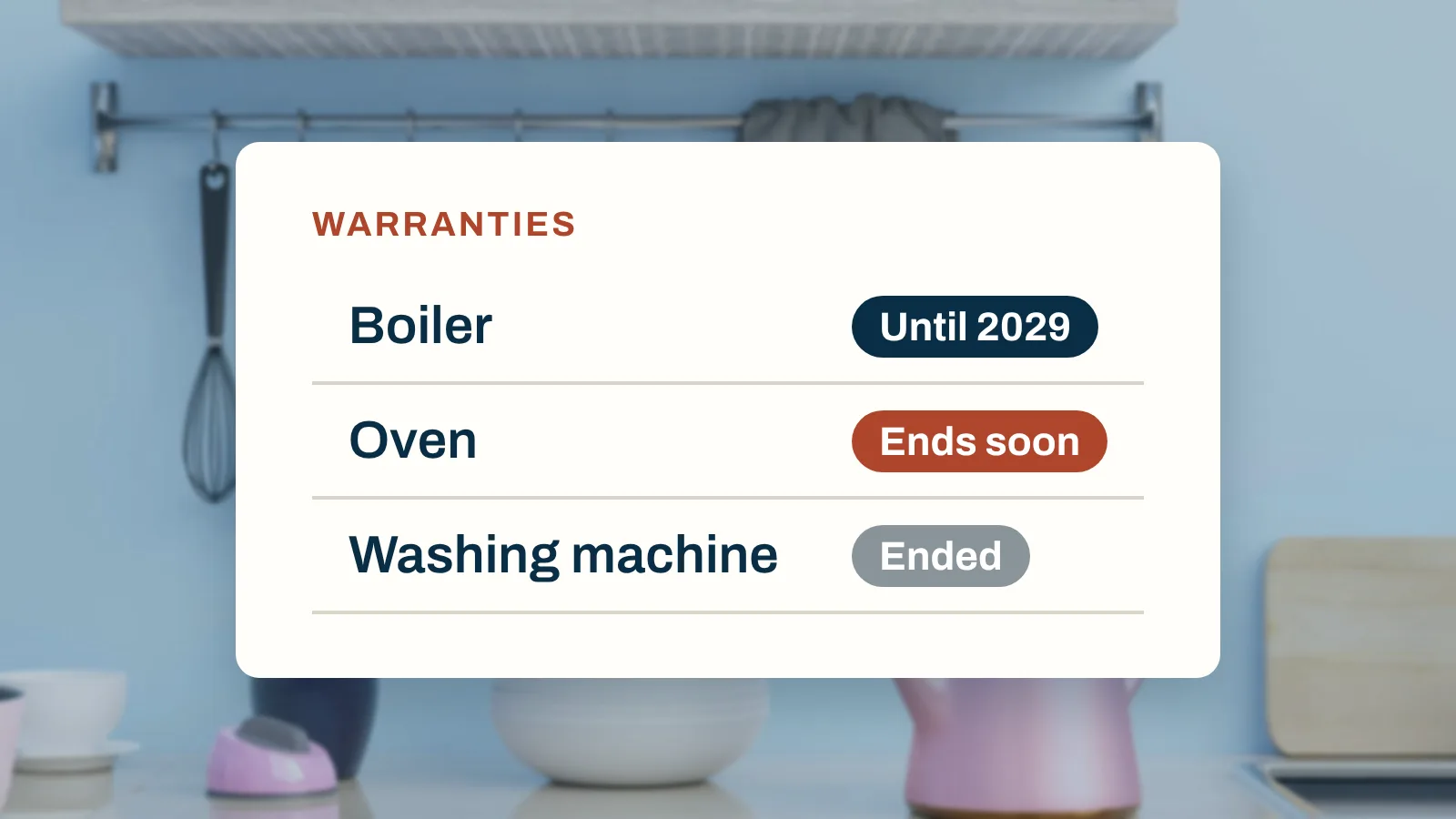
How to find a lost appliance manual, what to keep for a warranty claim, and a simple way to file every manual and warranty with the item it covers, so the next breakdown starts with the paperwork to hand.

A home maintenance log is the dated record of every check, service and repair your home has had. What to record for each job, a layout to copy, and why buyers, their solicitors and warranties all care about it.
Budgets, quotes, payments, documents and decisions in one place
30 days free. No card needed.
Monthly, with no annual plan. The Terms of membership set out the details.